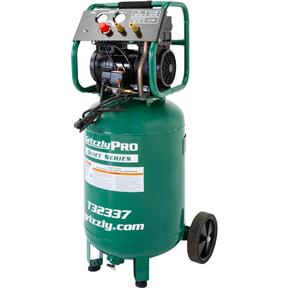
120V, 20 gallon

20-gallon, 2 HP, 120V compressor per the title. Plugs into a dedicated 20 A circuit; our layout allowance is 28 x 20 in. Check the listing for amps and CFM.
Comparison
Buy the 120V Klutch 20-gallon (2 HP, 120V) if the air goes to nailers, inflating tires and blow-off, you have a one-car bay, and you do not have a 240V circuit. Buy the 230V Campbell Hausfeld 60-gallon two-stage (175 PSI) for sanders, impact wrenches, paint guns or any tool that runs continuously, and only when a 240V circuit and a 36 x 24 in floor patch are on the table.
20-gallon, 2 HP, 120V compressor per the title. Plugs into a dedicated 20 A circuit; our layout allowance is 28 x 20 in. Check the listing for amps and CFM.
60-gallon two-stage, 175 PSI, 230V per the title. Wired to a 240V circuit; our layout allowance is 36 x 24 in and a 5 HP, 28 A planning load.
| 120V, 20 gallon | 230V, 60 gallon | |
|---|---|---|
| Tank | 20 gallon | 60 gallon |
| Voltage | 120V | 230V |
| Pressure (title) | See the listing | 175 PSI |
| Pumps | Single-stage, per the title; see the listing | Two-stage |
| Circuit | Dedicated 20 A, 120V, 12 AWG (read listing amps) | 240V: a 40 A breaker and 8 AWG for our 28 A planning load |
| Layout allowance (our engine) | 28 x 20 in | 36 x 24 in |
| Fits 12 x 20 ft with a car? | Empty bay only | Empty bay only |
| Fits 12 x 22 ft with a car? | Yes | Yes |
| Moves with the car in the way? | Often on wheels; check the listing | Stationary; plumb it and leave it |
| Best at | Nailers, tire inflation, blow-off, a brad gun | Sanders, impact wrenches, grinders, paint, a full auto shop |
| Budget tier | Under $500 | Under $2,000 |
The answer is set by the tool with the highest air demand, which the tool's own listing states as CFM at 90 PSI. Add the demand of tools that run together, then compare the sum with the compressor's delivered CFM at 90 PSI, which is also on its listing. The air compressor CFM calculator does the arithmetic from your tool list. We have no CFM figures for these two compressors in our briefs, so we do not quote any; read them on each listing.
Tank size is a separate question. A bigger tank stores air, so the pump runs less often. It does not make the pump deliver more air per minute. A 60-gallon tank behind a small pump still runs out under a sander. A 20-gallon tank behind an adequate pump does fine on a nailer. The pump's delivered CFM and the tool's CFM decide whether a tool runs; the tank decides how long the pump rests.
The voltage is a consequence of the pump. A pump that delivers a lot of air has a big motor, and a big motor wants 240V. The same horsepower on 120V draws twice the current, and a 15 or 20 A circuit sets a ceiling. That is why the 120V units stop around 2 HP.
A 120V compressor must fit the circuit. Our layout engine uses a planning load of 15 A for a 20-gallon, 2 HP unit; the nameplate on the actual model is the figure to use. Taking 125 percent of 15 A is 18.8 A, so a dedicated 20 A circuit with 12 AWG copper (NEC Table 310.16, 60 C column). NEC Table 430.248 gives 24 A for a 2 HP single-phase motor at 115V, which is why a compressor marketed as 2 HP on a 15 A cord is usually a peak rating and why the amp draw on the listing matters more than the horsepower.
A 240V unit halves the current. Our planning load for the 60-gallon unit is 28 A, the NEC value for a 5 HP single-phase motor at 230V (Table 430.248). 125 percent of that is 35 A, which points to a 40 A breaker and 8 AWG copper (the 60 C column gives 8 AWG as 40 A). That is a circuit with a real cost: a double-pole breaker, 8 AWG cable run from the panel, and a receptacle or a disconnect. Run it through the 240V circuit calculator and read the 5 HP circuit sheet. Long runs add voltage drop; the voltage drop calculator checks it. A licensed electrician should confirm the circuit.
Cheap fixes do not work. An extension cord from a 120V compressor loses voltage and cooks the motor; if you must use one, a heavy gauge such as the 10/3 50 ft cord is the minimum, and a short run is better. Better is a hose.
Our layout engine placed a 28 x 20 in allowance for the 20-gallon unit and a 36 x 24 in allowance for the 60-gallon unit in each bay, with and without a parked sedan. Both fit the 12 x 22 ft one-car garage with a car and every larger bay; neither fits the 12 x 20 ft bay with a car in it. Those footprints are planning allowances, not measured dimensions. The fit sheets for each size are the 20-gallon sheet and the 60-gallon sheet.
Fitting is only part of it. A compressor is loud and it vibrates, and an attached garage with a bedroom above it carries both. A hard-wired 60-gallon unit also has to go where the discharge line and the drain can reach. A drained tank sends oily water onto the slab; plan a drain hose, not a puddle. A parked car hates the water as well as the dust, so keep the compressor away from the car's engine bay and wheel wells.
The 20-gallon unit's advantage is that it can roll. If it has wheels, as many do, it can live against a wall and come out when it is needed. A 60-gallon unit weighs a good deal more, and moving it means a dolly and a helper. Check the weight on the listing.
Noise is the complaint most owners have. Oil-free compressors are generally louder than oil-lubricated ones, and the quiet series units trade pump speed for sound. The California Air Tools 20020 and the Grizzly T32337 are both sold as quiet, oil-free 20-gallon units, so the listings give decibel figures worth reading. A two-stage 60-gallon unit runs slower and cooler than a single-stage unit of the same air output, and it usually sounds lower in pitch, but the listing, not a rule of thumb, is the evidence.
In every case, hearing protection is cheap; the Decibel Defense muffs are a 37 dB NRR example. Garage heat is another issue: a compressor in an uninsulated, sun-baked garage runs hot and wears faster. Give it air, keep it off a south wall if you can, and do not box it in. See the air compressor roundup.
The compressor is the start of a system. A hose that is too small starves a tool no matter how big the tank is. The Goodyear 50 ft 3/8 in hybrid hose is a standard choice, and the Flexzilla retractable reel keeps it off the garage floor, which matters in a bay where you drive over the hose. The VEVOR 71-piece kit is a starter set for tire work. A dedicated drain valve, a regulator and a moisture filter are the cheap upgrades that protect tools and paint jobs.
Plan where the air goes. A 60-gallon unit at one end of a two-car bay with hard pipe to a drop at the bench is the clean version. A 20-gallon pancake or twin-stack on a cart with a reel is the temporary version.
This recommendation comes from the listings, published specifications and owner reviews, with no test of our own. It follows one rule. Buy for the tool that runs longest. If that tool is a nailer, the 120V 20-gallon wins on cost, plug and floor space. If it is a sander, a grinder or a paint gun, the 240V 60-gallon wins on air, and the circuit is the price of admission. If you cannot decide, start with the 20-gallon, and note that the cost of the 240V circuit is paid when you add the heater or the welder anyway.
120V 20-gallon for nailers, tires and blow-off in a one-car garage; 230V 60-gallon two-stage for sanders, grinders, paint and a full auto shop. The deciding fact is the circuit. If you can give the big unit a 240V line, it is the better machine. If you cannot, the 20-gallon is the better purchase and the better fit beside a car. Both Amazon and Grizzly 20-gallon options are in the card below.
Amazon pick and Grizzly pick for the same job, side by side.
Both are oil-free, quiet-series 20-gallon compressors, so they are tolerable in an attached garage. Pick on the sale, the warranty path and the noise rating you can live with.
Prices change often and Grizzly runs sales, so the buttons show current prices.


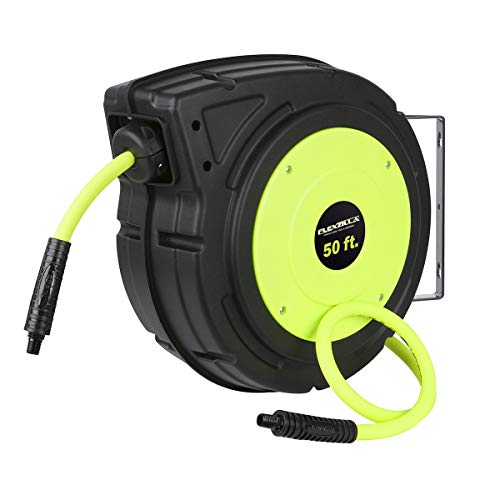
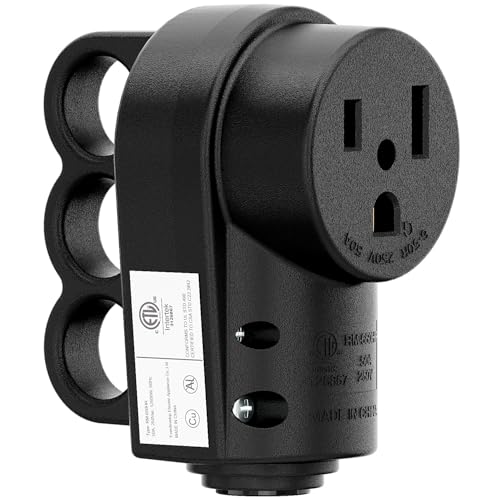
Prices change often; the button shows today's price on Amazon.
One printable page: measure the bay, count the circuits, list the machines, check the floor. Plus a few short emails, then a couple a month at most.
Unsubscribe anytime. You can also just read the checklist on this site.The Campbell Hausfeld in this comparison is a 230V unit per its title. Large two-stage compressors need 240V because a motor that size would pull more current than a 120V circuit allows. Check any other 60-gallon model's listing for voltage and amps, and have a licensed electrician confirm the circuit.
For nailers, tire inflation, blow-off and short bursts, yes. For a sander or a spray gun that runs continuously, the pump cannot keep up, whatever the tank size. Compare the tool's CFM at 90 PSI with the compressor's delivered CFM, both on their listings.
No. A bigger tank stores more air so the pump runs less often. Delivered CFM from the pump decides whether a tool runs continuously. A big tank on a small pump helps with bursts and does nothing for a sander.
Our planning load for a 60-gallon unit is 28 A, the NEC Table 430.248 value for 5 HP at 230V. At 125 percent that is 35 A, so a 40 A breaker and 8 AWG copper. The nameplate decides the final figure, and a licensed electrician confirms it.
Away from the car, with air around it and a path for the drain. The 20-gallon unit can sit on a cart; the 60-gallon unit stays put. Both fit a 12 x 22 ft bay with a car in our layout engine, and neither fits a 12 x 20 ft bay with one.
This page is researched guidance, not professional electrical, engineering or safety advice. Circuits, loads and clearances depend on your house, your service and your town: have a licensed electrician confirm any wiring, and check local code and each manufacturer's manual before you act.