
Calculator
Voltage Drop and Extension Cord Calculator for a Garage Shop
A 15 A table saw on a 50 ft, 14 gauge extension cord loses about 4.7 V on 120V, 3.9 percent, which is more than the 3 percent planning limit and starves the motor. Moving to 12 gauge cuts it to 2.5 percent; 10 gauge to 1.6 percent. Voltage drop equals 2 x 12.9 x amps x one-way feet divided by the wire circular mils.
Voltage drop and cordsUpdates as you type
3.9 percent drop, too much
- Volts lost
- 4.7 V of 120 V
- Voltage at the tool
- 115.3 V
- Smallest gauge under 3 percent
- 12 AWG
- Ampacity check for 14 AWG
- Within the 15 A rating
Formula: drop = 2 x 12.9 x amps x one-way feet / circular mils (NEC Chapter 9 Table 8 values). The 3 percent figure is the NEC 210.19 informational note for a branch circuit. A motor on a long, thin cord runs hot and wears out; shorten the cord before you thicken the plan.
Heavy cords and reels
Matched to this result.


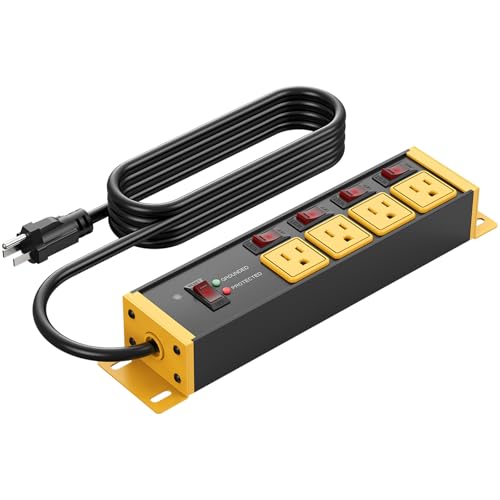
Prices change often; the button shows today's price on Amazon.
Both ways to buy: Amazon and direct from Grizzly
Each card shows an Amazon pick and a Grizzly Industrial pick for the same job, with one line on when to choose which.
Hybrid table saw for a 120V garage

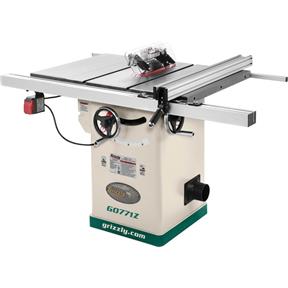
Both are 10 in saws in the 1-3/4 to 2 HP class. Pick Amazon for the SawStop contractor saw; pick Grizzly for an enclosed cabinet hybrid you can order direct and wire for 120V or 240V.
Cyclone dust collector for a one-man shop

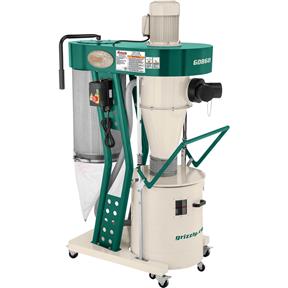
The Grizzly G0860 is a two-stage cyclone on 120V with a 1 micron canister; the Amazon pick is a bag-style 1 HP machine. The cyclone costs more and keeps the filter clean far longer.
Prices change often and Grizzly runs sales, so the buttons show current prices.
Why a long cord hurts a motor
Wire has resistance. The longer and thinner the cord, the more voltage disappears before the motor gets it. A motor that sees low voltage draws more current to make the same power, runs hotter and wears out faster. Planning guidance keeps the drop under 3 percent, which is 3.6 V on a 120V circuit. The formula is drop = 2 x 12.9 x amps x one-way feet / circular mils, where 12.9 is the resistivity of copper in ohm-circular-mils per foot.
Cord gauge in practice
| Gauge | Ampacity | 15 A, 50 ft drop at 120V |
|---|---|---|
| 16 AWG | 13 A | over 6 percent, over its rating |
| 14 AWG | 15 A | 3.9 percent |
| 12 AWG | 20 A | 2.5 percent |
| 10 AWG | 30 A | 1.6 percent |
For a table saw or a planer that is the difference between a cord that merely works and a cord that is right.
Get the garage shop planning checklist
One printable page: measure the bay, count the circuits, list the machines, check the floor. Plus a few short emails, then a couple a month at most.
Unsubscribe anytime. You can also just read the checklist on this site.More garage shop calculators
- Layout and what fits
- Space left with a car
- Workshop amps and subpanel
- 240V circuit sizing
- 240V outlet install cost
- Compressor CFM
- Dust collector and duct size
- Garage heater BTU
- Mini-split BTU
- Shop lighting
- Air filtration ACH
- Workbench height and depth
- Workbench size for a garage
- Mobile base sizing
- Shop budget planner
Frequently asked questions
What gauge extension cord for a table saw?
A 15 A saw on 50 ft of 12 AWG cord loses about 2.5 percent at 120V, within the 3 percent planning limit. 14 AWG loses about 3.9 percent, and 16 AWG is under-rated for the current. For anything over 50 ft use 10 AWG or add an outlet.
Does 240V reduce voltage drop?
The drop in volts is the same for the same current, but 240V loads draw half the current for the same power, and the percentage is measured against 240V. A 240V motor on the same cord has about a quarter of the percentage drop.
Is 3 percent a code limit?
No. It is an informational note in NEC 210.19(A), a recommendation for branch circuits, and a good planning limit for motors.
This page is researched guidance, not professional electrical, engineering or safety advice. Circuits, loads and clearances depend on your house, your service and your town: have a licensed electrician confirm any wiring, and check local code and each manufacturer's manual before you act.
