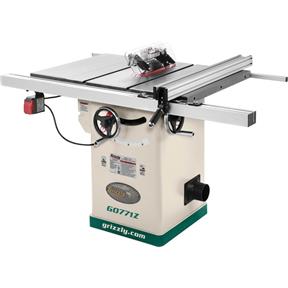
Cabinet saw, 240V
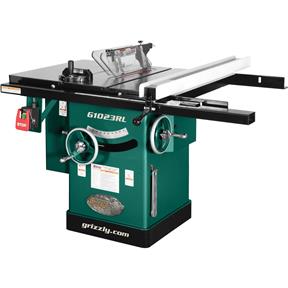
3 HP, 240V at 14 A on the listing. 32 in right rip, 3 in depth at 90 degrees, 40 x 27 in table at 34 in height, 508 lb shipping weight.
Comparison
For most garages the Grizzly G0771Z hybrid (2 HP, prewired 120V at 15 A, 64 x 40.5 in, 324 lb shipping) is the saw to buy: it runs on a 20 A circuit most garages can be given and fits beside a parked sedan in a 20 x 20 ft bay. The G1023RL cabinet saw (3 HP, 240V at 14 A, 66 x 47 in, 508 lb shipping, 32 in right rip) is the better saw and the harder garage guest: it needs a 240V circuit and a two-car bay.
3 HP, 240V at 14 A on the listing. 32 in right rip, 3 in depth at 90 degrees, 40 x 27 in table at 34 in height, 508 lb shipping weight.
2 HP prewired for 120V at 15 A (7.5 A at 240V). T-shaped fence, 30 in right rip, 40-1/2 x 27 in table at 35-3/8 in, 324 lb shipping weight.
| Cabinet saw, 240V | Hybrid saw, 120V | |
|---|---|---|
| Motor | 3 HP | 2 HP |
| Voltage and amps (listing) | 240V, 14 A | 120V at 15 A, or 240V at 7.5 A |
| Right rip capacity | 32 in | 30 in |
| Depth of cut at 90 degrees | 3 in | See the listing |
| Table | 40 x 27 in, 34 in high | 40-1/2 x 27 in, 35-3/8 in high |
| Overall size (listing) | 66 x 47 x 39.75 in | 64 x 40.5 x 36 in |
| Base footprint | 20-1/2 in square | 19-1/2 x 21 in |
| Shipping weight | 508 lb | 324 lb |
| Circuit at 125 percent of listing amps | 17.5 A: a 20 A, 240V breaker, 12 AWG | 18.8 A at 120V: a 20 A breaker, 12 AWG |
| Fits one-car 12 x 22 ft with a sedan? | No, not even with the clearance halo removed | Only stored against a wall, with the clearance halo removed |
| Fits two-car 20 x 20 ft with a sedan? | Yes | Yes |
| Budget tier | Price at grizzly.com | Price at grizzly.com |
This is the question that separates a garage saw from a shop saw. Our layout engine places each saw alone in each of our six standard bays, first with the bay empty, then with a sedan parked 12 in from the door and the usual walk-around clearance, and then with the clearance halo removed to see whether the saw can be stored.
| Bay | G1023RL cabinet | G0771Z hybrid |
|---|---|---|
| 12 x 20 ft one-car | Empty bay only | Empty bay only |
| 12 x 22 ft one-car | Empty bay only | Stored against a wall with a car, no working clearance |
| 20 x 20 ft two-car | Fits with a car | Fits with a car |
| 22 x 22 ft two-car | Fits with a car | Fits with a car |
| 24 x 24 ft two-car | Fits with a car | Fits with a car |
| 32 x 24 ft three-car | Fits with a car | Fits with a car |
The two saws only differ in one bay, the 12 x 22 ft one-car garage, and the difference is the footprint: 66 x 47 in against 64 x 40.5 in. Seven inches of depth is the margin between a saw that parks against the wall and one that does not. Both fit sheets show all six bays: the G1023RL sheet and the G0771Z sheet.
In a one-car garage the honest answer is that neither saw lives happily beside a car. The jobsite saw against hybrid comparison is the better read for that bay, because a folding saw is the only kind that disappears.
The two saws are not close on electrics, and that is the real cost difference between them. All figures here come from the grizzly.com listings and the NEC tables we cite; none are from our own measurements, and a licensed electrician should confirm every circuit.
The G0771Z is listed at 15 A at 120V. Take 125 percent for a continuous-duty motor load: 18.8 A, which points to a 20 A breaker and 12 AWG copper (the 60 C column of NEC Table 310.16 gives 12 AWG as 20 A). That circuit should serve the saw alone. A saw on a shared circuit with a dust collector trips on startup, since both motors have high starting current.
The G1023RL is listed at 14 A at 240V. 125 percent is 17.5 A, which also points to a 20 A, 240V breaker and 12 AWG. The wire size is the same as the hybrid's. What is different is that the circuit needs a double-pole breaker, a four-wire or three-wire cable depending on what the saw needs (read the listing for a neutral), and the correct receptacle or a direct connection. NEC Table 430.248 gives 17 A for a 3 HP single-phase motor at 230V, which is 21.3 A at 125 percent. The listing and the table disagree by a few amps, so the electrician decides the final breaker size from the nameplate. Run the numbers in the 240V circuit calculator and read the 3 HP motor sheet.
If you do not have a panel with two free slots and spare capacity, the hybrid is the cheaper path by the cost of a subpanel. The 240V outlet install cost calculator prices the run from your panel.
The footprint is not the real size of a table saw. The real size is the lane that stock travels through. For an 8 ft board, the rule in our layout engine is the machine depth plus 1.5 times the stock length, about 14 to 16 ft for a table saw. That lane runs infeed to outfeed, and it has to be clear of the car, the workbench and the door apron.
That has a practical consequence. In a 20 ft deep bay, a saw turned lengthwise along the long wall has room; the same saw crossways in the middle of the bay does not. In a 12 ft wide one-car garage you cannot rip 8 ft boards across the width at all, so the lane has to run along the 20 or 22 ft length, which is also where the car is. Rolling the saw out into the driveway for ripping long stock is how many one-car woodworkers solve it, and it is easier at 324 lb than at 508 lb.
Ask yourself how you actually cut. If you break down 4 x 8 sheets, the lane is the problem in either saw, and a track saw is usually a better answer in a small bay. If you rip boards to width and cross-cut on a miter saw, the lane is shorter and either saw works in a two-car bay.
Both saws are enclosed-cabinet designs, which is the single best feature for a garage with a car. A cabinet captures the bulk of the dust under the blade, where a 4 in port can pull it. The saws differ in how well that works in practice, and the listing is the place to read the dust port size on each one. What does not differ is the dust collector you need: a table saw asks for about 350 CFM at the hood, and a 4 in duct carries 349 CFM at 4,000 fpm.
That number matters more for the choice than horsepower does. A hybrid on a 120V circuit probably shares the garage with a 120V collector such as the Grizzly G0860, and the two cannot run on the same circuit. A 240V cabinet saw is a natural partner for the G0441. Our G0860 against G0441 comparison covers that decision, and the dust collector calculator sizes the system for your machine list.
Dust and cars do not mix well. Fine dust settles on paint and in the engine bay, and a car parked beside a running saw collects it. Run the collector, close the door between the shop and the car where you can, and add a hanging filter. See the air filtration roundup.
Shipping weight on a Grizzly listing is the crated weight, so the saw itself is lighter, but you will move the crated weight from the curb. Both saws arrive by freight, and you will want a helper, a pallet jack or an engine hoist for the cabinet saw. Plan the route from the truck to the bay before you order.
A mobile base adds its own weight and has a rated capacity. The Amazon catalog we link holds the WEN 500 lb base and the VEVOR 1500 lb base. Our sizing rule multiplies the machine weight by 1.3 to get the capacity you need. For the hybrid at 324 lb that is about 420 lb, which fits under 500 lb with little margin; for the cabinet saw at 508 lb it is about 660 lb, which needs the heavier base. Read the listing for each base's footprint against the saw's footprint, since a saw with a wide cabinet may overhang a universal base. See the mobile base roundup.
A saw on a base should roll only when it is empty and the floor is flat. Garage slabs slope toward the door for drainage, so a saw on a base will want to roll downhill. Use locking casters or a base with a lifting mechanism.
The Amazon side of this decision is a contractor saw rather than a cabinet saw. The SawStop contractor saw is the nearest Amazon alternative to either Grizzly saw, and check its listing for voltage and weight before you compare it. For a saw you can fold, the DeWalt jobsite saw sits at the other end of the scale. Prices change, so the budget tier in the table is a band, not a quote.
Grizzly sells direct, with freight and a parts line; Amazon lists items from third-party and brand sellers with the returns policy of the seller. For an object that weighs several hundred pounds, check how return freight works before you commit to either.
12 x 20 ft one-car: neither. Buy a folding jobsite saw and a track saw. 12 x 22 ft one-car: the hybrid if you can accept a saw that is stored against a wall and wheeled out to work; the cabinet saw will not fit. 20 x 20 ft two-car: the hybrid if you have only 120V, the cabinet saw if you have 240V and you cut every week. 22 x 22 ft and larger: the cabinet saw, because there is room for the lane and the weight is a one-time problem.
G0771Z for most garages; G1023RL for a two-car bay with 240V and a saw that stays put. The hybrid costs less to wire, moves on a base and gets you 30 in of right rip. The cabinet saw gives you 3 HP, 32 in and a heavier machine that does not care what you feed it, as long as you can feed it a 240V circuit and give it 66 x 47 in of floor. Whichever you pick, read the table saw roundup for the full range, including the jobsite tier.
Amazon pick and Grizzly pick for the same job, side by side.
The 3 HP cabinet saw needs a 240V circuit. The Amazon pick is the nearest contractor-class alternative; check its listing for voltage, since the saving is only real if it runs on a circuit you already have.
Both are 10 in saws in the 1-3/4 to 2 HP class. Pick Amazon for the SawStop contractor saw; pick Grizzly for an enclosed cabinet hybrid you can order direct and wire for 120V or 240V.
Prices change often and Grizzly runs sales, so the buttons show current prices.




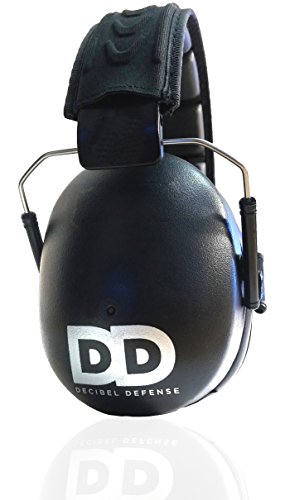
Prices change often; the button shows today's price on Amazon.
One printable page: measure the bay, count the circuits, list the machines, check the floor. Plus a few short emails, then a couple a month at most.
Unsubscribe anytime. You can also just read the checklist on this site.The listing gives the G1023RL as a 3 HP, 240V machine at 14 A. It is not a 120V saw. If you only have 120V in the garage, the G0771Z is the Grizzly saw in this pair that is prewired for it. A licensed electrician should confirm any circuit.
A hybrid has an enclosed cabinet and a cast-iron top like a cabinet saw but a smaller motor, here 2 HP against 3 HP, and a lighter build, 324 lb against 508 lb on the listings. For most garage work that is plenty. The cabinet saw wins on depth of cut and sustained thick-stock ripping.
Not working. Our layout engine stores the hybrid against a wall in a 12 x 22 ft bay with the clearance halo removed, and the cabinet saw does not fit a one-car bay with a car at all. A folding jobsite saw is the usual answer.
On its 15 A listing at 120V, 125 percent is 18.8 A, so a dedicated 20 A circuit with 12 AWG copper. At 240V it lists 7.5 A, so a 15 A, 240V circuit is the electrician's starting point. The nameplate and a licensed electrician decide.
A 24 in rip handles most casework parts and 4 x 8 sheets can be cut into 24 in wide strips. The listings give 30 in for the G0771Z and 32 in for the G1023RL. If you rip full sheets in half, you want at least 24 in, and the lane in front of the saw matters more than the extra inches.
This page is researched guidance, not professional electrical, engineering or safety advice. Circuits, loads and clearances depend on your house, your service and your town: have a licensed electrician confirm any wiring, and check local code and each manufacturer's manual before you act.