20-gallon quiet compressor
Both are oil-free, quiet-series 20-gallon compressors, so they are tolerable in an attached garage. Pick on the sale, the warranty path and the noise rating you can live with.
Best picks · three tiers
For most garages the best compressor is a 20-gallon, oil-free, quiet unit on a 120V circuit: the California Air Tools 20020 or the Grizzly T32337 PRO 20-gallon. A 6-gallon pancake such as the Metabo HPT EC914S covers nailers and tires in a one-car bay. Buy a 60-gallon 230V unit like the Campbell Hausfeld 60-gallon only if you have a 240V circuit and run air tools for hours.
| Tier | Amazon pick | Budget | Grizzly option |
|---|---|---|---|
| Beginner | Metabo HPT Portable Pancake Air Compressor | Under $250 | Amazon only |
| Intermediate | California Air Tools 20020 2.0 HP Ultra Quiet | Under $500 | Grizzly T32337 PRO 20-Gallon Oil-Free Quiet Series Air Compressor |
| Expert | Campbell Hausfeld 60-Gallon 2-Stage Air Compressor | Under $2,000 | Amazon only |
Size is two numbers: how much air the pump delivers (CFM at a pressure) and how much it can store (tank gallons). A pump that delivers enough air runs the tool continuously. A bigger tank only rides out bursts. Most garage tools fall into one of three groups, and the sizing pages on this site work each out in full.
The air compressor CFM calculator adds up the tools you pick and returns a CFM target. Compare it with the CFM figure on the listing at the pressure your tool needs, which is printed on the compressor's data plate. If a listing does not state the figure, we say so rather than guess.
This page was researched from manufacturer listings, published specifications and owner reviews, not a bench test. Where a number is not stated in our sources, check the listing before you buy.

Under $250
Who it is for: A one-car garage owner who inflates tires, runs a brad nailer and blows dust off a bench, and who wants to hang the compressor on a shelf when it is not in use.
The Metabo HPT EC914S is a 6-gallon, 200 PSI pancake and the Craftsman 6-gallon is a 150 PSI oil-free pancake. Both live on a shelf or the floor under a bench and need only a 120V outlet. Pair one with the Goodyear 50 ft 3/8 in hybrid hose, which is listed at 300 PSI and kink free, and the VEVOR 71-piece air tool kit if you want a starter set. A pancake is a good first compressor because it is cheap and moves in one hand. It is also loud and cycles often, so treat it as a tool for short jobs.
Skip it if: You plan to sand, paint or run a die grinder for more than a few minutes. A small tank empties quickly, and a pancake runs nonstop to catch up.
Check price on Amazon
Under $500
Who it is for: A one- or two-car garage owner who runs a nailer, an impact wrench and an inflator and wants one machine on a household circuit.
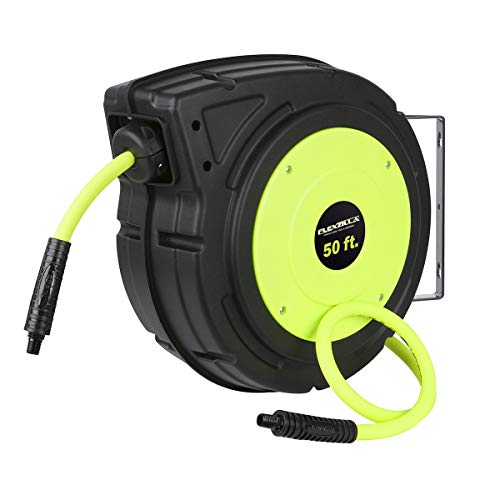
The California Air Tools 20020 is a 2 HP, oil-free, ultra quiet 20-gallon compressor, and the Klutch 20-gallon, 2 HP, 120V is the lower-cost alternative on the same circuit. The Grizzly T32337 is a PRO 20-gallon oil-free quiet series unit. A 20-gallon tank holds enough air to ride out the gaps between cuts when you are trimming a door, and a quiet motor keeps a neighbor from calling about it. Put it on a small cart, run it from the wall, and add a Flexzilla hose reel to keep the hose off the floor where the car rolls.
Skip it if: Your main tool is a die grinder, a paint gun or a sandblaster. Those are continuous air tools and want a bigger pump and tank.
See on Amazon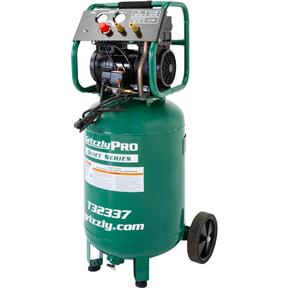
Direct from Grizzly: Grizzly T32337 PRO 20-Gallon Oil-Free Quiet Series Air Compressor. The T32337 is a quiet-series 20-gallon unit sold direct, handy if you are buying a Grizzly machine on the same order and want one freight run.
Buy direct at Grizzly
Under $2,000
Who it is for: A two- or three-car garage owner with a 240V circuit who runs air wrenches, a sander or a spray gun for long stretches.
The Campbell Hausfeld 60-gallon 2-stage is a 175 PSI, 230V unit, and the DeWalt 60-gallon vertical is the other stationary pick in our catalog. A 60-gallon vertical tank uses floor in the corner rather than in the middle, and a two-stage pump is meant for continuous duty. This is a permanent install: a dedicated 230V circuit, an air line on the wall, a drain valve at the bottom and a place where you can hear yourself think.
Skip it if: You have only a 120V circuit or a 12 x 20 ft bay. A stationary compressor is the largest single item you can put in a one-car garage by floor and noise.
Check price on AmazonA one-car garage is about 12 x 20 or 12 x 22 ft. With a sedan parked 12 in from the door, you keep roughly 3 ft behind the front bumper in a 12 x 20 and about 5 ft in a 12 x 22. A pancake compressor is small enough to put under a bench. A 20-gallon unit wants a corner, a cart or a spot beside the workbench. A 60-gallon vertical wants a permanent corner of its own.
Think about three things before you drop a compressor in the bay.
The 20-gallon compressor fit sheet and the 60-gallon fit sheet run the footprints through all six garage sizes.
This is where compressor shopping gets real. A 2 HP motor on 120V pulls a heavy load, and a 15 A garage circuit that also feeds the lights and an outlet near the freezer can trip when the compressor starts. A 20 A dedicated circuit is the safe assumption for a 2 HP 120V unit. The listing gives the amps; read it.
A 60-gallon two-stage unit like the Campbell Hausfeld is a 230V machine. For 230V loads the NEC full-load current tables (Table 430.248 for single-phase motors) give about 12 A for a 2 HP motor and 17 A for 3 HP at 230V, and the breaker is sized from 125 percent of that, with wire from Table 310.16 at the 60 C column for typical NM cable. These are the same figures the 240V circuit calculator uses. For a 5 HP motor the table gives 28 A. Because compressors start under load, ask your electrician about the right breaker type and wire, and have a licensed electrician confirm the circuit and the receptacle.
If the choice is between a 120V 2 HP unit and a 230V one, the 230V compressor draws half the current and is kinder to a long run. The general guide 240V in a garage explained walks through what it takes to get that circuit into the bay, and the auto workshop amps page shows how the compressor stacks with the rest of an auto shop's load.
Oil-free pumps need no oil changes and tolerate being tipped, which suits a unit you move on a cart. They are generally louder and shorter lived than oil-lubricated pumps of the same size. The pancake units and the 20-gallon units in this roundup are oil-free. Oil-lubricated two-stage pumps run cooler and quieter at the same output and are the norm for 60-gallon stationary units; check the listing for the pump type and the oil specification.
For a garage, the practical test is whether you will do the maintenance. An oil-free compressor asks for a regular tank drain and little else. An oil-lubricated one asks for a dipstick check, an oil change and a place to keep the oil. Pick the one you will actually care for.
The same logic applies to the filter and regulator on the line. Water in an air line ruins a paint job and rusts tools, so a water separator near the point of use pays for itself. And a coiled or retractable hose near the compressor is more convenient than a hose across the garage floor; the Flexzilla retractable reel holds a 50 ft, 3/8 in hose and mounts to the wall or ceiling.
The hose matters more than most people think. A thin, stiff, kinked hose chokes a tool that the compressor can run fine. A 3/8 in hose is the standard for impact wrenches and sanders, and a longer hose loses pressure along its length, so run the shortest hose that reaches. The Goodyear 50 ft hybrid hose is listed at 300 PSI and described as kink free, which is the property you want when you drag it around a car.
For a starter set, the VEVOR 71-piece kit comes with a 1/2 in air impact wrench and a set of accessories according to its title. If you already own cordless tools, an air wrench is not essential; the DeWalt 20V MAX impact wrench does many of the same jobs without a hose, and keeps the compressor free for tires, blow-off and paint.
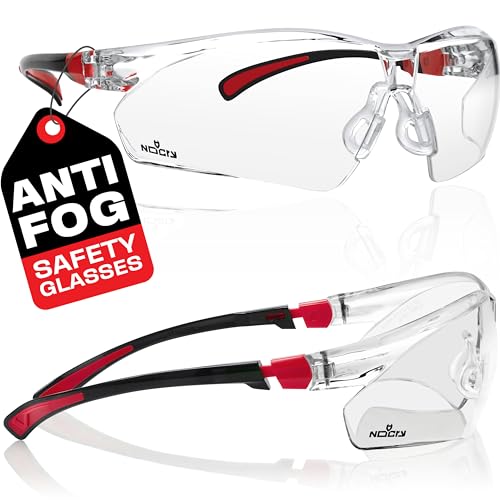
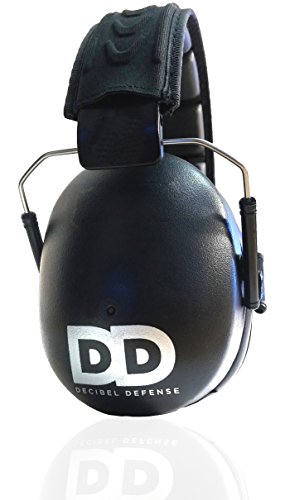
Bring a pair of safety glasses and ear muffs for any air job. A compressor tank is a pressure vessel, so read the manual, set the regulator to the tool rating and never exceed the tank rating. The garage workshop guide covers the rest of the safety basics.
Pick the spot by the door, not the middle. Compressors work best on the wall nearest the work, so the hose stays short. In a one-car garage the front wall behind the bumper is usually the only free space, and a pancake compressor can hang on a shelf there. In a two-car garage (20 x 20 to 24 x 24 ft), a 20-gallon unit fits beside the workbench and a 60-gallon vertical fits in a corner with 24 in of clearance in front for the drain and the controls.
Plan the hose. A reel near the compressor and a hose that reaches the whole bay without crossing the car lane keeps a tripping hazard out of the garage. Plan the outlet too: a 120V unit on a dedicated 20 A circuit wants a receptacle within reach of the cord, since a long extension cord starves the motor. The voltage drop calculator shows how much a cord run costs.
If you only have a one-car bay, use the garage shop layout calculator to see whether the compressor and your other machines fit with a car in the bay. Tire work, blow-off and light nailing are the usual reasons to own a compressor at all, and the pancake or the 20-gallon is the right answer for them.
One card per machine class, with the Amazon pick and the Grizzly pick side by side.
Both are oil-free, quiet-series 20-gallon compressors, so they are tolerable in an attached garage. Pick on the sale, the warranty path and the noise rating you can live with.
Prices change often and Grizzly runs sales, so the buttons show current prices.



Prices change often; the button shows today's price on Amazon.
These picks plus the rest of a complete build at three budgets, as one list. A few short emails follow, then a couple a month at most.
Unsubscribe anytime. You can also just read the checklist on this site.For tires, a nailer and blow-off, a 6-gallon pancake is enough. For an impact wrench and occasional air tools, a 20-gallon oil-free unit on 120V is the best fit. Sanders, grinders and paint guns want a 60-gallon two-stage unit.
For most home garages, yes. A 20-gallon, 2 HP oil-free unit runs nailers, inflators and short impact wrench jobs. It is not the right choice for continuous tools such as sanders or spray guns.
A pancake compressor often can. A 2 HP, 20-gallon unit pulls more, and many owners give it a dedicated 20 A circuit. Read the listed amps, and have a licensed electrician confirm the circuit.
Only if you run continuous air tools or buy a 60-gallon two-stage unit such as the Campbell Hausfeld, which is a 230V machine. It needs a dedicated circuit sized from NEC Table 430.248 and 310.16.
For most garage use, yes. They need little maintenance and tolerate being moved, but they are louder than oil-lubricated units. Quiet-series models narrow the gap, so compare the decibel figures on the listings.
Amazon carries the pancake, the 20-gallon and the 60-gallon units listed here. Grizzly sells a PRO 20-gallon quiet-series unit direct. Compare the pump type, tank size and warranty on both before you choose.
This page is researched guidance, not professional electrical, engineering or safety advice. Circuits, loads and clearances depend on your house, your service and your town: have a licensed electrician confirm any wiring, and check local code and each manufacturer's manual before you act.
