
Calculator
Dust Collector CFM and Duct Size Calculator for a Small Shop
A table saw and a bandsaw each ask for about 350 CFM, so one open gate needs a collector rated for 440 CFM or more once you allow 25 percent for leakage and a loading filter. Duct diameter follows airflow: 350 CFM at 4000 fpm is a 4 in duct, 800 CFM is 6 in. Run one gate at a time in a small shop and a 1-1/2 HP, 868 CFM cyclone clears nearly everything except a long planer run.
Dust collector and duct sizeUpdates as you type
Collector rated 440 CFM or more, 4 in main duct
- Largest machine
- Table saw, 350 CFM
- Open at once
- 350 CFM
- Collector rating to shop for
- 440 CFM (open airflow plus 25 percent)
- Branch duct
- 4 in (4.0 in calculated at 4000 fpm)
- Main duct
- 4 in
- Grizzly collectors that clear it
- Grizzly G0860, 1-1/2 HP, 868 CFM at 1.8 in SP; Grizzly G1028Z2, 1-1/2 HP bag type, 1300 CFM bag rating; Grizzly G0441, 3 HP 240V, 1654 CFM at 2.0 in SP
CFM per machine is a convention from tool makers and woodworking guidance: your manual wins. Collectors are rated at free airflow, and CFM falls fast with duct length, elbows and flex hose, so treat the rating as a ceiling. The Grizzly figures are copied from grizzly.com listings (the G1028Z2 figure is a bag rating).
Collectors, separators and ducting
Matched to this result.


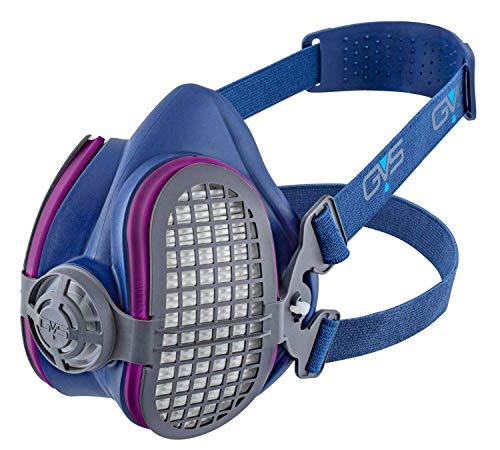
Prices change often; the button shows today's price on Amazon.
Both ways to buy: Amazon and direct from Grizzly
Each card shows an Amazon pick and a Grizzly Industrial pick for the same job, with one line on when to choose which.
Cyclone dust collector for a one-man shop
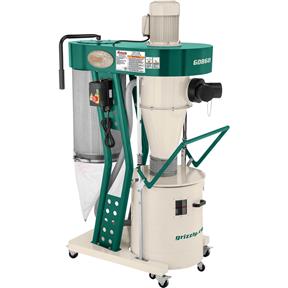
The Grizzly G0860 is a two-stage cyclone on 120V with a 1 micron canister; the Amazon pick is a bag-style 1 HP machine. The cyclone costs more and keeps the filter clean far longer.
Portable dust collector
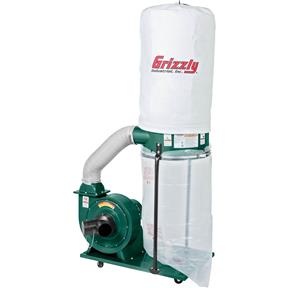
Both are bag-style portables on casters. The Grizzly unit is a 1-1/2 HP machine with a 1300 CFM bag rating; the Amazon unit is a 1 HP class machine at a lower entry cost.
3 HP cyclone collector (240V)
AmazonNo comparable Amazon item in our catalog
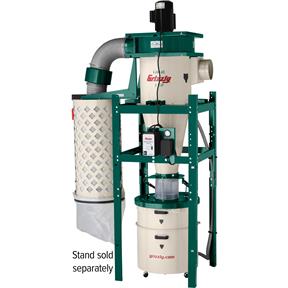
Nothing on Amazon in our catalog matches a 3 HP, 1654 CFM cyclone, so this one is Grizzly-direct only. It needs a 240V circuit and about 400 lb of freight.
Prices change often and Grizzly runs sales, so the buttons show current prices.
Duct diameter from airflow
Duct size comes from physics, not preference: CFM = velocity x cross-sectional area. At 4,000 feet per minute, a common design velocity that keeps chips moving, a 4 in duct carries 349 CFM, a 5 in duct 545, a 6 in duct 785, a 7 in duct 1,069 and an 8 in duct 1,396. A small shop runs one gate at a time, so the collector only has to feed the biggest machine; a long main line with two gates open needs a larger main.
Bag, canister or cyclone
Bag collectors are the cheapest and clog fastest. A canister filter has far more surface area and holds its airflow longer. A two-stage cyclone like the Grizzly G0860 drops most chips into a drum before the filter sees them, which is why its airflow stays up. Whatever you choose, the listed CFM is a free-air figure: ducting, elbows and flex hose take most of it, so the collector's static pressure rating matters as much as its CFM.
Get the garage shop planning checklist
One printable page: measure the bay, count the circuits, list the machines, check the floor. Plus a few short emails, then a couple a month at most.
Unsubscribe anytime. You can also just read the checklist on this site.More garage shop calculators
- Layout and what fits
- Space left with a car
- Workshop amps and subpanel
- 240V circuit sizing
- 240V outlet install cost
- Voltage drop and cords
- Compressor CFM
- Garage heater BTU
- Mini-split BTU
- Shop lighting
- Air filtration ACH
- Workbench height and depth
- Workbench size for a garage
- Mobile base sizing
- Shop budget planner
Frequently asked questions
How many CFM does a table saw need?
About 350 CFM at the hood for a typical cabinet or hybrid saw, picked up through a 4 in port on the cabinet and often a blade guard pickup as well. Check your saw's manual: it overrides the convention.
What size duct for a 1.5 HP dust collector?
The collector's intake is typically 6 in (the Grizzly G0860 lists a 6 in intake), reduced to 4 in at each machine. Keep the main run short and straight, since every elbow costs airflow.
Is a shop vacuum enough for dust collection?
For a single benchtop tool, yes, especially with a cyclone separator. For a table saw, jointer or planer the airflow is too low to carry chips, and a dust collector is the right tool.
This page is researched guidance, not professional electrical, engineering or safety advice. Circuits, loads and clearances depend on your house, your service and your town: have a licensed electrician confirm any wiring, and check local code and each manufacturer's manual before you act.
