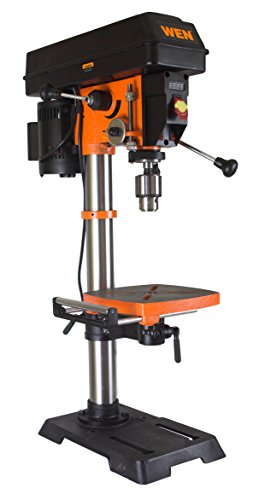
Benchtop, 15 in
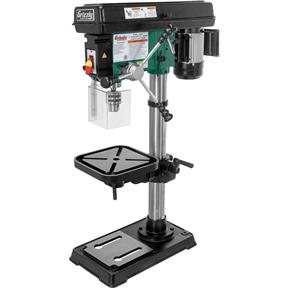
15-1/4 in swing, 12 speeds, 10-9/16 in square table, LED and laser guide, 120V at 5.3 A, footprint 19-1/2 x 12 in, 42 in tall, 127 lb shipping.
Comparison
In a garage that parks a car, the Grizzly T34608 benchtop drill press (15-1/4 in swing, 12 speeds, 120V at 5.3 A, 19-1/2 x 12 in footprint, 127 lb shipping) fits beside a sedan in every bay, even the 12 x 20 ft one-car garage. The Klutch 13 in floor drill press (3/4 HP, 120V, 16 speed) gives you the tall stock and the bench space back, at the cost of a floor spot that a car then cannot have.
15-1/4 in swing, 12 speeds, 10-9/16 in square table, LED and laser guide, 120V at 5.3 A, footprint 19-1/2 x 12 in, 42 in tall, 127 lb shipping.
Klutch 13 in floor drill press, 3/4 HP, 120V, 16-speed, per the title. Stands on the floor, so the bench stays free; check the listing for height, footprint and weight.
| Benchtop, 15 in | Floor, 13 in | |
|---|---|---|
| Type | Benchtop: needs a bench or a stand | Floor standing |
| Size class | 15-1/4 in swing (listing) | 13 in (title) |
| Motor | 120V at 5.3 A (listing) | 3/4 HP, 120V (title) |
| Speeds | 12 | 16 (title) |
| Table | 10-9/16 in square | See the listing |
| Footprint and height | 19-1/2 x 12 in, 42 in tall | See the listing |
| Weight | 127 lb shipping | See the listing |
| Takes bench space? | Yes: a 19-1/2 x 12 in patch | No |
| Takes floor space? | No, if it sits on a bench | Yes, all the time |
| Fits 12 x 20 ft with a car? | Yes | Check: a floor press is a floor item, and our engine has a footprint only for the benchtop class |
| Budget tier | Price at grizzly.com | Under $500 |
It comes down to which scarce thing you have less of: bench or floor. In a one-car garage with a car in it, floor is scarcer. The car, the walk-around, the apron at the door and the stock lane for long boards take most of the floor, and a floor press adds a permanent obstacle. In a two-car garage with a dedicated shop zone, floor is plentiful and bench space is the constraint. The benchtop press gives up bench; the floor press gives up floor.
That sounds like a wash, and it is not, because a bench is a flexible surface and a floor press is a fixed object. A benchtop press can be taken off the bench and stored. A floor press stands in the way until you roll it, and most do not roll. The same logic is why the layout engine treats the T34608 as a bench item and does not give a floor press the same treatment.
Our layout engine's results for the T34608, placed alone in each bay, are in the T34608 fit sheet: it fits with a car in all six bays.
The T34608 lists a 15-1/4 in swing, which means it can drill to the center of a 15-1/4 in wide piece, and a table of 10-9/16 in square, 12 speeds, and an LED and a laser guide. Swing is the reach from the column to the chuck; a wider swing handles wider panels. The Klutch title gives 13 in, 3/4 HP, 120V and 16 speeds. We have no quill travel, column height or chuck capacity for either in our briefs, so read the listings for those figures. They matter more than the swing for many jobs.
Speed range matters for metal. Drilling steel wants slower speeds than drilling wood, and larger bits want slower speeds than smaller ones. The more steps a press has, the easier it is to match the speed to the bit and the material. A press with variable speed, such as the 6.2-amp WEN models in our catalog (WEN 10 in and WEN 12 in), adds a dial, and the listings give the range. Whatever press you choose, clamp the work: the PONY 4 in drill press vise keeps a part from spinning into your hand.
Tall work is the case for the floor press. A drill press for table legs, posts or a fence section needs a column and a table that drop low enough to clear them. The floor press does that by lowering the table on the column. A benchtop press can do it by sitting on the floor or on a low stand, but it gives up the bench height the press was built for.
The benchtop press has a footprint the engine knows: 19-1/2 x 12 in on the T34608 listing, 42 in tall. The engine places it as a 19-1/2 x 12 in item and finds room for it beside a parked sedan in all six of our bays, including the 12 x 20 ft garage. The bench to carry it has to fit, which is a separate question: our 4 ft bench allowance (48 x 24 in) fits an empty 12 x 20 ft bay and a 12 x 22 ft bay with a car; see the fixed against mobile workbench page.
A floor press has a footprint of its own on the slab and a halo around it. We have no floor drill press in the engine and no footprint figure from the Klutch listing in our briefs, so we cannot say for certain whether one fits next to a sedan in a 12 x 20 ft garage. The planning rule is simple: find the footprint on the listing, add a 30 in operator zone in front and sketch it on your own plan next to the car; the garage shop layout calculator shows how the standard machines sit.
Floor presses are tall. The ceiling height in a garage is usually fine, but a garage door track or an opener rail can hang lower than you expect. Stand the press where the head clears them.
Both presses run on 120V. The T34608 lists 5.3 A, which at 125 percent is 6.6 A and well inside a 15 A circuit. The Klutch is a 3/4 HP, 120V motor per the title; the nameplate on the listing gives the amps. A drill press is a light load compared with a saw or a dust collector, and it can share a circuit with lights and a charger, but not with a compressor. A licensed electrician should confirm any new circuit; the workshop amps calculator adds up the load.
Noise is not an issue with either, apart from the drill bit itself. Dust is: wood drilling makes chips and fine dust, and metal drilling makes sharp swarf that goes into the car's paint and onto the floor. A shop vac and a brush are the right tools. Wear safety glasses, such as the NoCry clear glasses, and tie back loose clothing and hair, since a drill press catches both.
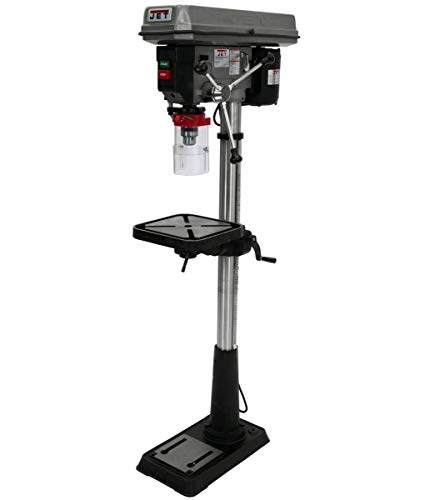
The Amazon benchtop pair is cheaper than the Grizzly benchtop. The WEN 12 in is a 6.2-amp variable speed press per its title, and it is the comparison point for the T34608 in our Grizzly pairing. Above that, the JET 15 in floor press (3/4 HP, 115/230V, 16 speed) is the step up from the Klutch, and it is the only floor press in our catalog that lists 230V as well. See the machine shop roundup for the drill press in its natural company of a lathe and a mill.
Benchtop for any garage that parks a car; floor for a two-car shop with floor to spare or tall work to drill. The T34608 is the one that fits every bay we model, and it takes its footprint from a bench you already own. The Klutch floor press frees the bench and handles taller stock, and it needs a spot on the slab that a car then cannot use. When in doubt, buy the benchtop and put it on a mobile bench or a stand you can roll.
Amazon pick and Grizzly pick for the same job, side by side.
Both are benchtop drill presses on a 120V cord. The Grizzly lists a 15 in swing with an LED light and laser guide; the Amazon pick is a 12 in size at a lower entry cost.
Prices change often and Grizzly runs sales, so the buttons show current prices.
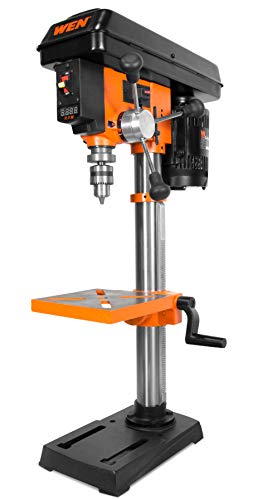



Prices change often; the button shows today's price on Amazon.
One printable page: measure the bay, count the circuits, list the machines, check the floor. Plus a few short emails, then a couple a month at most.
Unsubscribe anytime. You can also just read the checklist on this site.Swing is twice the distance from the column to the center of the chuck. A 15-1/4 in swing, as on the T34608, drills to the center of a piece about 7-5/8 in from an edge on a wide panel. A bigger swing handles wider stock.
It can sit on a stand or a low platform, but it is built for bench height. If you plan to drill tall work, check the maximum distance from chuck to table on the listing, or buy a floor press.
In our layout engine, yes: it fits beside a parked sedan in every bay, including a 12 x 20 ft garage. The footprint on the listing is 19-1/2 x 12 in and 42 in tall, and it assumes a bench to put it on.
Both presses here run on 120V. The T34608 lists 5.3 A, well within a 15 A circuit, and the Klutch nameplate on the listing gives its amps. Keep a compressor off the same circuit, and have a licensed electrician confirm anything new.
Yes, for metal and for any small part. A part that catches the bit spins with it. A drill press vise such as the PONY 4 in, or clamps to the table, keeps your hands clear. Always clamp.
This page is researched guidance, not professional electrical, engineering or safety advice. Circuits, loads and clearances depend on your house, your service and your town: have a licensed electrician confirm any wiring, and check local code and each manufacturer's manual before you act.