
Guides
Dust control with a car in the shop
Control dust at the source first: a collector rated for the hungriest machine (440 CFM or more for a table saw, 500 CFM with a planer), 4 in branch duct, and a hanging air filter turning over the room 6 to 10 times an hour. In a 22 x 22 ft garage that is a 436 to 726 CFM filter, two G0738 units at 409 CFM. Then cover the car, close the garage door gap, and clean with a vacuum, not a broom.
Why do garages get so dusty?
Garages get dusty for four reasons that stack. First, they are leaky: the overhead door seal, the gaps around side doors and the unconditioned attic or eave vents let outside dust, pollen and grit in all year. Second, they are hard: concrete floors shed fine powder as they wear and as traffic grinds them, and bare drywall and wood framing shed too. Third, they have a moving air problem: temperature swings, a car door opening and a heater or fan stir settled dust back into the air. Fourth, they hold activity: every tool that sheds particles puts a fine fraction into the air that stays suspended for hours.
Adding a woodshop to that makes the fine fraction the problem. Chips and shavings fall to the floor and are easy to sweep. The fine dust that comes off a sander, a table saw and a router table stays airborne, settles slowly and gets into everything, including the car's finish, air intake and cabin. The goal is not a clean room, it is capturing most of what machines make before it escapes, filtering what does, and protecting what you need to protect.
Step 1: Capture at the machine
Source capture is worth more than any amount of room filtration. A dust port connected to a collector captures chips and a large share of the fine dust where it is made. The sizing is simple. Machine CFM at the hood from common tool-maker guidance: table saw 350, bandsaw 350, jointer 350, planer 400, router table 350, miter saw 350, sander 550, drill press 200. The hungriest machine you run sets the minimum, and a 25 percent allowance for leakage and a loading filter turns 350 CFM into 440 CFM. If you run two gates at once, add them: 880 CFM. Duct at 4,000 feet per minute carries 349 CFM in 4 in duct, 545 in 5 in, 785 in 6 in and 1,069 in 7 in.
Three Grizzly collectors in our data clear that bar: the G0860 (1-1/2 HP, 120V, 868 CFM at 1.8 in static pressure, a 6 in intake, a 1 micron canister and a 20 gallon drum), the G1028Z2 (1-1/2 HP, a 1300 CFM bag rating and a 6 in inlet with two 4 in openings) and the G0441 (3 HP, 240V, 1,654 CFM at 2.0 in static pressure, 8 in inlet, rated for three machines at once). On Amazon the POWERTEC 1 HP 560 CFM portable is the entry choice. Read how to set up dust collection in a garage shop for the full duct plan, and the best dust collector roundup for the tiers.
The cheap, powerful option for one machine at a time is a cyclone separator on a shop vacuum. A Dust Deputy cyclone on a DEWALT 12 gallon or Shop-Vac 12 gallon vacuum catches most chips before they reach the filter, keeps the filter clean and gives good capture at a sander or a miter saw. A vacuum moves much less air than a collector, so it suits a small port and not a table saw's blade guard alone. See shop vac versus dust collector.
Step 2: Filter the room air
What escapes the hood is fine dust, the most harmful part. An ambient air filter pulls it out of the room. Size it by air changes per hour. The room volume is length times width times ceiling height, and the CFM is volume times air changes divided by 60. Six changes an hour is a baseline for a shop in use, ten is better for sanding days.
| Garage | Volume | CFM at 6 ACH | CFM at 10 ACH |
|---|---|---|---|
| 12 x 20 x 8 ft | 1,920 cu ft | 192 | 320 |
| 12 x 22 x 8 ft | 2,112 cu ft | 211 | 352 |
| 20 x 20 x 8 ft | 3,200 cu ft | 320 | 533 |
| 22 x 22 x 9 ft | 4,356 cu ft | 436 | 726 |
| 24 x 24 x 9 ft | 5,184 cu ft | 518 | 864 |
| 32 x 24 x 9 ft | 6,912 cu ft | 691 | 1,152 |
The Grizzly G0738 hanging filter lists 260, 362 and 409 CFM speeds, a timer of 1, 2 or 4 hours, a 5 micron outer filter and a 1 micron inner filter, an IR remote and hanging chains, at 34 lb and about 1 A. One unit on its top speed covers a one-car bay at 6 or 10 changes and a 20 x 20 ft bay at 6; two cover a 22 x 22 ft bay at 6 changes. On Amazon, the POWERTEC AF4001E and the WEN 3410 (listed at 300, 350 and 400 CFM) are the same class. The per-bay pages work the rest: 22 x 22 and 12 x 20, and the air filtration calculator takes your own numbers. Run the filter during the work and for 30 to 60 minutes after, then clean the pre-filter.
Collection, filtration and a respirator
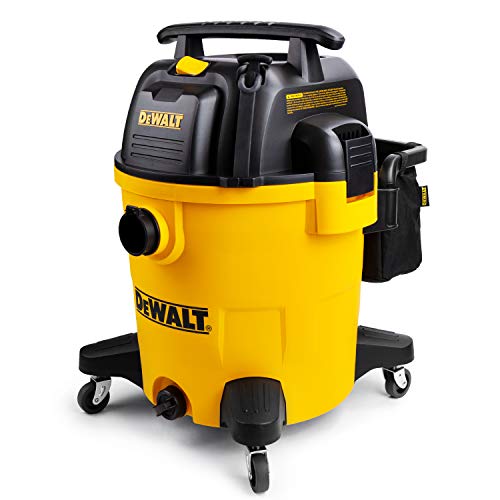

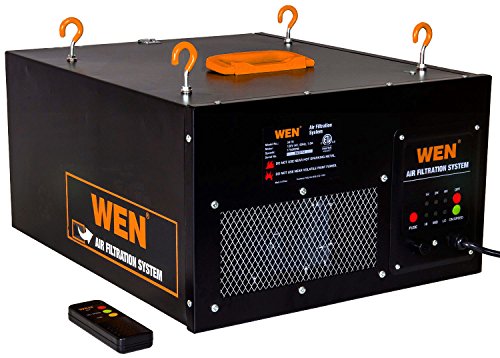
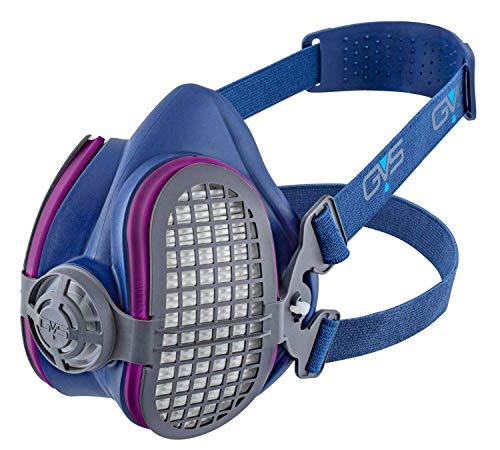
Prices change often; the button shows today's price on Amazon.
Amazon and Grizzly, side by side
Each card shows an Amazon pick and a Grizzly Industrial pick for the same job.
Cyclone dust collector for a one-man shop

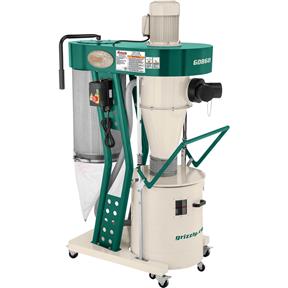
The Grizzly G0860 is a two-stage cyclone on 120V with a 1 micron canister; the Amazon pick is a bag-style 1 HP machine. The cyclone costs more and keeps the filter clean far longer.
Hanging air filter
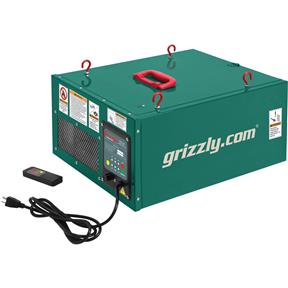
Both are 3-speed ceiling-hung filters in the 300 to 400 CFM class with remotes. The Grizzly unit is owner-rated 4.8 on grizzly.com across 301 reviews.
Prices change often and Grizzly runs sales, so the buttons show current prices.
Step 3: Protect the car
A car in a woodshop collects dust on its paint, in its door jambs and in the engine bay, and fine abrasive dust on paint is a scratch waiting for a wipe. Three layers protect it.
- Distance and direction. Park the car at the far end from the dust makers, and orient machines so their dust and exhaust go away from it. Collectors that exhaust inside the shop should have a fine filter; a collector that vents the room with unfiltered air is a dust cannon.
- A cover. A breathable, fitted car cover goes on during sanding and sawing. Do not use a plastic tarp, which traps moisture and scratches. Wipe the car with a soft cloth or a dry microfiber before you drive; do not wipe a dusty car with a dry cloth if it is gritty, blow it off with low-pressure air or rinse it.
- A curtain. A hung plastic or fabric curtain between the shop and the car side of a two-car bay blocks coarse dust and gives a clear boundary. It is a barrier for large particles, not for fine ones.
The best protection is time: a garage that holds the car overnight should be cleaned before it goes in. Run the air filter after the last cut, then vacuum surfaces, then park. If the car comes in hot, remember that a warm engine and exhaust system near a pile of fine dust and finishing rags is a fire risk. See garage shop fire safety.
The layout can do part of this for you. In a two-car bay, putting the car on one side and the machines on the other, with the collector and the filter between, is the default plan in the 22 x 22 mixed layout. In a one-car bay, the car often has to share, so the cover and the schedule matter more. See single car garage workshop ideas.
Step 4: Seal the leaks and the door
Outside dust comes in through the same gaps that let heat out. Replace a worn bottom seal on the overhead door, add a brush or rubber seal to the sides and top, and weatherstrip side doors. Seal gaps where the wall meets the slab and around pipe and wire penetrations. This helps with dust, bugs, cold air and noise at once. A bottom seal that fits tightly also keeps water and leaves from collecting dust on the floor.
Insulating the door has a side benefit: kits such as the NASA TECH reflective foam core two-car kit and the Reach Barrier single-door kit cover the panels, and a sealed door helps keep the shop air from swapping with the outside air. Reflective foam does not stop dust by itself, but a better-sealed door does. See best garage workshop heater for why sealing the door pays twice.
Ventilation is a trade-off. A shop that is sealed tight holds fine dust in the room, which the air filter must remove. A shop that is open to the outside swaps its dust for the neighborhood's. Use the filter for the first and open the door for fresh air only after the filter has run. Never exhaust a collector filtered into a heated room in winter without a fine final filter; the 1 micron canister on the G0860 is a good example of what you want.
Step 5: Clean without making it worse
Cleaning stirs dust back into the air unless you do it right. Do not sweep fine dust with a broom or blow it off with compressed air; both turn a floor problem into a lungs problem. Use a vacuum with a fine filter, ideally the cyclone-and-vacuum combination above, and vacuum high to low: top of shelves and machines, then benches, then the floor. Wipe the car side last. Do it after the filter has run so the airborne fraction has settled into the filter, not onto the clean surface.
Breathe clean air while you work. A dust mask is a minimum for casual work; a half-facepiece respirator with a P100 filter, like the GVS Elipse P100 or the 3M 6291 half facepiece kit, is better for sanding and sawing. The right filter for your hazard is on the respirator's package; wood dust, finishing sprays and metal fumes are different hazards. Keep the respirator clean and store it sealed, and replace filters per the maker's instructions. A respirator is protection for you, not for the car, so it is not a substitute for capture and filtration.
Set a schedule. Empty the collector before it is full, since an overfull drum loses suction. Clean the canister or bag filter per the manual, preferably outdoors with a respirator on. Wipe the air filter pre-filter weekly in a busy shop. Dispose of fine dust in a closed bag, and keep it away from heat and ignition sources, because fine wood dust burns and can explode in the right conditions.
What a realistic setup looks like by garage size
12 x 20 or 12 x 22 ft one-car. A cyclone on a shop vacuum at the table saw and sanders, a single hanging filter, a car cover and a rule: no sanding with the car in. The 120V G0860 is a step up for a permanent setup, but it is a big machine in a small bay; check the G0860 fit sheet.
20 x 20 or 22 x 22 ft two-car. A 120V cyclone collector with 4 in branch ducts, two hanging filters (about 436 CFM at 6 changes in a 22 x 22 ft bay), a cover for the car and a curtain. See the 22 x 22 dust collector page.
24 x 24 or 32 x 24 ft. A 3 HP, 240V collector such as the G0441 with a trunk line, 2 to 3 filters, and the car parked in the far bay. The collector needs a 240V circuit: have a licensed electrician confirm it (see 240V in a garage explained).
For an overview of the equipment tiers, read best air filtration for a garage woodshop and bag vs canister vs cyclone. And if noise is the next problem, see garage shop noise and neighbors.
Get the garage shop planning checklist
One printable page: measure the bay, count the circuits, list the machines, check the floor. Plus a few short emails, then a couple a month at most.
Unsubscribe anytime. You can also just read the checklist on this site.Frequently asked questions
How do I keep dust off my car in a garage woodshop?
Capture dust at the machines, run a hanging air filter during and after work, park the car at the far end under a breathable cover, and vacuum before you park. A hung curtain blocks coarse dust between the shop and the car side.
How big an air filter do I need for a garage woodshop?
Room volume times 6 to 10 air changes per hour, divided by 60. A 22 x 22 x 9 ft garage needs 436 CFM at 6 changes and 726 at 10; a Grizzly G0738 lists up to 409 CFM, so two units cover it.
Why does my garage get so dusty?
Leaky doors and vents let outside dust in, concrete sheds fine powder, air moves stir settled dust, and any machine or tool adds fine particles. Sealing the door and filtering the air address the first three.
Is a shop vac enough for a garage woodshop?
For a sander or a miter saw with a cyclone separator, yes. For a table saw, planer or jointer you need more airflow than a vacuum provides, so a collector sized to 350 to 400 CFM at the hood is the standard.
Is wood dust a fire hazard in a garage?
Yes. Fine wood dust is combustible, and it can explode in the right concentration. Keep it away from heaters, sparks and finishing rags, empty collectors regularly and do not store fuel next to the dust makers.
This page is researched guidance, not professional electrical, engineering or safety advice. Circuits, loads and clearances depend on your house, your service and your town: have a licensed electrician confirm any wiring, and check local code and each manufacturer's manual before you act.
