Best picks · three tiers
Best garage workshop heater
For a one- or two-car garage with a 240V circuit, the Dura Heat 240V 3750W (12,800 BTU) or the InoKraft 7500W with a 14-50 plug (about 25,600 BTU) are the best electric picks. With no 240V, the DAHTEC 1500W takes the chill off one work spot. For a big bay, a gas unit such as the Mr. Heater 50,000 BTU moves the most heat.
| Tier | Amazon pick | Budget | Grizzly option |
|---|---|---|---|
| Beginner | DAHTEC 1500W Electric Space Heater for Indoor Use | Under $100 | Amazon only |
| Intermediate | Dura Heat 240V Electric Space Heater for Garage | Under $250 | Amazon only |
| Expert | Mr. Heater 50 | Under $500 | Amazon only |
How many BTU does a garage workshop heater need?
A heater has to replace the heat the garage loses. Loss depends on the area of walls, ceiling and door, the insulation, the air leaks and the gap between the temperature you want and the temperature outside. The garage heater BTU calculator does the arithmetic for your bay, and every constant on that page is labelled CONVENTION so you can see what was assumed.
Use the sizing pages for a quick read by bay: 12 x 20 one-car, 12 x 22 one-car, 20 x 20 two-car, 22 x 22 two-car, 24 x 24 two-car and 32 x 24 three-car. A bigger bay costs more than its floor suggests, because most of the loss is through the large door and an uninsulated ceiling.
Remember the conversion: one watt of electric heat is 3.412 BTU per hour. So a 1500W plug-in heater is about 5,100 BTU, the 3750W Dura Heat lists 12,800 BTU, a 7500W heater is about 25,600 BTU, and the gas units are labelled in BTU directly at 50,000 and 80,000. This page was researched from manufacturer listings, published specifications and owner reviews; the sizing is the calculator's, not a field measurement.
Picks by budget: beginner, intermediate and expert
DAHTEC 1500W Electric Space Heater for Indoor Use

Under $100
Who it is for: A one-car garage owner with a 15 A or 20 A household circuit, who works at one bench for an hour or two and wants to stay warm in front of it.
The DAHTEC 1500W ceramic heater is a portable plug-in unit. At 3.412 BTU per watt, 1500W is about 5,100 BTU, a spot heater and not a room heater. Put it beside the bench and point it at your legs. It is the lowest cost of entry and the lowest risk, since it burns nothing. The limit is the circuit: 1500W is 12.5 A at 120V, most of a 15 A circuit, so it cannot share with a saw or a vacuum.
Skip it if: You want to heat the whole bay from the cold. A 1500W heater cannot raise a leaky 12 x 20 ft garage by itself; see the BTU math below.
Check price on AmazonDura Heat 240V Electric Space Heater for Garage

Under $250
Who it is for: A one- or two-car garage owner who has a 240V receptacle or is willing to have an electrician add one.
The Dura Heat EUH4000 lists 3750W and 12,800 BTU on 240V. The InoKraft 7500W is listed with a NEMA 14-50P plug and a ceiling mount; the Comfort Zone 7500W is listed as a hard-wired ceiling mount with a remote. At 7500W the heat output is about 25,600 BTU, and the current is about 31 A at 240V. Treat a heater as a continuous load: the NEC sizes a fixed electric heating circuit at 125 percent of the load, so a 7500W unit lands on a 40 A circuit. Confirm the numbers with a licensed electrician. A wall or ceiling mount keeps the floor clear, which is the whole point in a shared bay.
Skip it if: You have no way to add a 240V circuit. Use the 1500W heater, or look at gas.
Check price on AmazonMr. Heater 50

Under $500
Who it is for: A two- or three-car garage owner who heats a big bay for hours, welds or paints, and has a propane tank or a natural gas line.
The Mr. Heater 50,000 BTU forced-air unit and the 80,000 BTU model are listed for propane or natural gas. Fifty thousand BTU is about three times the heat of the 7500W electric heater, which is why gas wins on a large, leaky bay. It also comes with a gas line, venting and clearance rules. Read the listing for venting and clearance, have a licensed professional run the gas, and install a carbon monoxide alarm. Never run a gas heater with solvents, finishing fumes or heavy sawdust in the air.
Skip it if: You work with finishes, solvents or airborne dust, or you cannot vent the unit. Go electric.
Check price on AmazonShould the heater be electric or gas?
For a garage that also parks a car and stores gasoline, electric is the safer default. It has no flame, no exhaust and no fuel line, so it can sit near sawdust and a stray rag with fewer risks. The cost is the circuit. A 240V heater of any size needs a dedicated circuit, and the 240V circuit calculator returns the breaker and wire from NEC Table 430.248 style data. Heaters are not motors, so for a fixed heater the circuit is sized from the heater's own amps at 125 percent. Have a licensed electrician confirm.
Gas moves more heat per dollar of equipment and costs less per BTU in many areas, but it adds a flame, a flue or combustion air, and a gas line. In a woodshop gas is a poor idea whenever you are sanding or finishing, because fine dust and solvent vapor are ignition sources. In an auto or fab shop gas is a common choice, as long as the unit is hung where the manufacturer's clearances say. The comparison pages mini-split for a garage shop and the guide to using a garage as a workshop cover the third option, a heat pump, which is the quietest and often the cheapest to run.
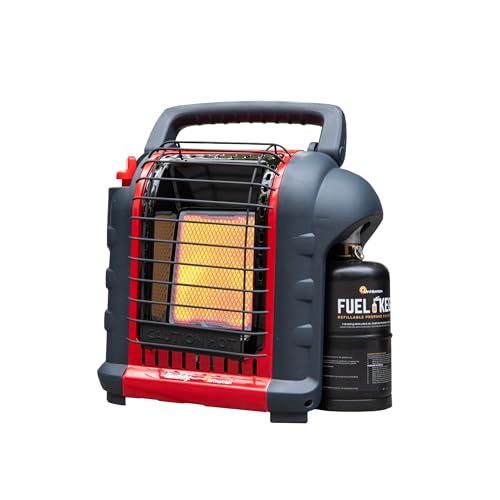
The little Mr. Heater Buddy is a portable radiant propane unit, 9,000 BTU on its listing. It is popular for a quick warm-up, and its listing states the indoor-use conditions. Read them, keep it clear of anything flammable, and treat it as a heater for a ventilated space with a CO alarm.
What circuit does an electric garage heater need?
Divide watts by volts to get amps. A 1500W heater at 120V is 12.5 A. A 3750W heater at 240V is 15.6 A. A 7500W heater at 240V is 31.25 A. Because a heater runs for hours, the NEC treats it as a continuous load, which is why the circuit is sized at 125 percent: about 19.5 A (a 20 A circuit) for the 3750W heater and about 39 A (a 40 A circuit) for the 7500W unit. Wire comes from NEC Table 310.16 at the 60 C column for NM cable: 12 AWG for 20 A and 8 AWG for 40 A. These are the figures the calculators use, and they are a starting point. Have a licensed electrician confirm the breaker, wire, receptacle and local code before any work.
The plug matters too. The InoKraft 7500W is listed with a NEMA 14-50 plug, the same receptacle used for an electric vehicle charger. A hard-wired unit like the Comfort Zone skips the plug. A plug-in unit can move if you change your mind; a hard-wired one is permanent. The 240V outlet install cost calculator estimates the job, and the Leviton 14-50 receptacle is the part for a plug-in setup. If the heater shares a panel with a welder or an EV charger, run the workshop amps calculator first.
Where do you mount the heater in a shared bay?
In a garage that parks a car, the floor is for the car and the machines, so heat from the wall or the ceiling is better. A ceiling-mount unit like the Comfort Zone or the InoKraft heats downward and takes no floor. A forced-air gas unit hangs from the ceiling in a corner, aimed along the long axis of the bay, with the manufacturer's clearance to the wall and the ceiling.
Never place a heater where the car's hood or a parked ladder will block it. Keep the intake and outlet clear, and keep gasoline, solvents and rags well away. Do not run any heater on a long, thin extension cord; a 1500W unit on a bad cord is a common cause of garage fires. If you must use a cord, use a heavy one, such as the 10 gauge 50 ft cord, and read the voltage drop figures on the voltage drop calculator.
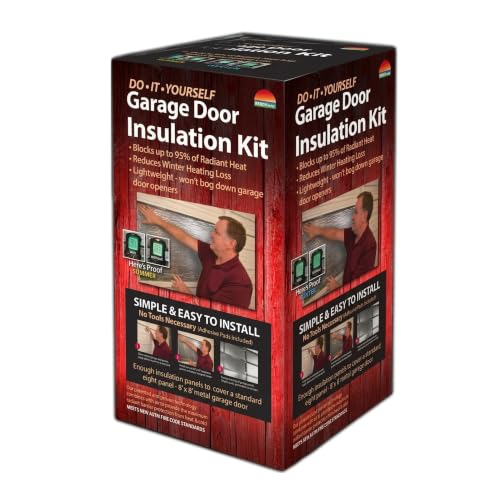
Insulate before you heat. A garage door with no insulation is the biggest single loss in most bays, and a kit such as the Reach Barrier single-door kit or the NASA TECH two-car kit is far less than a larger heater. Seal the door bottom and gaps, too. A smaller heater on a tight bay beats a bigger heater on a drafty one.
Is a garage heater worth it?
That depends on how many hours you work and how cold it gets. A heater that cuts a winter hobby from "too cold to stand" to "comfortable" is easy to justify. A heater that runs for ten hours a week all winter adds to the electric bill, and a heat pump is cheaper to run than resistance heat per BTU delivered. The question is a big one, and the plain answer is on the mini-split page: for a bay you use all year, a mini split costs more up front and less every month. For a bay you use a few weekends, a plug-in heater is plenty.
Two more notes. First, you rarely need to heat the whole bay to 70 degrees; heat the work spot, wear layers and let the room come up a little. Second, a heater is a good pair with insulation, because both reduce the BTU you need. Use the calculator before you buy, look at the circuit before you commit, and plan for a CO alarm and a smoke alarm in any garage where something burns.
What safety rules apply in a garage?
Heat and a garage mix three hazards: fuel vapor, dust and electrical load. Gasoline vapor is heavier than air and collects at the floor, so a heater at floor level is the worst case; a heater hung high with a clear space around it is better. Fine wood dust is combustible, and a heater with a hot element or a flame near a dusty bench is a risk. And a heater is the heaviest steady electrical load in a garage, which is why the circuit must be dedicated.
Keep a fire extinguisher by the door. Test the smoke and CO alarms. Read the manual for your heater and follow it before anything on this page. These are general notes; this is not electrical, gas or fire-code advice, and local rules vary. Ask a licensed electrician or gas fitter before any work on a circuit or a gas line.
Also worth a look



Prices change often; the button shows today's price on Amazon.
More roundups
- Best mini split for a garage shop
- Best mobile base for a table saw
- Best planer and jointer for a garage shop
Email me the full garage shop buy list
These picks plus the rest of a complete build at three budgets, as one list. A few short emails follow, then a couple a month at most.
Unsubscribe anytime. You can also just read the checklist on this site.Frequently asked questions
What is the best heater for a 2-car garage workshop?
For a 20 x 20 to 24 x 24 ft bay on a 240V circuit, a 7500W electric heater such as the InoKraft or the Comfort Zone (about 25,600 BTU) is a common pick. A gas unit heater at 50,000 BTU covers a leaky bay with more margin.
Can I use a 1500W heater in a garage?
Yes, as a spot heater. At 3.412 BTU per watt it gives about 5,100 BTU, which warms a bench area but not a whole bay. It draws 12.5 A at 120V, so give it its own circuit.
Is an electric or gas garage heater better?
Electric is safer around dust, solvents and fuel because it has no flame or exhaust, but it needs a 240V circuit. Gas moves more heat per piece of equipment but needs a gas line, venting and a CO alarm.
What circuit does a 7500W garage heater need?
A 7500W heater on 240V draws about 31 A. At 125 percent for a continuous load that is about 39 A, so a 40 A circuit with 8 AWG copper per NEC 310.16 is the usual answer. Have a licensed electrician confirm.
How do I keep the heat in a garage?
Insulate and seal the garage door first, then the ceiling and walls. A door insulation kit costs far less than a bigger heater, and a tight bay needs a smaller heater to stay warm.
Is a propane Buddy heater safe in a garage?
It is rated by its maker for specific indoor conditions, so read the listing. Keep it away from fuel and dust, ventilate the space and use a CO alarm. Do not use any flame heater while finishing or sanding.
This page is researched guidance, not professional electrical, engineering or safety advice. Circuits, loads and clearances depend on your house, your service and your town: have a licensed electrician confirm any wiring, and check local code and each manufacturer's manual before you act.
