
Guides
How to set up dust collection in a garage shop
Size dust collection from the machine list: a table saw, bandsaw, jointer or router table wants about 350 CFM at the hood, a planer 400, a sander 550 and a drill press 200.
At 4,000 feet per minute, a 4 in duct moves 349 CFM, 5 in moves 545, 6 in moves 785 and 8 in moves 1,396, so a one-machine-at-a-time garage shop runs a 5 or 6 in main with 4 in drops and a portable collector such as the Grizzly G0860 (868 CFM at 1.8 in static pressure), while a permanent duct system serving three machines wants a 3 HP collector like the G0441 (1,654 CFM). Add a hanging air filter for the fine dust the collector misses.
Why a garage needs more dust control, not less
A garage woodshop has three problems a basement shop does not. The dust gets on the car and into the paint. It gets into the house through the shared wall and the door. And it mixes with a rotating cast of other garage air: fuel, fumes and moisture. Wood dust is also a health matter. The fine particles that stay in the air for hours are the ones that matter, and a broom and a shop vac do not stop them. A collector pulls chips and coarse dust at the machine; a filter takes the fine dust out of the air; a respirator protects you while those two work. You need all three. The first two are the setup. The third is a habit; keep a P100 half mask where you will actually reach for it.
This guide builds the system in the right order: list the machines, find the CFM, choose the duct, choose the collector, plan the runs, then handle the fine dust and the electrical. The dust collector calculator automates the middle of it, and the best dust collector for a garage shop compares models.
Step 1: List the machines and find the CFM at each hood
A collector does not move "dust". It moves air, and the air has to be fast enough to carry chips. The target is the flow each machine needs at its dust port. The site's standards data uses these values, from common tool-maker and woodworking-magazine guidance (your machine manual always wins):
| Machine | CFM at the hood | Typical port (check your manual) |
|---|---|---|
| Table saw | 350 | 4 in |
| Bandsaw | 350 | 4 in |
| Jointer (6 in) | 350 | 4 in |
| Planer (13 in) | 400 | 4 in, many take 4 in only |
| Router table | 350 | 4 in |
| Miter saw station | 350 | 4 in |
| Drum or disc sander | 550 | 4 in or two ports |
| Drill press | 200 | 2.5 in or a table port |
Most one-man garage shops run one machine at a time. That is the single most useful fact in this guide, because it means you size the collector for the biggest single machine (about 400 to 550 CFM), not for the sum. A shop with two people, or a shop where you want the planer and a sander to run together, needs more.
The ports matter as much as the CFM. A hybrid table saw usually has a 4 in port, and a planer is often a 4 in port that chokes the flow. A collector with a 6 in inlet needs a reducer at every machine. Check the listing for each of your machines.
Step 2: Pick the duct size from the speed table
Duct velocity is how fast the air moves; 4,000 feet per minute is the common design value for wood chips (the site's standards data uses it). Flow equals velocity times duct area, so the same speed moves more air in a bigger pipe. At 4,000 fpm:
| Duct diameter | CFM at 4,000 fpm | Typical use |
|---|---|---|
| 4 in | 349 | Drop to one machine port |
| 5 in | 545 | Short run or main for one machine at a time |
| 6 in | 785 | Main trunk for a small shop |
| 7 in | 1,069 | Main for two machines at once |
| 8 in | 1,396 | Main for a larger cyclone |
Read it as a rule: a 4 in drop to a table saw (350 CFM) is correct. A single 4 in hose cannot carry a 550 CFM sander, so the sander wants a 5 in pipe or two ports. A 6 in main trunk carries about 785 CFM, plenty for one machine at a time, and it matches the 6 in intake of the Grizzly G0860 and the 6 in inlet Y of the G1028Z2. An 8 in main matches the 8 in inlet of the G0441 and carries about 1,396 CFM, which is why that collector is described as able to run three machines at once. Use smooth metal or rigid plastic pipe for the main runs and a short flexible hose only for the last 2 to 3 ft, because corrugated hose has several times the resistance of smooth pipe.
Step 3: Choose the collector
There are four families of collector. Pick the family by the shop, then the model by the numbers.
- Shop vac with a cyclone separator. A wet-dry vacuum such as the DEWALT 12 gal or the Shop-Vac 12 gal with a Dust Deputy cyclone on top is the entry system. The cyclone drops chips into a bucket, and the vac filter stays clean. It suits sanders, routers, a drill press and a small saw, with small hoses. It does not move enough air for a planer. The layout engine uses a vac with a separator as the dust choice in the mixed (car-in-the-bay) packages, because it is small and rolls out of the way.
- Single-stage bag portable. A 1 HP or 1-1/2 HP unit on casters, with filter bags and a collection bag. The POWERTEC 560 CFM portable and the Grizzly G1028Z2 (1,300 CFM bag rating, 6 in inlet Y with two 4 in openings, 42.6 gal bag, 120V or 240V per the listing) are the two benchmarks. Chips go through the fan, which wears it, and the bag filters finish early, but it is the cheapest way to get real airflow at a planer.
- Portable cyclone. The Grizzly G0860 is a two-stage cyclone on 120V: 1-1/2 HP, 868 CFM at 1.8 in static pressure, 6 in intake, 1 micron canister filter and a 20 gal drum, about 78 dB, with a wireless remote, per the listing. The cyclone drops chips in the drum before they reach the filter, so the filter stays clear much longer. Its listed footprint is 27.5 x 44 in and its height is 70 in, small enough for a 12 x 20 ft bay. See the fit sheet for the G0860.
- 3 HP cyclone. The Grizzly G0441 is 240V, 22 A, with 1,654 CFM at 2.0 in static pressure, an 8 in inlet and a 55 gal drum. It is rated for three machines at once. It stands 109 in tall by the listing, which is taller than even a 9 ft (108 in) ceiling, so measure and plan for a lower mount or a different model before you order. See the G0441 fit sheet and the G0860 vs G0441 comparison.
For a one-person woodshop in a one- or two-car garage, the G0860 is the sweet spot: 120V, plenty of air for one machine at a time, and a clean filter. For a 24 x 24 or three-car garage with a fixed duct network and a 240V subpanel, the G0441 is the layout engine's choice. For a wall-mounted unit that frees the floor, see the POWERTEC wall mount and the Grizzly G0785.
Step 4: Plan the runs
Put the collector where the pipe is short. Every foot of pipe and every elbow takes airflow away, so the layout goal is the shortest straight route from the collector to the machines. Rules that work in a garage:
- Collector on a wall, near the center of the machines, not in the corner farthest from the table saw. Keep it out of the car's side of the bay.
- A main trunk along the wall at about 7 ft, with 4 in drops down to each machine. Use long-radius or two-45-degree elbows, not sharp 90s.
- Blast gates at every drop. With one machine running and the other gates closed, all the air goes where you need it. Without gates, the airflow goes to the shortest path.
- Short flex at the machine. Use 2 to 3 ft of flexible hose from the end of the pipe to the machine, so the machine can move on its mobile base.
- Machines on wheels get a quick-connect. A table saw on a mobile base needs a hose long enough to move; use a coupling you can pull in one second.
- Ground the plastic. Rigid plastic pipe builds a static charge. Run a bare copper wire inside or along the pipe, ground it, and keep the fittings electrically continuous. This reduces shocks and, more importantly, the dust ignition risk.
In a garage where the car stays, run the pipe along the wall at the ceiling or high on the wall, not across the open ceiling. A pipe at 7 ft clears most vehicles, but a pickup truck with a roof rack may not. The park-the-car calculator and the 22 x 22 woodshop layout show how the collector and the machines share the floor with a vehicle. In a mixed shop, skip the fixed duct altogether: a cyclone on casters and a short hose to each machine is easier than pipe you must work around a car to reach.
Step 5: Capture at the source with the right hood and hose
A collector is only as good as its capture. A table saw captures best at the blade shroud under the table and at the blade guard overhead; a 4 in port on the cabinet alone leaves a lot of dust on the table. A bandsaw needs a port below the table and one at the lower guide. A planer and a jointer need their own chip ejection port, and often a hood. A router table needs a fence port and a below-table port. A miter saw needs a hood or a back box, and a sander needs a table port. A shop built on 350 CFM at the hood works only when the hood is close to the cut.
Use the shortest, straightest hose to each machine. Use smooth-wall hose for the last connection when you can. If a machine has a 2.5 in port, use a reducer and expect lower flow. A common mistake is to put a 6 in pipe on a collector and a 2.5 in hose on the sander and expect the system to work. Match the diameter, and use a separate vac with a small hose for hand sanders.
Collectors, separators and air filters for a garage shop


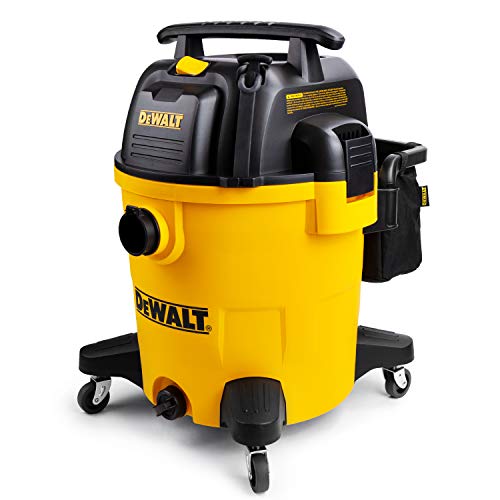
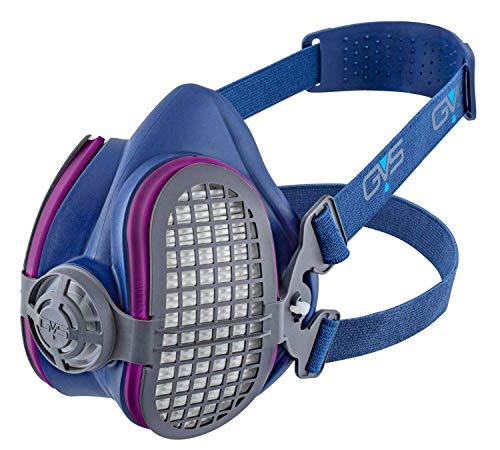
Prices change often; the button shows today's price on Amazon.
Amazon and Grizzly, side by side
Each card shows an Amazon pick and a Grizzly Industrial pick for the same job.
Cyclone dust collector for a one-man shop
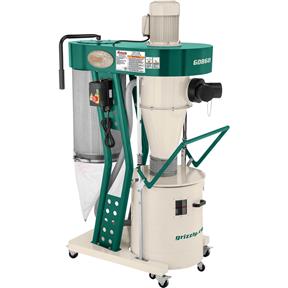
The Grizzly G0860 is a two-stage cyclone on 120V with a 1 micron canister; the Amazon pick is a bag-style 1 HP machine. The cyclone costs more and keeps the filter clean far longer.
Portable dust collector
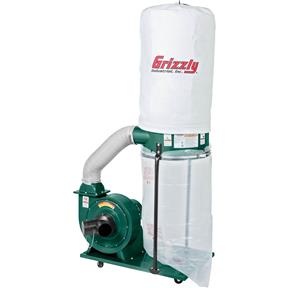
Both are bag-style portables on casters. The Grizzly unit is a 1-1/2 HP machine with a 1300 CFM bag rating; the Amazon unit is a 1 HP class machine at a lower entry cost.
3 HP cyclone collector (240V)
AmazonNo comparable Amazon item in our catalog
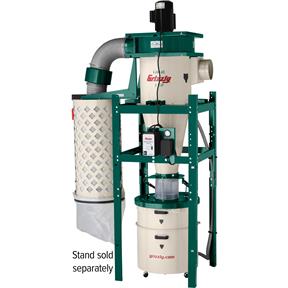
Nothing on Amazon in our catalog matches a 3 HP, 1654 CFM cyclone, so this one is Grizzly-direct only. It needs a 240V circuit and about 400 lb of freight.
Hanging air filter
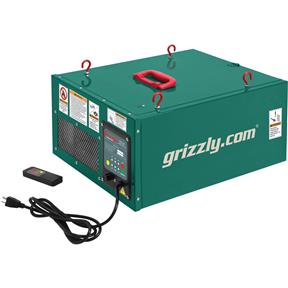
Both are 3-speed ceiling-hung filters in the 300 to 400 CFM class with remotes. The Grizzly unit is owner-rated 4.8 on grizzly.com across 301 reviews.
Prices change often and Grizzly runs sales, so the buttons show current prices.
Step 6: Clean the air that escapes with a hanging filter
Even a good collector misses the finest dust, and it stays in the air for hours. A ceiling-hung air filter cleans that. The Grizzly G0738 has three speeds (260, 362 and 409 CFM), a timer of 1, 2 or 4 hours, a 5 micron outer filter and a 1 micron inner filter, an IR remote and hanging chains, per the listing. The POWERTEC AF4001E is the Amazon equivalent, and the WEN 3410 (300, 350 and 400 CFM) and the DEWALT DWXAF101 are other options. Run the filter during the work and for an hour afterward.
The standard way to size it is to change the room's air several times an hour. The air filtration calculator does it for any bay, and the sizing pages give a result for each: for example air filtration for a 22 x 22 two-car garage. See also the best air filtration for a garage woodshop.
Step 7: Run the numbers on power
A collector is a motor, and motors have rules. NEC Table 430.248 gives single-phase full-load current: 1-1/2 HP is 20 A at 115V and 10 A at 230V, and 3 HP is 34 A and 17 A. The G0860 is a 120V, 15 A machine by the listing; it wants its own 20 A circuit. The G0441 is a 240V, 22 A machine; its circuit should be sized by an electrician from the nameplate, using 125 percent of the running current for the conductor (NEC 430.22). In the layout engine a 3 HP collector is the one that moves the woodshop shop from a 120V layout to a 240V one, and it lands at a 30 A, 10 AWG circuit with a NEMA 6-30R receptacle in the package. The 240V circuit calculator and 240V in a garage explained take it from there.
Have a licensed electrician confirm the circuit before the collector arrives. Do not power a collector from an extension cord for anything but a test.
Also consider a remote switch. A wireless remote on the G0860 lets you start the collector from the saw. For a fixed machine, an automatic switch that starts the collector when the machine starts is the safest habit, because the collector is only useful when it is on.
The five most common garage dust mistakes
- A bag collector with no cyclone in front of the planer. The bag fills in minutes and the airflow collapses.
- A 2.5 in hose on a 6 in collector. The air has nowhere to go and the motor works hard for nothing.
- Too much flex hose. Ten feet of corrugated hose is worth a fraction of the same length of pipe.
- No blast gates. The air takes the easy path and the saw gets nothing.
- Never emptying the bin. A full drum overflows into the filter. Keep a bag liner and an emptying schedule.
Also, never leave a collector running unattended, and keep sparks out of the system: a grinder or a welder near a collector is a fire hazard. In a garage that also hosts a car, keep the exhaust or filter side pointed away from the vehicle.
A starter system for each garage
Here is where the numbers land for each kind of bay, using the layout engine's woodshop and mixed packages:
- 12 x 20 or 12 x 22 ft one-car, car out. A portable cyclone on 120V such as the G0860, 4 in drops by hose, a hanging filter, a P100 mask. See the 12 x 20 layout and the dust collector sizing for 12 x 20.
- One-car with a car in it. A shop vac with a cyclone separator on wheels and a hanging filter. Run machines one at a time with the vac, and roll everything aside when the car comes in.
- 20 x 20 or 22 x 22 ft two-car. A G0860, with a short fixed 6 in main and 4 in drops if you like. See dust collector sizing for 22 x 22.
- 24 x 24 ft or three-car. A 3 HP cyclone such as the G0441 on a 240V circuit and a fixed 8 in main with 4 in drops, if you can solve its 109 in height.
Whatever you choose, add the collector to the budget planner and the amps calculator together. And for the overall order of work, read how to set up a workshop in a garage.
Get the garage shop planning checklist
One printable page: measure the bay, count the circuits, list the machines, check the floor. Plus a few short emails, then a couple a month at most.
Unsubscribe anytime. You can also just read the checklist on this site.Frequently asked questions
What size dust collector do I need for a garage shop?
For one machine at a time, about 550 CFM at the hood is enough for everything but a large sander. A portable cyclone like the Grizzly G0860 (868 CFM at 1.8 in static pressure) covers it. Two machines at once want about 1,000 CFM or more.
What size duct for a garage dust collection system?
At 4,000 fpm a 4 in duct moves 349 CFM, 5 in moves 545, 6 in moves 785 and 8 in moves 1,396. Use 4 in drops to machines and a 5 or 6 in main for a one-at-a-time shop.
Can a shop vac be used for dust collection?
For sanders, routers and a drill press, yes, especially with a cyclone separator in front. A shop vac does not move enough air for a planer or a table saw with a large guard.
Do I need blast gates?
In any shop with more than one machine on the same collector, yes. Gates close the drops you are not using so all the airflow goes to the machine that is cutting.
Do I need an air filter if I have a dust collector?
Yes. A collector captures chips at the machine; fine dust escapes and stays airborne for hours. A hanging filter with a 1 micron inner stage cleans the room, and a respirator protects you while it does.
This page is researched guidance, not professional electrical, engineering or safety advice. Circuits, loads and clearances depend on your house, your service and your town: have a licensed electrician confirm any wiring, and check local code and each manufacturer's manual before you act.
