Best picks · three tiers
Best garage shop floor covering
For a garage woodshop, the easiest floor upgrade is a pack of interlocking tiles plus anti-fatigue mats at the stations: the VEVOR 12 x 12 in interlocking tiles (50 pack) cover 50 sq ft per pack, so a 12 x 20 ft bay takes about five packs, and the Vergo 15/16 in mat or the FEATOL 0.9 in mat go where you stand. Skip tiles under welding and heavy rolling loads.
| Tier | Amazon pick | Budget | Grizzly option |
|---|---|---|---|
| Beginner | FEATOL 0.9" Anti Fatigue Mat | Under $100 | Amazon only |
| Intermediate | VEVOR Garage Floor Tiles 12 x 12 x 0.53 inch Interlocking | Under $100 | Amazon only |
| Expert | VEVOR Garage Floor Tiles 12 x 12 x 0.53 inch Interlocking | Under $100 | Amazon only |
What is the best floor for a garage woodshop?
There is no single best floor, because a garage floor has to do jobs that conflict. It has to carry a car, take a rolling saw, stand up to dropped tools, resist oil and moisture, be easy to sweep and be comfortable to stand on. Bare concrete is hard and cold, dusts as it wears and shows every stain. Epoxy is tough and easy to clean but slippery when wet and a weekend of work to apply. Tiles are removable and softer. Mats are the simplest. Most woodworkers settle on a mix: tiles or a coating for the floor, and mats where they stand.
The garage adds two constraints. The first is the car. Tires bring water, salt and sometimes hot-tire marks, and a floor covering that stains from tires is a problem in the car lane. The second is the shop. Machines roll across the floor, and a floor that is not flat under a mobile base makes a saw wobble. Treat the car lane and the shop zone as two different floors.
This page was researched from manufacturer listings, published specifications and owner reviews, not a wear test. Tile dimensions come from the VEVOR listing title; load ratings, chemical resistance and temperature limits are on the listings, and where they are not, we say so.
Picks by budget: beginner, intermediate and expert
FEATOL 0.9" Anti Fatigue Mat

Under $100
Who it is for: A one-car garage owner who stands at a bench or a saw for hours and does not want to change the whole floor.
The FEATOL 0.9 in anti-fatigue mat and the Vergo industrial 15/16 in extra-thick mat are the low-effort choice. A mat sits where you stand and no place else: at the bench, at the table saw, at the lathe. It takes no installation, picks up in seconds when the car comes in and softens a concrete floor that tires your back and knees. Pick one for each station rather than one large rug.
Skip it if: You roll heavy machines across the floor. A thick mat is a trip and a roll hazard under casters, so lift it when you move the saw.
Check price on AmazonVEVOR Garage Floor Tiles 12 x 12 x 0.53 inch Interlocking

Under $100
Who it is for: A one- or two-car garage woodworker who wants a clean, warmer, softer shop floor without glue or epoxy.
The VEVOR interlocking tiles are 12 x 12 x 0.53 in and come 50 to a pack, which is 50 sq ft. They snap together and sit on the slab, so you can cover the work zone and leave the car lane bare, or cover everything. A tiled floor is kinder to a dropped chisel than bare concrete, is easier to sweep than a raw slab and feels warmer under your feet in winter. Mats on top of tiles at the stations finish the job.
Skip it if: You weld, grind or spill solvents. Plastic tiles melt under spatter and sparks, and stain or soften under some chemicals. Check the listing for chemical and heat limits.
Check price on AmazonVEVOR Garage Floor Tiles 12 x 12 x 0.53 inch Interlocking
Under $100
Who it is for: A two- or three-car garage woodworker or machinist who wants a full floor and still rolls a saw and a cart.
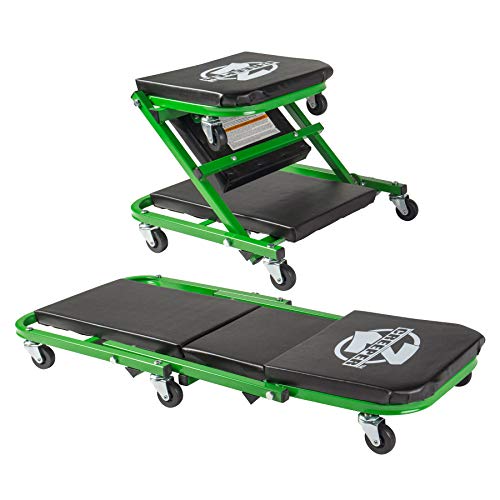
Combine the tiles with mats at fixed stations and plywood or hardboard runners where heavy mobile bases roll. A table saw base carrying 300 to 500 lb concentrates its load on four small wheels, and tile edges and interlock seams are the weak point. Rolling on a smooth runner keeps the tiles flat. Add a creeper for auto work and the Vergo mat at the bench. This is the floor for a shop that stays a shop.
Skip it if: You want a permanent coating. Epoxy or polyaspartic coatings are a different job with a different cost and prep; tiles are removable, coatings are not.
Check price on AmazonHow many tile packs does each garage need?
Each VEVOR pack is 50 tiles at 12 x 12 in, so one pack covers 50 sq ft. Divide your floor area by 50 and round up. Buy a few extra tiles for cuts and mistakes. The table counts the full floor; you will usually cover less, since machines and cabinets sit on the floor, not under it, and the car lane may stay bare.
| Garage | Floor area | Packs for the full floor |
|---|---|---|
| 12 x 20 one-car | 240 sq ft | 5 packs |
| 12 x 22 one-car | 264 sq ft | 6 packs |
| 20 x 20 two-car | 400 sq ft | 8 packs |
| 22 x 22 two-car | 484 sq ft | 10 packs |
| 24 x 24 two-car | 576 sq ft | 12 packs |
| 32 x 24 three-car | 768 sq ft | 16 packs |
Most woodshops tile only the work zone. In a 22 x 22 ft bay with a car on one side, the work zone is about half the floor, so five packs may be plenty. Use the garage shop layout calculator to mark the zone, and the budget planner to add the cost to the rest of the shop.
Do tiles work under a mobile base?
With care. Interlocking tiles are about half an inch thick, and a 300 to 500 lb saw on four small casters puts a lot of load on a few square inches. Hard casters can dent soft tile and catch on the interlock seams. The fix is simple. Roll heavy bases on a path of plywood or hardboard laid over the tiles, or leave a bare strip of slab where the saw travels. Large, soft casters help, and so does a clear check of the tile load rating on the listing.
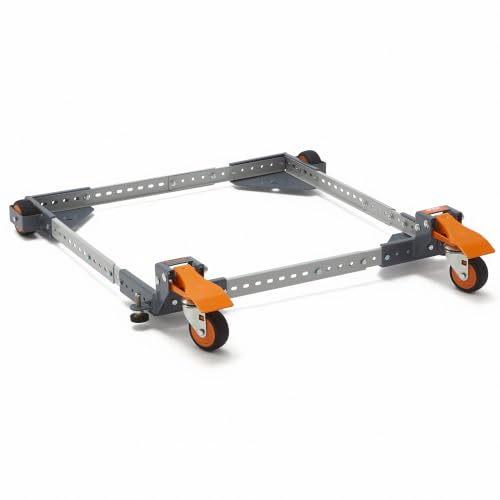
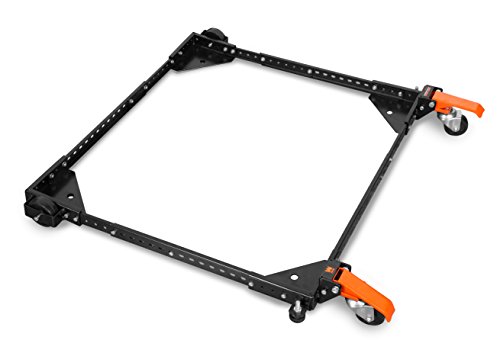
Once the saw is parked, a locking base sits still and the tile does not matter. The trouble is the moving. If your saw lives in one spot and visits the center on cut day, plan the route and lay the runner along it. See the mobile base roundup for how to match a base to a saw, and use the same advice for the bandsaw and the planer.
Lifts and jacks are a different story. A floor jack or a jack stand on plastic tile is a bad idea; put a steel plate or plywood under it, or work on the bare slab. If you do auto work, leave the lift zone bare.
What about welding, grinding and chemicals?
Plastic tiles and mats are not for hot work. Welding spatter and grinder sparks burn or melt plastic and rubber, and they can start a fire in a garage with a car. In a metal shop, leave the weld zone bare concrete or use a steel plate or a welding blanket, and keep the tiles and mats well away from the work. A fire extinguisher stays by the door.
Chemicals matter too. Solvents, brake fluid, some oils and some finishes can stain or soften plastic. Check the listing for chemical resistance, and keep a drip tray or a mat under anything that leaks. If you do a lot of auto work, a bare, sealed or coated slab is easier to clean than tiles, which hide spills in the seams.
In a woodshop none of this applies much. Sawdust sweeps off tile easily, finish spills wipe up, and a softer floor is kinder to dropped chisels. A wet-dry vacuum cleans the seams. The welder roundup covers the fire rules for a metal shop.
Why stand on a mat at all?
Standing on concrete for hours is hard on feet, knees and backs. An anti-fatigue mat adds a bit of give and a bit of insulation from the cold slab. The Vergo mat is listed at 15/16 in thick, and the FEATOL at 0.9 in. Both are thick compared with a kitchen mat, and both are meant for standing stations, not rolling traffic.
Place the mat where you stand: in front of the table saw, at the bench, at the lathe. Keep it flat, because a curled corner is a trip hazard around moving machinery. Lift it when you roll a mobile base across it. And choose a size that matches the station; a mat that is too large gets in the way of the car and the base.
Pair the mat with a good bench height, because standing posture matters as much as the surface. The workbench height page shows how to set it. For auto work, a creeper and a rolling stool keep you off the cold floor.
Does the floor change moisture and dust?
A little. Tiles lift the surface off the slab and leave a small air gap beneath, so a damp slab can trap moisture under the tiles. If your garage is damp, run a dehumidifier first, and check under the tiles after a wet season. A sealed slab is better than a raw one under any covering. See the dehumidifier page for the moisture side.
Dust is easier to manage on a sealed or covered floor. A raw slab dusts as it wears; tiles and coatings stop that, and sweeping or vacuuming takes it away. Dust control still needs a collector and an air filter, as covered in the dust collector page. The floor is only a part of it.
If you plan to put a lift, a heavy compressor or a big machine on the floor, think about the slab itself. Cracks, heaving and spalling are signs of trouble that no covering fixes. Ask a pro if the slab looks bad.
Also worth a look



Prices change often; the button shows today's price on Amazon.
More roundups
Email me the full garage shop buy list
These picks plus the rest of a complete build at three budgets, as one list. A few short emails follow, then a couple a month at most.
Unsubscribe anytime. You can also just read the checklist on this site.Frequently asked questions
What is the best flooring for a garage woodshop?
Interlocking tiles over the work zone, anti-fatigue mats at the stations and bare slab or a runner where heavy bases roll. Tiles are removable, softer and easy to sweep.
How many tiles do I need for a two-car garage?
The VEVOR pack is 50 tiles at 12 x 12 in, or 50 sq ft. A 22 x 22 ft garage is 484 sq ft, about 10 packs for the full floor. Most woodworkers tile only the work zone, about half.
Can I roll a table saw on interlocking tiles?
Yes, with care. Lay plywood or hardboard along the roll path, use large soft casters and check the tile load rating. Heavy base casters can dent tiles and catch on seams.
Are garage floor tiles good for welding?
No. Spatter and sparks melt plastic tiles and mats. Leave the weld zone bare concrete or use a steel plate, and keep tiles and mats away from hot work.
Do anti-fatigue mats help in a garage?
They help if you stand for long periods at a bench, saw or lathe. Use one per station, keep it flat and lift it when you roll a heavy base across it.
Should I use tiles or epoxy?
Tiles are removable, need no prep or cure time and soften the floor. Epoxy is tougher and seals the slab but takes prep, is hard to remove and can be slippery. Tiles suit a woodshop; coatings suit an auto bay.
This page is researched guidance, not professional electrical, engineering or safety advice. Circuits, loads and clearances depend on your house, your service and your town: have a licensed electrician confirm any wiring, and check local code and each manufacturer's manual before you act.
