Best picks · three tiers
Best dehumidifier for a garage shop
For a damp one- or two-car garage shop, a 50 pint compressor dehumidifier is the right size: the Midea 50 pint for the lowest cost or the Frigidaire 50 pint with WiFi for a unit you can watch from the house. Drain it continuously to a floor drain or a hose, seal the door first with a door insulation kit, and wipe cast iron with Boeshield T-9.
| Tier | Amazon pick | Budget | Grizzly option |
|---|---|---|---|
| Beginner | Midea 50 Pint Dehumidifier for Basement | Under $250 | Amazon only |
| Intermediate | Frigidaire 50 Pint Dehumidifier w/Wifi | Under $500 | Amazon only |
| Expert | MRCOOL DIY Select 12000 BTU Mini Split AC/Heating System | Under $2,000 | Amazon only |
Why do garages get so damp and so dusty?
A garage is the least controlled room in a house. The slab is cold and sits on damp ground, the door leaks, the walls are often uninsulated, and the car brings water in on its tires in wet weather. Warm humid air meets cold surfaces, condenses and leaves water on iron. That is where rust comes from, and it is also why the smell of a damp garage never quite goes away.
The dust has its own causes. Concrete dusts as the surface wears, outside air carries pollen, soil and road dust through the door gaps, and the car tracks in dirt. Add the sawdust or the metal dust from your own work and the bay never stays clean. A sealed door, a sealed slab and an air filter help; the air filtration page covers the last. A dehumidifier helps with dust indirectly: dry air carries less mold and mildew and makes dust easier to sweep up than damp, clumped dust.
This page was researched from manufacturer listings, published specifications and owner reviews, not a humidity log. The pint ratings on the listings are stated at test conditions that are usually warmer and more humid than a winter garage, so plan for less in cold weather.
Picks by budget: beginner, intermediate and expert
Midea 50 Pint Dehumidifier for Basement

Under $250
Who it is for: A one-car garage owner who sees rust on tools and a damp smell in summer, and wants the simplest fix.
The Midea 50 pint dehumidifier is listed for basements up to 4,500 sq ft and is Energy Star rated. Put it on a shelf or a stand, run a drain hose to the floor drain or the driveway, and set a humidity target. A 12 x 20 ft garage is only 240 sq ft, so the unit has plenty of headroom, and a smaller space means it cycles off sooner. Add Boeshield T-9 on bare iron, like table saw tops and bandsaw tables, and wipe it on again each season.
Skip it if: Your garage drops below freezing most of the winter. Compressor dehumidifiers lose capacity in the cold and many list a minimum operating temperature; read the listing.
Check price on AmazonFrigidaire 50 Pint Dehumidifier w/Wifi

Under $500
Who it is for: A one- or two-car garage owner who wants to monitor the shop from the house and who is willing to seal the door.
The Frigidaire 50 pint dehumidifier with WiFi lists app control, which is useful if the garage is detached or you want to check the humidity before you walk out. Pair it with a door insulation kit, either the Reach Barrier single-door kit or the NASA TECH two-car kit, and weatherstrip the bottom and sides. A leaky garage door lets in moist outside air all day, and no dehumidifier can keep up with an open bay. Sealing first makes the machine smaller, cheaper to run and quieter.
Skip it if: You leave the garage door open all day. A dehumidifier cannot dry the outdoors.
Check price on AmazonMRCOOL DIY Select 12000 BTU Mini Split AC/Heating System

Under $2,000
Who it is for: A two-car garage owner who uses the shop year-round and wants one machine to manage temperature and humidity.
The MRCOOL DIY Select 12,000 BTU mini split is a 115V heat pump that cools and heats, and mini splits commonly offer a dry or dehumidify mode; check the listing for it on your model. A heat pump that holds the shop at a steady temperature also keeps surfaces from sweating when warm air meets cold iron, which is the usual cause of rust. The Albott 12,000 BTU 115V is the other pick. The mini-split roundup covers the choice.
Skip it if: You use the shop a few weekends a year. A mini split costs far more than a dehumidifier and is only worth it for regular use.
Check price on AmazonWhat size dehumidifier does a garage need?
Dehumidifier size is a capacity in pints of water removed per day, rated at stated test conditions. A garage is a small floor area but a leaky one, so the capacity you need depends more on the tightness of the bay than on its size. A sealed 12 x 20 ft garage (240 sq ft) is easy for a 50 pint unit. A drafty 24 x 24 ft bay (576 sq ft) with a poorly sealed door can overwhelm it, because outside air brings in water as fast as the machine removes it.
For most one- and two-car garages, a 50 pint unit is the common choice. The Midea lists coverage of 4,500 sq ft for a basement, which is far more than a garage; that is a sign the machine will have headroom, not that you need a bigger one. Two smaller units, one at each end, work better in a three-car bay than one in the middle. Set a target relative humidity, commonly in the range of 40 to 50 percent for tools, and let the machine cycle.
The garage workshop guide covers the broader moisture picture. If you also plan to heat the bay, remember that warm air holds more water, so a dehumidifier and a heater often work together; see the heater roundup.
How do you drain it?
Draining is the part that decides whether you use the machine. A bucket fills fast in a damp bay and shuts the unit off. The better options are a drain hose and a condensate pump. Most dehumidifiers have a hose connection at the back or the side. Run a short hose to a floor drain, a utility sink or out through a small hole to the driveway. Gravity is free, so mount the machine on a shelf or a stand above the drain level and keep the hose sloping down.
If you have no drain, a condensate pump lifts the water through a thin tube to a sink or outside. Some models include a pump; check the listing. In a garage where the temperature falls below freezing, the hose can freeze, so run it where it drains fully and stays dry. And empty or drain the machine before a long cold spell.
Clean the filter regularly. A dusty garage clogs a dehumidifier filter fast, and a clogged filter means a weaker, noisier unit. A quick vacuum once a month keeps it working.
Where does the unit go in a shared bay?
Put it where the floor is free and the air moves: on a shelf at the back or side of the bay, away from a sawing or grinding station, and away from the car door and the exhaust. A unit on the floor catches sawdust and chips, and a unit on a shelf catches less. In a one-car garage with a car in it, a shelf above the workbench or a spot in a corner works. In a two-car garage, put it at the center of the long wall so air circulates.
Make sure the outlet is close. A dehumidifier draws steady current when the compressor runs, so a short, heavy cord on a circuit that is not also feeding a saw is best. The listing gives the amps; check the nameplate. A 12 gauge extension cord is only for temporary use, and the workshop amps calculator shows how it stacks with the rest of the load. Do not place a dehumidifier in standing water.
Keep the doors and windows closed while it runs. It cannot dry the outdoors. If you want to ventilate the garage for fumes, turn it off, ventilate and turn it on again after.
How do you protect tools from rust?
A dehumidifier lowers the humidity, and surface protection handles the rest. Cast iron tables and ways, steel blades and bits and bench vises all rust when moisture condenses on them. A thin film of Boeshield T-9 leaves a waxy barrier that lasts; wipe it on, let it dry and buff it off. Reapply on a schedule, and do it before a long winter shutdown.
Other habits help. Wipe tools dry after use. Store hand tools in a closed chest or drawer and keep a desiccant pack in each drawer. Cover machines with a breathable cover, not plastic, which traps moisture. And watch the cold-to-warm cycle: iron stays cold longer than the air, so warm humid air on a cold machine leaves water. Dry air and steady temperature are the cure, which is why the mini split sits at the top of this page.
See the tool chest page for storage that keeps tools dry, and the lathe and mill page for the care of cast-iron machines.
Seal the door first: why insulation matters
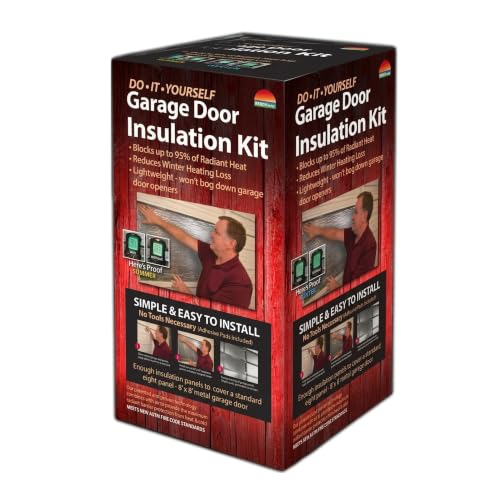
The garage door is the largest hole in the bay. A single-car door is about 9 ft wide and a two-car door about 16 ft, and the seal at the bottom and the sides rarely closes tight. A reflective foam insulation kit for the door panels, like the Reach Barrier 8 x 8 kit for a single door or the NASA TECH kit for a two-car door, adds a layer of insulation to the panels. Together with a new bottom seal and side weatherstrip, it cuts the air that carries moisture in.
The benefit goes beyond humidity. A sealed, insulated door reduces the load on the heater and the mini split, keeps dust and leaves out and quiets the shop. It is the first step, and it comes before a bigger dehumidifier, a bigger heater or a bigger air conditioner. See the 22 x 22 heater sizing page for how much heat the door costs, and the garage heater BTU calculator to see the effect on your own bay.
One caution: a sealed garage with a gas appliance, a car that is running or any combustion source needs fresh air. Do not run a car in a sealed garage, and keep a CO alarm in the shop.
Also worth a look


Prices change often; the button shows today's price on Amazon.
More roundups
Email me the full garage shop buy list
These picks plus the rest of a complete build at three budgets, as one list. A few short emails follow, then a couple a month at most.
Unsubscribe anytime. You can also just read the checklist on this site.Frequently asked questions
What size dehumidifier for a garage?
A 50 pint unit is the common choice for a one- or two-car garage. The Midea 50 pint is listed for large basement spaces, so it has headroom. Seal the door first, since a leaky bay can overwhelm any size.
Will a dehumidifier stop my tools from rusting?
It helps a lot by lowering the humidity, but also protect bare iron with a coating such as Boeshield T-9 and wipe tools after use. Steady temperature matters too, because cold iron collects condensation.
Can a dehumidifier work in a cold garage?
Compressor models lose capacity in the cold and many list a minimum operating temperature. Read the listing. In a garage that freezes, a heated, sealed bay or a mini split with a dry mode is the better choice.
How do I drain a garage dehumidifier?
Use the drain hose connection and run the hose with a downward slope to a floor drain or outside. If there is no slope, use a condensate pump. A bucket fills quickly in a damp bay and shuts the unit off.
What humidity should a garage shop hold?
A range of 40 to 50 percent relative humidity is a common target for tools and wood. Use a small hygrometer in the bay and let the dehumidifier cycle to hold it.
Should I buy a dehumidifier or a mini split?
A dehumidifier is far cheaper and fixes dampness. A mini split heats, cools and can dry the air, so it makes sense if you use the shop year-round. Start with sealing the door either way.
This page is researched guidance, not professional electrical, engineering or safety advice. Circuits, loads and clearances depend on your house, your service and your town: have a licensed electrician confirm any wiring, and check local code and each manufacturer's manual before you act.
