
Best picks · three tiers
Best mini split for a garage shop
For a one- or two-car garage on 120V, the best mini splits are the MRCOOL DIY Select 12,000 BTU and the Albott 12,000 BTU 115V DIY, both heat pumps that heat and cool. Start with a Dura Heat 240V heater if you only need winter warmth a few days a year.
| Tier | Amazon pick | Budget | Grizzly option |
|---|---|---|---|
| Beginner | Dura Heat 240V Electric Space Heater for Garage | Under $250 | Amazon only |
| Intermediate | Albott 12 | Under $1,000 | Amazon only |
| Expert | MRCOOL DIY Select 12000 BTU Mini Split AC/Heating System | Under $2,000 | Amazon only |
Is a garage heater worth it?
The honest answer depends on three things: how many hours you use the shop, how cold it gets and how well the bay holds heat. If you work in the garage a few cold weekends a year, a small heater and a jacket cost the least. If you work there every week through the winter, the cost of staying warm is the largest ongoing cost of the shop, and the tool that makes the biggest difference to how much you use it.
The way to decide is to put numbers on it. Start with the garage heater BTU calculator, which estimates the heat your bay loses through its walls, ceiling and door. Then compare the cost of running a resistance heater with the cost of a heat pump. One watt of electric heat is 3.412 BTU per hour, so a 3750W resistance heater gives 12,800 BTU for 3750W of power. A heat pump delivers its rated heat from a fraction of that power, with the exact ratio on the listing and depending on the outdoor temperature. That ratio is the reason a heat pump can be cheaper to run, even if it costs more to buy.
This page was researched from manufacturer listings, published specifications and owner reviews. We do not give an operating cost in dollars, because it depends on your electric rate, climate and use. Plug your own rate into the calculator.
Picks by budget: beginner, intermediate and expert
Dura Heat 240V Electric Space Heater for Garage

Under $250
Who it is for: A one-car garage owner who works in the shop a few cold weekends a year and wants to find out if heat changes how much they use it.
The Dura Heat 240V 3750W lists 12,800 BTU of heat and is the lowest-cost way to test whether a warm garage changes your habits. It needs a 240V receptacle, which you may install anyway for a welder or a charger. Pair it with a door insulation kit such as the Reach Barrier single-door kit so the heat stays in. If you find you use the shop all winter, you have your answer and can move up to a mini split.
Skip it if: You want cooling in summer or you run the shop for many hours a week in winter. Resistance heat costs more to run than a heat pump.
Check price on AmazonAlbott 12

Under $1,000
Who it is for: A one- or two-car garage owner who works in the shop most weeks and has a good wall for the indoor unit.
The Albott 12,000 BTU 115V DIY mini split is listed as a DIY AC and heating system with a Fast-Fit line set. A 12,000 BTU heat pump is a one-ton unit, and a one-ton unit is a good fit for a well-sealed one- or two-car garage. It runs on 115V, so it can use a dedicated 15 or 20 A circuit (check the nameplate). Install is a weekend job for a handy owner, but refrigerant lines and electrical connections are rules-based work, so read the instructions and local rules and have a licensed electrician confirm the circuit.
Skip it if: Your garage is a leaky, uninsulated three-car bay in a very cold climate. A 12,000 BTU unit will not keep up, and its heat output drops as it gets colder; read the low-temperature rating on the listing.
Check price on AmazonMRCOOL DIY Select 12000 BTU Mini Split AC/Heating System

Under $2,000
Who it is for: A two-car garage owner with an insulated, sealed bay who uses the shop year-round and wants one machine for temperature and humidity.
The MRCOOL DIY Select 12,000 BTU is a 115V heat pump, listed as an AC/heating system. A heat pump moves heat rather than making it, so it delivers more heat per unit of electricity than a resistance heater, which is the reason it is cheaper to run. Pair it with insulation, a sealed door and a dehumidifier or the unit own dry mode if the listing has one. A bay that holds steady temperature stops sweating rust onto your tools.
Skip it if: You need to heat a large three-car bay with no insulation. Check the sizing page for your bay before you buy one unit.
Check price on AmazonMini split or space heater: which one wins?
A space heater is cheap to buy and costs more to run. A mini split is expensive to buy and costs less to run. Beyond the cost, they differ in kind.
- Heat and cooling: a mini split heats and cools. A heater only heats. If you want a garage that is livable in midsummer, only the mini split does it. The mini-split cooling calculator sizes it.
- Install: a heater plugs in or hard-wires to a 240V circuit. A DIY mini split needs a wall hole, a line set, a condenser outside and a circuit. It is more work, and the lines and wiring are rules-based.
- Floor: neither takes floor. The mini split indoor unit hangs high on the wall, and the outdoor unit sits outside.
- Safety: neither burns fuel, which makes them better than gas in a shop with a car, fuel and dust.
- Cold weather: heat pumps lose output as it gets colder. Read the low-ambient rating on the listing.
The companion page, best garage workshop heater, covers the heater side, and you can read both and decide. If you only need heat now and then, buy the heater. If you need comfort all year, buy the mini split.
How big a mini split does your bay need?
Mini splits come in sizes by BTU: 9,000, 12,000, 18,000 and up. A 12,000 BTU unit is one ton of cooling. For a garage, the right size depends on the area, the ceiling height, the insulation and the door. A sealed, insulated 12 x 20 ft one-car bay may need less than 12,000 BTU; an uninsulated 24 x 24 ft bay with a big door may need more. The sizing pages show the numbers for each bay: 12 x 20, 12 x 22, 20 x 20, 22 x 22, 24 x 24 and 32 x 24.
Do not oversize. A unit that is too big for the space cycles on and off, wastes energy and dries poorly. Do not undersize either. The calculator labels every constant as a CONVENTION, so you can see what was assumed and change it for your climate. Then look at the listing for the unit heating capacity at your design temperature, not just the cooling number on the box.
The first move for any bay is to cut the load. Insulate the door with a kit like the NASA TECH two-car kit, seal the gaps, and add insulation to the ceiling if you have an unfinished attic space above. A smaller unit on a tight bay beats a bigger unit on a leaky one.
What circuit does a 115V mini split need?
The Albott and MRCOOL units are listed as 115V, which is why they suit a garage with no 240V. Check the nameplate for the minimum circuit ampacity and the maximum overcurrent protection; the listing and the manual give them. The usual answer is a dedicated 15 or 20 A circuit, with a disconnect near the outdoor unit as the code requires. Do not share the circuit with a saw, a compressor or a heater.
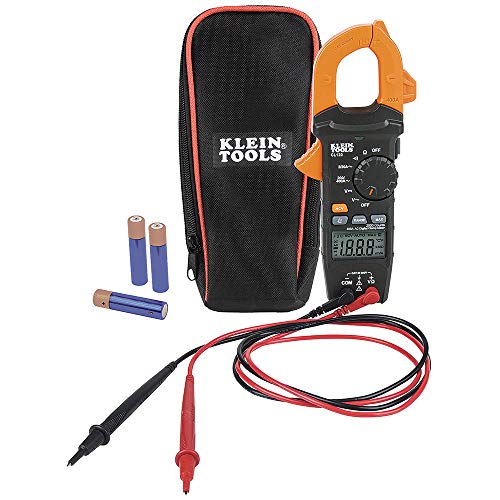
The wiring involves the indoor and outdoor units, a small control cable and the power feed. Some DIY kits ship with pre-charged line sets that you connect without special tools; follow the manual for that, and do not vent refrigerant. For the electrical part, have a licensed electrician confirm the circuit, breaker and disconnect against local code. A Klein clamp meter lets you check the real current draw once it is running.
If your garage already has a 240V circuit, a 240V mini split is another option, but the two units in our catalog are 115V. The 240V in a garage guide explains the choice.
Where does the indoor unit go in a shared bay?
High on a wall, away from the garage door and the car. A mini split indoor unit is typically 3 to 4 ft wide and about a foot deep; the listing gives the dimensions. It needs clear space around it for airflow and service. Do not hang it over a sanding station, where dust clogs the filter, or above a welding table, where spatter and smoke reach it. The outdoor unit sits outside on a pad or a bracket, with the line set running through the wall.
Aim the airflow along the length of the bay, not straight at the bench. Keep the drain line clear and sloped; it carries condensate out. Plan for the car: the line set and the pad should not interfere with the driveway or the door. In a shared bay, wall space is the premium, so locate the unit where it does not block pegboard or shelving, and see the tool storage page for how to use the rest of the wall.
Filters need cleaning, and a dusty shop clogs them fast. Check the filter monthly, and run an air cleaner as described on the air filtration page. If you cut wood, keep the unit as far from the saw as the bay allows.
What about humidity and rust?
A mini split in cooling mode removes moisture from the air, and many models have a dry mode for the purpose. Check your listing. A bay held at a steady temperature, with a sealed door and a mini split running now and then, has far less condensation on cold iron. That protects the table saw, the bandsaw and the vise from rust, which is a quiet cost of an unconditioned garage.
It will not replace a dehumidifier in a very damp bay. A stand-alone unit like the Frigidaire 50 pint is built for the job, and the dehumidifier page covers it. Many shops use both: the mini split for comfort, the dehumidifier for the damp months.
Keep a fire extinguisher by the door and a smoke alarm in the bay. This page gives general information, not HVAC or electrical advice. Ask a licensed professional about the installation, and check your local rules before you cut a hole in the wall.
Also worth a look


Prices change often; the button shows today's price on Amazon.
More roundups
- Best mobile base for a table saw
- Best planer and jointer for a garage shop
- Best table saw for a garage shop
Email me the full garage shop buy list
These picks plus the rest of a complete build at three budgets, as one list. A few short emails follow, then a couple a month at most.
Unsubscribe anytime. You can also just read the checklist on this site.Frequently asked questions
Is a garage heater worth it?
If you work in the shop more than a few cold weekends a year, yes. Start with the heater BTU calculator for your bay, insulate the door first, and compare a resistance heater with a heat pump for running cost.
Can a mini split heat a garage?
Yes. A 12,000 BTU heat pump such as the MRCOOL DIY Select or the Albott heats and cools a well-sealed one- or two-car garage. Check the low-temperature heating rating on the listing for cold climates.
Does a 12,000 BTU mini split need 240V?
The MRCOOL DIY Select and the Albott in our catalog are listed as 115V units. Check the nameplate for the minimum circuit ampacity and have a licensed electrician confirm the circuit.
Is a mini split cheaper to run than a space heater?
Per BTU of heat delivered, usually yes, because a heat pump moves heat instead of making it. A 3750W resistance heater gives about 12,800 BTU for 3750W of power. The savings depend on your rate and climate.
Can I install a DIY mini split myself?
Many owners do, using pre-charged line sets, but the electrical connection and the disconnect are rules-based. Follow the manual, check local rules and have a licensed electrician confirm the circuit.
What should I do before buying a mini split?
Insulate and seal the garage door, size the unit with the cooling calculator and check your circuit. A tight bay needs a smaller, cheaper unit, and the savings pay for the insulation.
This page is researched guidance, not professional electrical, engineering or safety advice. Circuits, loads and clearances depend on your house, your service and your town: have a licensed electrician confirm any wiring, and check local code and each manufacturer's manual before you act.
