Benchtop metal lathe, entry
The Amazon lathe is a VEVOR 7 x 14; the Grizzly G4000 is a 9 x 19 with a 3/4 HP motor and 294 lb of cast iron. More lathe means more floor and more weight.
Best picks · three tiers
For a first garage machine shop, start with a 7 x 14 lathe like the VEVOR 7x14 or step up to the Grizzly G4000 9x19 (294 lb, 16 x 37 in footprint), and add a 7 x 27 mill such as the Grizzly G0704 (372 lb with its stand). Both Grizzly lathes and the mill run on 120V, so no new circuit is needed, but each one is a bench or stand load of 300 lb or more.
| Tier | Amazon pick | Budget | Grizzly option |
|---|---|---|---|
| Beginner | VEVOR 7"x14" Metal Lathe | Under $1,000 | Grizzly G4000 9 x 19 Benchtop Metal Lathe |
| Intermediate | Mechmaxx 1.5HP 7''x 27-1/2''Benchtop Mini Mill Drill Machine | Under $3,000 | Grizzly G0704 7 x 27 1 HP Mill/Drill with Stand |
| Expert | VEVOR 7"x14" Metal Lathe | Under $1,000 | Grizzly G0602 10 x 22 Benchtop Metal Lathe |
Yes, and many people do. A machine shop is two or three machines, a bench, a vise and a place to measure, and it fits a garage better than a woodshop does because it makes no sawdust cloud and needs no 20 ft stock lane. What it does need is weight capacity, clean power and a plan for chips and oil. The 12 x 22 one-car machine shop layout, the 22 x 22 two-car machine shop layout and the 24 x 24 layout show a lathe, a mill and a bench in each bay with a car parked. If your shop is a 12 x 20 ft bay, use the garage shop layout calculator to see what fits.
This page was researched from manufacturer listings, published specifications and owner reviews, not a bench test. The figures for the Grizzly machines come from the Grizzly briefs; for the Amazon machines we use the title and listing and say so where a figure is missing.
A word on expectations. A benchtop lathe or mill is a hobby machine. It is good for bushings, pins, small brackets and prototypes. It is not a production tool, and a heavy cut in steel will show you its limits. Start light, learn feeds and speeds, and upgrade when the machine is the limit instead of you.

Under $1,000
Who it is for: A one-car garage owner who wants to turn small parts, bushings and pins and has a bench that can carry the weight.
The VEVOR 7x14 metal lathe lists a 550W motor, variable speed up to 2250 RPM and a digital display. Add the Joogto 21-piece indexable tool set, a 6 in digital caliper and a Fowler magnetic base and dial indicator and you have a starter kit. The Grizzly G4000 is the next size up: a 9 x 19 with an 8-3/4 in swing, 19 in between centers and a 16 x 37 in footprint at 294 lb. Neither is a production machine, but both teach the basics.
Skip it if: You expect to turn big shafts or heavy cuts in steel. Small benchtop lathes flex, and a 7 x 14 is limited in swing and in power.
See on Amazon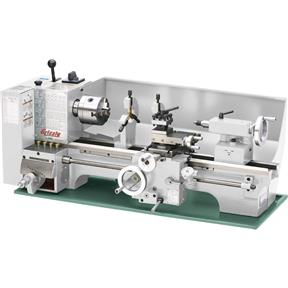
Direct from Grizzly: Grizzly G4000 9 x 19 Benchtop Metal Lathe. The G4000 is a real step up in cast iron for a still-modest 16 x 37 in footprint on 120V at 9 A.
Buy direct at Grizzly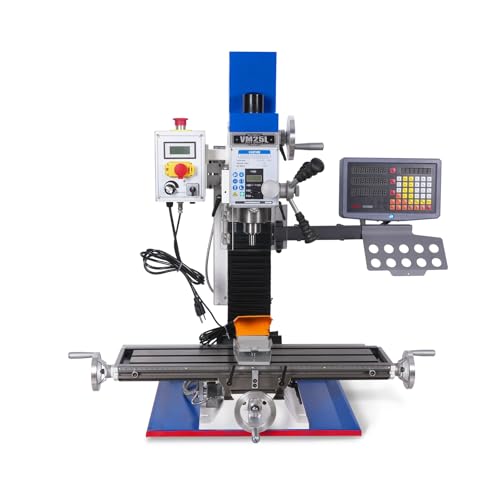
Under $3,000
Who it is for: A one- or two-car garage owner who has a lathe and wants to cut flats, slots and holes accurately.
The Mechmaxx 1.5 HP 7 x 27-1/2 in mini mill and the INTBUYING brushless 7 x 27-1/2 in mill both list R8 spindles, and the Grizzly G0704 is a 7 x 27 mill/drill with a 1 HP motor, an R-8 spindle, a table of 7-1/16 x 26-5/8 in and 18-7/8 in of table travel. It ships with a stand at 372 lb. A mill adds the cuts a lathe cannot make, and a PONY 4 in drill press vise is the usual first way to hold the work. The briefs do not give a footprint for the G0704, so read the listing for the stand size before you plan the floor.
Skip it if: You have a 12 x 20 ft bay and a car you park every night. A mill on a stand is a permanent piece of floor.
See on AmazonDirect from Grizzly: Grizzly G0704 7 x 27 1 HP Mill/Drill with Stand. The G0704 is 120V at 12 A and comes with its stand, so the only electrical work is a clear 20 A circuit.
Buy direct at Grizzly Under $1,000
Who it is for: A two- or three-car garage owner who turns real parts weekly and wants a heavier, stiffer machine.
The Grizzly G0602 is a 10 x 22 benchtop lathe with a 9-1/2 in swing, 22 in between centers and an enclosed gearbox, on a footprint of 47-1/2 x 12-1/2 in at 432 lb. It runs on 120V at 13.6 A. That is a heavy machine on a long, narrow footprint, so it wants a bench or stand that can carry it without flex. The VEVOR 7 x 14 is a small shop machine by comparison, and the choice is not close if you plan to make parts.
Skip it if: You are in a one-car bay or you are still deciding if machining is for you. Buy the smaller lathe first.
See on Amazon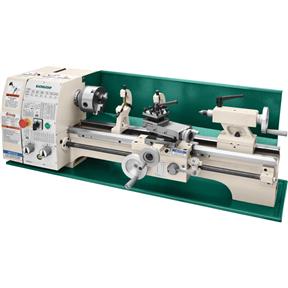
Direct from Grizzly: Grizzly G0602 10 x 22 Benchtop Metal Lathe. The G0602 is the heaviest 120V lathe in this catalog, and 432 lb on 4 sq ft of footprint needs a bench built for it.
Buy direct at GrizzlyWeight is the number new machinists underestimate. The Grizzly G4000 is 294 lb, the G0704 mill with its stand is 372 lb and the G0602 lathe is 432 lb. On a garage slab that is no problem; a concrete floor carries a car and much more. The problem is the bench or stand that sits between the machine and the floor. A bench rated for 2000 lb static, like the adjustable benches on the workbench page, can hold a lathe, but only if the load is on the legs and the top does not flex.
The G0602 is a good example. Its footprint is 47-1/2 x 12-1/2 in, about 4.1 sq ft, so the machine loads the bench at roughly 105 lb per square foot, all of it along one narrow strip. Put it on a bench whose top is stiff along that strip, bolt it down or shim it flat, and level it. A twisted bench makes a lathe cut a taper, and no tool setting will fix that.
Moving a machine this heavy is a two-person job with a lift or a gantry. Plan the delivery: the Grizzly machines ship by freight on a pallet, and the driver may leave it at the curb. Have help, a pallet jack or an engine hoist ready, and think about how you will get it up on the bench. Do not lift a 300 lb machine by hand.
All three Grizzly machines are 120V. The G4000 is 3/4 HP at 9 A, the G0704 is 1 HP at 12 A, and the G0602 is 1 HP at 13.6 A. A 15 A circuit is marginal for the 13.6 A lathe and a dedicated 20 A circuit is the safe choice. A mill and a lathe do not run at the same moment in a one-person shop, so one circuit can serve both machines if you work one at a time, but the lights, a vacuum and a heater should be on other circuits.
The machine shop amps page adds up the loads for a typical machine shop, and the workshop amps calculator does it for your own list. For longer runs, check the voltage drop; a lathe on a thin extension cord will bog down and the variable-speed drive will complain. A heavy cord like the 10 gauge 50 ft cord is the only kind to consider, and a permanent receptacle is better.
If you add a larger mill or a lathe on 240V later, the motor current tables (NEC Table 430.248: 16 A at 115V and 8 A at 230V per 1 HP) show why 240V is gentler on the wiring. Have a licensed electrician confirm any circuit, and read 240V in a garage explained.
The machines are half the cost. A basic set of measuring and holding tools is the other half, and it decides whether your parts come out right.
Budget for cutting fluid, a chip brush, a scraper and a floor mat. And buy safety glasses first; a chip in the eye does not wait.
A machine shop makes a different mess from a woodshop. Chips are sharp, oil is slippery and the floor around the machines becomes a hazard. Put a mat under the operator, a tray or a splash guard behind the machine, and sweep chips with a brush and a pan, not your hand. Keep the area under the machines clear for a vacuum nozzle and use a magnet to catch strays.
Rust is the garage's gift to every cast iron surface. Wipe the ways and the table with oil after use, and wipe a film of Boeshield T-9 on bare iron before a long sit. A dehumidifier in a damp garage protects every tool in the bay. Keep an eye on the car, too: a car shares a space with a machine shop, and chips and oil end up on its floor. Park it on a mat or roll the machines to the wall when it comes in.
Fire is a real risk. Cutting oil and rags burn, and sparks from a grinder travel. Keep a fire extinguisher by the door, store rags in a metal can and keep the grinder away from the lathe. The guide on using a garage as a workshop covers the rest.
If you can pick only one, pick the one that makes what you want. The lathe makes round things: shafts, bushings, spacers, pins. The mill makes flat things and holes: brackets, plates, slots, pockets. A lathe is the more forgiving first machine because the tool does not wander, and it teaches speeds and feeds. A mill is the more useful second machine because it makes the parts a lathe cannot.
For a one-car bay, one of each is about the limit, and only if you keep them on benches against a wall and park the car in front. For a two-car bay, a lathe, a mill, a bench and a drill press fit with a car. The G4000, G0602 and G0704 fit sheets run each machine through every garage size. And if you want a woodshop in the same bay, think hard: chips and sawdust do not mix, and the rule is separate days, separate collectors.
One card per machine class, with the Amazon pick and the Grizzly pick side by side.
The Amazon lathe is a VEVOR 7 x 14; the Grizzly G4000 is a 9 x 19 with a 3/4 HP motor and 294 lb of cast iron. More lathe means more floor and more weight.
The Grizzly G0602 is a 10 x 22 with an enclosed gearbox and 432 lb of weight on a footprint of about 4 ft by 1 ft; the Amazon VEVOR 7 x 14 is the lightweight entry alternative.
Both are 7 x 27 class benchtop mills with an R-8 spindle. The Grizzly G0704 ships with a stand and a listed weight of 372 lb.
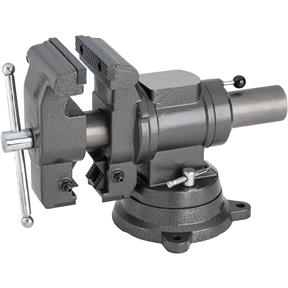
Both are 5 in vises with a 360 degree swivel base. The Grizzly one is a drop-forged industrial unit; the Amazon one is a lower-priced 5 in cast-iron vise.
Prices change often and Grizzly runs sales, so the buttons show current prices.




Prices change often; the button shows today's price on Amazon.
These picks plus the rest of a complete build at three budgets, as one list. A few short emails follow, then a couple a month at most.
Unsubscribe anytime. You can also just read the checklist on this site.Yes, if you have a sturdy bench along a wall. The Grizzly G4000 is 16 x 37 in at 294 lb on 120V. Park the car in front of it and plan the stock and chips so they stay off the car lane.
A 7 x 14 benchtop lathe teaches the basics at the lowest cost. A 9 x 19 like the Grizzly G4000 is a stiffer step up, and a 10 x 22 like the G0602 is a serious hobby machine at 432 lb.
The Grizzly G0704 mill/drill is a 1 HP, 120V machine at 12 A, so it does not. Give it a dedicated 20 A circuit. Larger mills are 240V; check the listing before you buy.
The Grizzly G4000 is 294 lb and the G0602 is 432 lb. A lightweight 7 x 14 weighs less, but check its listing. Plan a bench rated for the weight and a way to lift the machine into place.
A caliper, a dial indicator with a magnetic base, indexable lathe tools, a drill press vise, a bench vise and cutting fluid. Buy safety glasses first, then the measuring tools, then everything else.
Amazon carries the entry-level VEVOR lathe and the Mechmaxx and INTBUYING mills. Grizzly sells cast-iron lathes and the G0704 mill/drill direct. Compare weight, swing and the stand included.
This page is researched guidance, not professional electrical, engineering or safety advice. Circuits, loads and clearances depend on your house, your service and your town: have a licensed electrician confirm any wiring, and check local code and each manufacturer's manual before you act.