
Guides
Garage woodshop flooring
For a garage woodshop, sealed bare concrete is the cheapest floor that works, interlocking tiles are the easiest upgrade and anti-fatigue mats belong only at the places you stand, such as the bench and the saw. A 12 x 20 ft garage takes 5 packs of 50 tiles at 12 x 12 in, a 22 x 22 ft garage takes 10, before 5 to 10 percent waste. Keep mats and tiles out from under rolling machine bases unless the listing rates them for the load.
What is the best flooring for a garage woodshop?
The best floor is the one that fits how you work. A woodshop floor has four jobs: carry the weight of machines, stay flat enough to roll a mobile base across, be easy on your legs and be easy to clean, since sawdust and chips pile up. No single surface wins all four, so most shops end up with a base floor and mats where people stand. The base is concrete, sealed or coated. The upgrades are interlocking tiles over the whole floor or anti-fatigue mats at the work stations.
Sealed concrete wins on cost, load rating and flatness. It is already there, it takes any machine weight a residential slab can carry, and casters roll on it. Its drawbacks are that it is hard on legs and dropped tools, cold, dusty when unsealed and slippery when wet. Tiles solve the comfort and cold problems and hide cracks, but they are a layer with joints, and heavy points can dent or shift them. Mats solve comfort in one spot at the lowest cost. A woodshop rarely needs more than concrete plus mats.
Floor options compared
| Option | Comfort | Machine loads | Rolling bases | Cleaning | Watch for |
|---|---|---|---|---|---|
| Bare concrete | Hard, cold | Best | Best | Dusty | Cracks, dust, oil stains |
| Sealed concrete | Hard, cold | Best | Best | Easy | Slippery when wet |
| Epoxy or polyaspartic coating | Hard, cold | Best | Good | Easiest | Prep, hot-tire pickup, wet slipperiness |
| Interlocking tiles | Better | Check listing | Check joints | Easy | Dented by point loads, edges |
| Anti-fatigue mats | Best | Not for machines | Poor | Easy | Trip edges, chips under mat |
| Plywood or OSB over sleepers | Warmer, softer | Depends | Fair | Fair | Moisture, height, fire |
Two things on the table deserve attention. First, a floor cannot make a wet slab dry; see garage shop moisture and rust for the plastic sheet test before you cover anything. Second, a coating or a sealer needs a clean, dry, profiled slab, and a failure from moisture vapor shows as peeling or bubbling a season later. If you plan to coat, follow the product instructions precisely and do not guess about cure times or ventilation.
How many tiles does a garage woodshop need?
The VEVOR garage floor tiles are listed as 12 x 12 x 0.53 in, interlocking, in a pack of 50, so one pack covers 50 sq ft. Divide your floor area by 50, round up and add 5 to 10 percent for cuts and mistakes. Edge pieces and corners may be sold separately; check the listing before you count.
| Garage | Area | Packs of 50 (no waste) | Packs with 10 percent waste |
|---|---|---|---|
| 12 x 20 one-car | 240 sq ft | 5 | 6 |
| 12 x 22 one-car | 264 sq ft | 6 | 6 |
| 20 x 20 two-car | 400 sq ft | 8 | 9 |
| 22 x 22 two-car | 484 sq ft | 10 | 11 |
| 24 x 24 two-car | 576 sq ft | 12 | 13 |
| 32 x 24 three-car | 768 sq ft | 16 | 17 |
You do not have to tile the whole bay. In a bay shared with a car, tile the shop half and leave the car half bare, which also lets a wet car drip on concrete. In a one-car garage, tile the bench and machine zone only and measure it off the layout. The 12 x 22 woodshop layout and 22 x 22 layout show the zones. The price band is on the product page, and the best garage shop floor covering roundup compares the tiers; for a full budget the budget planner adds flooring to the machines.
Tiles, mats and a rolling stool


Prices change often; the button shows today's price on Amazon.
Machines on tiles: the load question
Tile and mat listings rate for foot and vehicle traffic, and a machine puts its weight on a few small feet. A 500 lb cabinet saw on four 2 in feet puts over 30 lb on each square inch, which can crush foam and dent plastic. A table saw on a mobile base with small casters is the worst case, and a rolling base rolling over tile joints can catch an edge. If you tile, you have three safe choices. Leave a bare concrete pad under the heavy machine, cutting the tile around it. Put a steel or plywood plate under each foot to spread the load. Or check the listing for a point-load rating that exceeds your machine and base, and pick tiles whose rated load comes from the manufacturer, not from a guess.
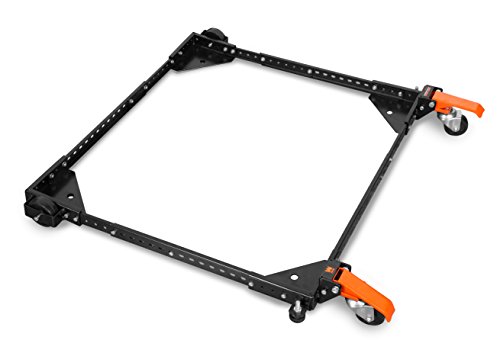
For wheeled work, check the base. A WEN 500 lb universal base lists its capacity; the caster size is on the listing. Large casters roll over joints, small casters do not. Whatever you choose, lock the casters before the machine runs and test the floor under the real machine before you tile the whole room. See best mobile base for a table saw and the mobile base sizing calculator.
The same caution applies to metalworking machines: lathes and mills should stand on bare concrete or a leveled bench, not on foam. In a mixed woodshop and machine shop, see the machine shop start guide.
Mats where you stand
Standing for hours on concrete is hard on the back, knees and feet, and a mat at the workstation changes that. The Vergo Industrial 15/16 in extra thick anti-fatigue mat and the FEATOL 0.9 in anti-fatigue mat are the two in our catalog; the thickness is on the listing title. Place one at each station where you stand still: the bench, the table saw operator spot, the jointer and planer, the drill press and the sanding station. A mat should be just larger than where your feet are. Check the edge: a beveled edge helps you step on and off without tripping.
Mats have three downsides in a woodshop. Chips and screws get under them and become a trip or a puncture. Rolling bases do not roll over them well. And a mat in front of a table saw can shift under a push stick, which is a loss of footing in the worst place. Anchor a mat with non-slip backing or a flat edge, vacuum under it weekly and never place a mat where a machine rolls. A rolling stool, such as the WEN 300 lb pneumatic mechanic stool, gives you a place to sit at the bench or the lathe.
Footwear helps more than people expect. Hard soles and a good insole on a bare slab are cheaper than a floor. Closed-toe shoes protect from dropped tools and offcuts. Always.
Dust, spills and safety on any floor
Whatever you choose, plan for what lands on it. Sawdust on a smooth floor is slippery, especially fine dust on a sealed or coated surface, and a spill of finish or oil on a coating is an invitation to slip. Sweep or vacuum at the end of every session. A shop vacuum with a fine filter is better than a broom; see dust control with a car in the shop. Oil-soaked rags and sawdust soaked with finish are fire hazards; see garage shop fire safety.
Some floors have particular concerns. Epoxy and similar coatings can become slick when wet, and anti-slip additives are available from the coating maker. Raised tiles have drainage gaps that collect fine dust, which then needs vacuuming from the gaps. Cheap vinyl and rubber over a bare slab can trap moisture. Rubber gym mats off-gas in a closed space for some time. Avoid carpet or cloth in a woodshop, which holds dust and is a fire risk with sparks.
Cold is the last factor. A bare slab in a cold garage is a heat sink, and standing on it makes your feet and legs colder than the air does. A mat or tile layer insulates a little. If you heat the garage, the floor takes the longest to warm; see best garage workshop heater.
A flooring plan by garage size
12 x 20 or 12 x 22 ft one-car. Sealed or bare concrete, a mat at the bench, no tiles under the saw or the mobile bases. Tile only if the slab is cracked or cold and you can leave pads for the machines.
20 x 20 or 22 x 22 ft two-car. Tile the shop bay, leave the car bay bare, and use mats at the bench and the saw. With 9 to 11 packs of tiles for the whole 484 sq ft; half that if you only tile the shop side.
24 x 24 and 32 x 24 ft. The same, plus a coating on the car side if you want an easy-clean surface for a car and a bare or sealed floor under the heavy machines. Clearances are in the layout guide.
Installing tiles and mats: a practical sequence
If you decide on tiles or a coating, do the prep before the product. A sequence that avoids most failures:
- Empty and sweep. Clear the bay, vacuum the slab and degrease oil spots. Tiles do not stick to oil and neither do coatings.
- Test for moisture. Run the plastic sheet test from the moisture guide. A damp slab changes the plan: tiles that allow air movement, and no sealed coating over a wet slab.
- Repair cracks. Fill cracks and spalled spots with a patching compound made for concrete so that tiles lie flat and machine feet are level.
- Mark the layout. Snap a center line and dry-lay tiles from the center out, so cut tiles at the edges are at least half a tile wide. Plan around the door track, the drain and the machine spots that stay bare.
- Lay and cut. Interlocking tiles click together with a mallet; cut edge pieces with a sharp blade or fine-tooth saw. Leave the expansion gap the listing asks for at the walls, since tiles grow and shrink with temperature.
- Add mats last. Place anti-fatigue mats where you stand, and test a mobile base across the tiles and the mat edges.
Work in daylight and with the garage door open for ventilation if you use adhesives or coatings, and keep ignition sources away from solvent-based products. For a one-weekend job, a bay of 240 sq ft takes 5 to 6 packs of 50 tiles by the table above, and a 484 sq ft bay 10 to 11. Look at the sizing again after you lay out the machines, because the bare pads under heavy machines reduce the count slightly.
Get the garage shop planning checklist
One printable page: measure the bay, count the circuits, list the machines, check the floor. Plus a few short emails, then a couple a month at most.
Unsubscribe anytime. You can also just read the checklist on this site.Frequently asked questions
What is the best floor for a garage woodshop?
Sealed bare concrete is the best base: cheap, flat and strong enough for machines and rolling bases. Add anti-fatigue mats where you stand, and tiles if the slab is cracked or cold, leaving bare pads under heavy machines.
How many garage floor tiles do I need?
Divide the floor area by 50 sq ft per pack of 12 x 12 in tiles, round up and add 5 to 10 percent. A 12 x 20 ft garage takes 5 packs and a 22 x 22 ft garage 10, before waste.
Can I put a table saw on garage floor tiles?
Only if the tile listing rates a point load above your machine and base. Heavy feet can dent or crush tiles, so leave a bare concrete pad under the machine or use steel plates to spread the load.
Are anti-fatigue mats good in a woodshop?
At the bench and other standing stations, yes. Keep them out from under rolling machines and out of the path of a push stick, anchor them and vacuum under them to remove chips.
Should I epoxy my garage woodshop floor?
A coating makes a floor easy to clean and resists oil, but it needs a dry, prepared slab and can be slippery when wet. Do a moisture test first and follow the product instructions.
This page is researched guidance, not professional electrical, engineering or safety advice. Circuits, loads and clearances depend on your house, your service and your town: have a licensed electrician confirm any wiring, and check local code and each manufacturer's manual before you act.
