
Guides
EV charger and workshop 240V sharing
Give the EV charger and the workshop separate 240V circuits. A charger is a continuous load, so its breaker and wire are sized at 125 percent of the charging current: a 40 A charge rate needs a 50 A circuit with 6 AWG copper (NEC Table 310.16, 60 C column), commonly on a NEMA 14-50 outlet. Add the shop on its own circuits or a subpanel, and have a licensed electrician run the load calculation for the whole house. General information; check local rules.
Can a car charger and a workshop share 240V in a garage?
They can share a service and a panel, but they should not share a circuit. An EV charger draws a high current for hours, a table saw draws a high current for minutes, and a welder draws a high current in bursts. Put any two of them on one 240V circuit and you either trip the breaker, overheat the wire or, with the wrong adapter, build a hazard. The right plan is one dedicated circuit for the charger, separate circuits for each shop machine that needs 240V, and a main panel or subpanel that your electrician has checked can carry them together.
The thing that surprises people is the arithmetic. A 40 A charger on a 240V circuit is 9.6 kW, which is more than a whole 30 A dryer circuit. Add a 3 HP table saw at 17 A, a 3 HP dust collector at 17 A and a welder drawing 30 A or more, and the garage's connected load easily passes the 60 or 100 A subpanel sizes we compute for shops. The service to the house may have room or may not. Whether it does is the electrician's load calculation under the NEC, not something a website can determine. For the basics of how 240V works, see 240V in a garage explained.
How is an EV circuit sized?
The code treats EV charging equipment as a continuous load, meaning one that runs for three hours or more. A continuous load must have its breaker and conductors rated at 125 percent of the load current. Work backward and the usable charging current is 80 percent of the breaker size. These are the common combinations, from NEC Table 310.16 (copper, 60 C column, with the small-conductor limits in NEC 240.4(D)) and the 80 percent rule:
| Breaker | Max continuous charge | Power at 240V | Wire (60 C copper) | Common receptacle |
|---|---|---|---|---|
| 20 A | 16 A | 3.8 kW | 12 AWG | NEMA 6-20 |
| 30 A | 24 A | 5.8 kW | 10 AWG | NEMA 6-30 |
| 40 A | 32 A | 7.7 kW | 8 AWG | hardwired, or 14-50 on a 50 A |
| 50 A | 40 A | 9.6 kW | 6 AWG | NEMA 14-50 |
| 60 A | 48 A | 11.5 kW | 4 AWG | hardwired |
Two things on the table. First, a charger's own rating and your vehicle's onboard charger both limit the actual rate; the car and the charging equipment negotiate and take the lower of the two. Second, long runs add voltage drop; the voltage drop calculator shows whether a run of 60 or 100 ft needs a thicker wire. Aluminum wire, wire in conduit and cable in walls have different rules from the NM cable column above. The electrician reads the manufacturer's instructions and the code and decides. Have a licensed electrician confirm everything on this page. The 240V circuit calculator does the arithmetic for motors, and the principle is the same.
14-50 or 6-50: which outlet in the garage?
A NEMA 14-50 is a 50 A, 250V receptacle with two hots, a neutral and a ground. It is the common outlet for plug-in EV charging equipment and for ranges and RV hookups. The Leviton 50 A 1450R heavy duty receptacle is the example in our catalog. A NEMA 6-50 is a 50 A, 250V receptacle with two hots and a ground and no neutral; it is the common welder outlet, and the 6-50R welder receptacle is the example. A plug fits only its own receptacle; the two are physically different, and an adapter is not a solution to a mismatch.
A 14-50 can serve a charger and a welder only if the welder's plug is a 14-50 plug, and only one at a time. If you want both a charger and a welder at 50 A, install two outlets on two circuits. A plug-in outlet that is used every day is also a wear item: the heat in a poor connection is a known cause of melted receptacles. Use a quality, heavy duty receptacle, have it installed with the correct torque and inspect it for discoloration. Many installers prefer hardwiring a dedicated EV charger because it removes the receptacle as a failure point. Whichever you pick, read the equipment manual.
GFCI protection for EV receptacles and garage receptacles is a requirement in recent NEC editions, and the details depend on the edition your area adopted. The electrician and your local inspector know which applies.
Receptacles, wire and a subpanel
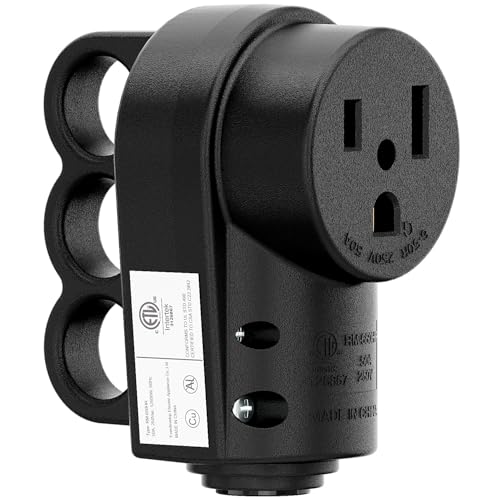


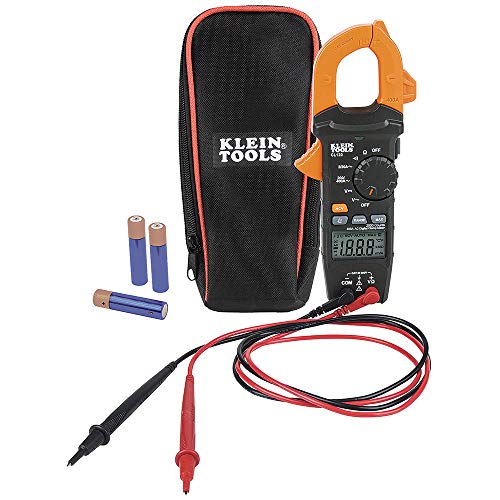
Prices change often; the button shows today's price on Amazon.
Where should the outlet go?
In a garage with a car, the outlet location is a layout problem. Look at where the charge port sits on your car, which varies between models, then at how you park. The cord on a plug-in charger has a fixed length, so the outlet or the wall unit must be within reach of the port with the car in its usual spot. Common practice is a wall position near the front or the side of the car. In a 12 x 20 ft one-car bay with a sedan parked 12 in from the door, the car sits in a 6.2 ft wide footprint in a 12 ft bay, leaving 30 in or more beside it on each side. A wall outlet at 3 to 4 ft off the floor is in the walk-around zone, so mount it at the front wall or the side wall away from the door-swing.
The shop adds conflicts. A charger outlet in the same wall as the bench takes space. A charging cable across the floor is a trip hazard and a hazard for a mobile base. Plan the path: outlet, cable, port, and keep the cable off the aisle. If the shop has mobile machines that roll to the car's position when the car is out, the cable must not be in their path. Look at the 22 x 22 mixed layout and the 12 x 22 mixed layout to see where a car and a shop coexist, and use the park-the-car calculator for your vehicle. A crew-cab truck at 21 ft does not fit a 20 ft deep bay with the door closed, so a charger for a big EV truck may be outside the closed door anyway.
Put the outlet where a future second EV can reach it, too. Running conduit with space for another circuit is cheap now and expensive later.
The subpanel and the whole-house question
Our subpanel sizing, from the machine packages that fit a 22 x 22 ft garage, gives the shop side: a woodshop package needs 7 circuits (1 at 240V) with about 40 A of demand and a 60 A subpanel to ask about; a machine shop about 22 A and a 60 A subpanel; welding and fab about 60 A and a 100 A subpanel; an auto shop about 56 A and a 100 A subpanel. See the woodshop, the welding and the auto pages, and the workshop amps calculator. Now add a 40 A charger (50 A circuit). A woodshop at 40 A of demand plus a charger at 40 A is 80 A of continuous and shop loads before any demand factors, and an electrician decides how much of that can be assumed not to run at once.
That is why the electrician looks at the main service. Common service sizes are 100, 150 and 200 A. A 100 A service with an electric range, a dryer and air conditioning may have no room for a 50 A charger plus a shop subpanel. A 200 A service often does. Options include a service upgrade, a load management device that limits the charger when other loads are high, or a lower-power charger on a smaller circuit. The load calculation under the NEC sets the answer; some utilities also have EV rates, rebates or requirements. Ask the electrician to show the calculation and keep it with your permit.
A subpanel in the garage is a good home for both. The shop circuits and the charger circuit come off the same panel, each with its own breaker, and the feeder from the main is sized to the load the calculation allows. A basic main lug load center, like the View-Pak Siemens E0204ML1060SU, is the kind of panel used for a subpanel; the electrician selects the panel, feeder and breakers. For feeder or branch wire, a 6 AWG three-conductor NM-B cable such as the Southwire 6/3 NM-B, 125 ft is the sort of cable that fits a 50 A branch circuit in a dry interior run, subject to the code and the inspector.
What does it cost?
There is no honest single number. The pieces that drive a quote are the distance from the panel to the garage outlet, whether the wall is finished, whether the panel has space or needs a subpanel or a service upgrade, the permit and the inspection, and local labor rates. Wire is a real cost at 50 A: 6 AWG copper is thick, and a 100 ft run is a major cost compared with a 10 ft run. The 6/3 NM-B cable is catalog-tiered under $500 for a 125 ft roll. The 240V outlet install cost calculator adds the pieces you get from quotes, and cost to install a 240V outlet in a garage explains the cost drivers. Get at least two written quotes and ask each electrician to state whether the service can carry the charger and the shop.
Ask about incentives. Some utilities and local programs offer rebates or time-of-use rates for home charging; the details change often and vary by location, so check yours.
Safety notes for a shared garage
- Never use an extension cord for EV charging unless the equipment manual explicitly allows it; the continuous load heats a cord quickly.
- Never plug a charger and a shop heater or welder into the same circuit through an adapter or splitter.
- Check the receptacle and plug for warmth after a long charge. A warm plug is a bad connection; stop and have it looked at.
- Keep combustibles, finishes and fuel away from the charger and the panel; see garage shop fire safety.
- Do not work inside a live panel. Turn off the main, test with a tester you trust and leave panel work to the electrician.
- A clamp meter, such as the Klein CL120 digital clamp meter, shows the real current on a branch circuit, which is useful to see what the charger and the shop draw, but it is not a replacement for a load calculation.
For a plan that includes a plug-in outlet, a welder circuit and a dust collector, see how to install a 240V outlet in a garage and how to run outlets in a garage shop. The price of the shop side is on the budget planner.
Get the garage shop planning checklist
One printable page: measure the bay, count the circuits, list the machines, check the floor. Plus a few short emails, then a couple a month at most.
Unsubscribe anytime. You can also just read the checklist on this site.Frequently asked questions
Can I plug an EV charger into the same outlet as my welder?
Only if both use the same receptacle type, one at a time, and the circuit is rated for the larger load. Better to install separate circuits. Never use an adapter to force a mismatch. A licensed electrician should confirm.
What size breaker for a Level 2 EV charger?
The breaker is 125 percent of the charging current: a 32 A charge rate needs a 40 A breaker, and a 40 A rate needs a 50 A breaker with 6 AWG copper (NEC Table 310.16, 60 C). The electrician confirms for your equipment and run.
Is a 14-50 outlet good for an electric car?
Yes, it is the most common plug-in option for 40 A charging on a 50 A circuit. A heavy duty receptacle and a correct installation matter, because a continuous load heats poor connections. Hardwiring is the alternative.
Do I need a subpanel for a garage workshop and EV charger?
Often yes if you have several circuits. Our woodshop package needs about a 60 A subpanel and welding about 100 A, and a 50 A charger circuit adds to that. Whether your service supports it is the electrician's load calculation.
How much does it cost to install a 240V outlet for an EV?
It depends on run length, wall finish, panel space, permit and local labor, so we do not publish a figure. Use two written quotes and our install cost calculator to see how the pieces add up.
This page is researched guidance, not professional electrical, engineering or safety advice. Circuits, loads and clearances depend on your house, your service and your town: have a licensed electrician confirm any wiring, and check local code and each manufacturer's manual before you act.
