
Guides
Cost to install a 240V outlet in a garage
The cost to install a 240V outlet in a garage is driven by five things: how far the outlet is from the panel, whether the panel has a free double-pole space, whether the wall and ceiling are finished, the wire gauge for the load (a 30 A circuit on 10 AWG is far cheaper than a 50 A circuit on 6 AWG), and the permit and labor rates where you live.
We do not print a dollar figure for your town because no honest number exists without a quote. Get two written quotes that itemize those parts, and use the outlet install cost calculator to compare them. Have a licensed electrician confirm the design.
Why there is no single price, and what to do instead
Search for the cost of a 240V garage outlet and you will find a wide range of numbers, and none will be for your garage. The same outlet can be a short, simple job or a day-long one, depending on facts a web page cannot see. So this page does something different from most: it breaks the cost into its parts, shows which parts move the total, and gives you a way to compare real quotes. We do not publish an electrician's rate, because that varies by region, season and contractor, and we do not type a dollar figure for labor or for a finished job. If a page tells you a precise price without knowing your panel, treat it with suspicion.
What you can do before you call anyone is know your own job. Work out the load, the breaker and the wire (how to install a 240V outlet in a garage walks through it), measure the run from the panel, and check whether the panel has space. Then the quote is for the right work, and the comparison between bids is fair. The 240V outlet install cost calculator takes the pieces you enter from real quotes and totals them.
The parts of a 240V outlet quote
Every quote for a new circuit is made of the same building blocks. Ask each electrician to itemize them, so you can see where two bids differ:
- Labor. Hours on site times the rate, plus a trip or minimum charge in many places. This is usually the largest part, and the most variable.
- Breaker. A double-pole breaker sized to the circuit. A ground-fault or arc-fault breaker costs more than a standard one; ask whether your jurisdiction's code edition requires one for this receptacle.
- Cable or conduit and wire. Priced by the foot and by the gauge. A 10 AWG circuit for a 30 A load uses much cheaper wire than a 6 AWG circuit for 50 A. Conduit with individual conductors costs more in materials and labor than cable, but makes later changes easier.
- Receptacle, box and cover. A heavy-duty 14-50 or 6-50 receptacle is a small cost next to the rest.
- Permit and inspection. A fee set by your jurisdiction. Not optional where required.
- Panel work. If there is no free double-pole space, the electrician may add tandem breakers (if the panel allows), reorganize circuits, install a subpanel or recommend a service upgrade. This is the item that makes quotes jump.
- Drywall, patching and finish. Fishing cable through finished walls is more labor than running it exposed on an unfinished garage wall. Patch and paint may be extra.
- Disposal and incidentals. Staples, straps, connectors, labels.
What moves the total: the five big drivers
1. Distance from the panel to the outlet
Every foot adds cable and labor. It also adds voltage drop, which can force a thicker wire on a long run. The NEC Chapter 9 Table 8 values used in the site's voltage drop calculator give a quick check: a 17 A motor on 10 AWG copper stays under about 3 percent to roughly 150 ft, and a 40 A load on 8 AWG is more limited. Use the voltage drop calculator with your run. A short run on an unfinished garage wall, panel next to the outlet, is the cheapest case. A long run through a finished ceiling, or a trench to a detached garage, is the most expensive.
2. Panel capacity and free spaces
A new 240V circuit needs a double-pole space and spare service capacity. The electrician does a load calculation under the NEC for the house. A panel with no spaces, a fuse box, an electric range, dryer, heat pump and EV charger already near the service limit, or an old aluminum feeder can each change the job from "add a breaker" to "add a subpanel" or "upgrade the service". The layout engine's suggestion for a woodshop package is 60 A for the 12 x 20, 20 x 20 and 22 x 22 ft garages and 100 A for the 24 x 24 and 32 x 24 ft ones. These sizes and the panel work they imply are the biggest swing in the cost.
3. Load and wire gauge
NEC Table 430.248 puts a 3 HP motor at 17 A at 230V, so a 25 A breaker (125 percent, 21.3 A, rounded up to a standard size) and 10 AWG copper (NEC Table 310.16, 60 C column, 30 A). A 5 HP motor draws 28 A, so a 35 A breaker and 8 AWG. A 50 A welder or EV circuit needs 6 AWG (55 A in the table). The wire price rises quickly with the gauge, and the 125 ft spool of Southwire 6/3 NM-B is in the under $500 tier for materials alone. Choosing the right load, not the biggest one, is the best saving: the 240V circuit calculator shows the minimum, and the electrician decides if more is sensible.
4. Wall and ceiling finish
An unfinished garage wall lets the electrician staple cable or run conduit across the surface. A finished wall means fishing cable through studs, drilling plates and patching. A detached garage or a long underground feed adds trenching, conduit and a separate disconnect.
5. Permit, inspection and regional labor
Permit fees, inspection scheduling and the local electrical labor rate are set where you live. Ask the building department which permits apply. Also ask whether a licensed electrician is required or a homeowner may do the work with a permit.
Four common cases, ranked by how complicated they are
Instead of a price, here is the relative effort for four typical cases, from simplest to most involved. Use them to sanity-check a quote:
| Case | What the electrician does | What makes it bigger |
|---|---|---|
| A. Panel in the garage, outlet within about 10 to 15 ft, spare space | Add a breaker, run a short cable on an unfinished wall, mount a box and receptacle, permit | Finished wall, need for conduit, a GFCI breaker |
| B. Panel inside the house, outlet 30 to 60 ft away | Same, with a longer run through the attic, basement or wall into the garage | Fishing through finished walls, thicker wire for voltage drop |
| C. No spare space or several circuits needed | Install a subpanel in the garage, fed by a larger breaker, with several breakers | Feeder size, service capacity, number of circuits |
| D. Service at its limit, or a detached garage | Service upgrade or underground feeder, then circuits | Utility coordination, trenching, permits |
Case A is the quote people hope for. Cases C and D are why electricians say "it depends". If your garage is Case C, the next question is how many circuits you really need now and later: it is almost always cheaper to run a subpanel once than to add circuits one at a time. See how many amps for a garage workshop.
Materials behind a 240V garage outlet quote

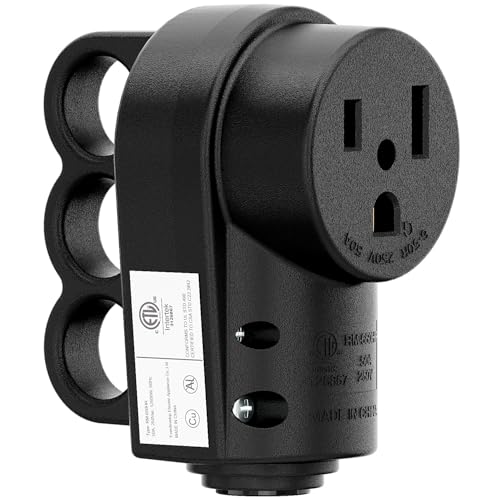


Prices change often; the button shows today's price on Amazon.
How to get quotes you can compare
- Write a one-page scope. The machine, its nameplate amps and horsepower, the outlet location marked on a floor plan, the panel location and a photo of the panel (door open, main breaker visible).
- Ask for at least two written quotes, from licensed electricians, with the permit included or itemized.
- Ask each one the same questions. Can the service carry this load? Is there a free space? What breaker, wire and receptacle will you use, and why? Will you use conduit or cable? Is the outlet GFCI-protected under the local code? Who pulls the permit and schedules the inspection?
- Compare the parts, not the total. A low bid that leaves out the permit, the patching or a GFCI breaker is not low.
- Ask about timing. A short job in a busy season may wait for a gap in the electrician's schedule.
- Check licenses and insurance. Your state or city licensing board lists them.
Enter each bid's pieces into the install cost calculator and look at which line accounts for the difference.
Can doing it yourself save money, and is it worth it?
Labor is the largest part of most quotes, so the savings from doing it yourself can be real. So are the risks. A live panel can kill, and a mistake in sizing or termination can start a fire months later and void an insurance claim. Many jurisdictions allow a homeowner to do the work only with a permit and an inspection, and some require a licensed electrician for any new circuit. A common compromise: you plan the job and do the non-hazardous work (opening the garage wall, running conduit, setting the box), and a licensed electrician makes the panel connection and signs off. Ask the electrician before you start, because they may not accept work they did not do.
If you do buy parts yourself, the materials are modest next to labor. A 14-50 receptacle is in the under $50 tier and a 6-50 receptacle in the under $25 tier. A subpanel load center is in the under $50 tier before breakers and feeder. A plug-in outlet tester is in the under $25 tier. Tell the electrician what you plan to supply so they agree to install it.
This is general information, not electrical advice or a quote. Have a licensed electrician confirm the design and make the panel connection.
Ways to keep the cost down without cutting corners
- Put the outlet near the panel if the machine can live there. Moving the layout is free; moving the cable is not.
- Do the circuits together. One trip for a 240V outlet, a heater circuit and two 20 A outlets is cheaper than three trips.
- Size the circuit to the load. A 3 HP motor does not need a 50 A circuit. Do not pay for 6 AWG when 10 AWG is enough, unless you are deliberately future-proofing.
- Leave the walls open. If you are insulating or finishing the garage, wire before the drywall goes up. See how to build a workshop in a garage.
- Do the prep. Clear the area, have the panel accessible, and mark the outlet position.
- Use a conduit stub to a convenient point if you expect to add machines.
- Pick a standard receptacle. Do not order exotic parts; a 14-50 or 6-50 is stocked everywhere.
And remember what the outlet is for. A 240V circuit only saves money if the machine you run on it is worth it. Use the budget planner to total the machines, the circuits and the rest together.
Get the garage shop planning checklist
One printable page: measure the bay, count the circuits, list the machines, check the floor. Plus a few short emails, then a couple a month at most.
Unsubscribe anytime. You can also just read the checklist on this site.Frequently asked questions
How much does it cost to install a 240V outlet in a garage?
It depends on the run length, panel space, wall finish, wire gauge and local labor and permit rates, so no single honest number exists. Get two itemized written quotes and compare the parts. The site calculator totals the pieces you enter.
What makes a 240V garage outlet cost more?
A long run, a full panel that needs a subpanel, finished walls, a 50 A circuit on 6 AWG instead of a 30 A circuit on 10 AWG, a detached garage or a service upgrade. The panel work is the biggest swing.
Is it cheaper to put the outlet near the panel?
Yes. Cable and labor scale with distance and with how hard the route is. Placing the machine near the panel, or running a subpanel once, usually beats several long runs.
Do I need a subpanel for one 240V outlet?
Often not. A spare double-pole space and enough service capacity are enough. A subpanel makes sense when you need several circuits, the run is long or the main panel is full. A licensed electrician does the load calculation.
Can I save money by buying the receptacle and wire myself?
Materials are a modest share of the cost, but you can save by supplying parts if the electrician agrees. Tell them in advance which receptacle and wire you plan to buy, based on the load.
This page is researched guidance, not professional electrical, engineering or safety advice. Circuits, loads and clearances depend on your house, your service and your town: have a licensed electrician confirm any wiring, and check local code and each manufacturer's manual before you act.
