Gas MIG, 205A

YESWELDER 205A MIG welder, 110V/220V, 5-in-1 per the title: MIG, flux-core MIG, spool gun MIG, lift TIG and stick. The machine to run gas MIG on 240V.
Comparison
For a garage that also parks a car, gas MIG on a 240V machine such as the YESWELDER 205A (110V/220V, MIG, flux-core, spool gun, lift TIG and stick per the title) makes the cleanest welds with the least smoke and spatter, and needs a gas cylinder and a place to keep it. Flux-core on the YESWELDER 140A (110V/220V) needs no cylinder and welds in a drafty bay, and it makes more smoke, spatter and slag.
YESWELDER 205A MIG welder, 110V/220V, 5-in-1 per the title: MIG, flux-core MIG, spool gun MIG, lift TIG and stick. The machine to run gas MIG on 240V.
YESWELDER 140A MIG welder, 110V/220V per the title: MIG, flux-core MIG, lift TIG and stick. The lower-amp machine for 120V and flux-core work.
| Gas MIG, 205A | Flux-core, 140A | |
|---|---|---|
| Shielding | Gas cylinder (argon mix) shields the weld | Wire core makes its own shield; no cylinder |
| Smoke and fumes | Less | More: a visible plume |
| Spatter and clean-up | Less spatter, no slag | More spatter, slag to chip off |
| Wind and drafts | Gas blows away in a draft | Tolerates a draft; works with the door open |
| Machine (title) | 205A, 110V/220V | 140A, 110V/220V |
| Circuit | Our planning load is 30 A at 240V: a 40 A breaker and 8 AWG; the nameplate decides | Smaller machine; read the listing for amps on 120V |
| Floor items | Welder, cart, cylinder | Welder and cart |
| Fits 12 x 20 ft with a car? | Empty bay only (30 x 20 in cart allowance) | Same machine class: empty bay only |
| Fits 12 x 22 ft with a car? | Yes | Yes |
| Budget tier | Under $500 | Under $250 |
They are the same machine doing two things. A MIG welder feeds wire through a gun. In gas MIG, solid wire is shielded by a gas from a cylinder. In flux-core, the wire is a hollow tube filled with flux that burns to make its own shield. Both machines in this comparison are listed as multi-process, so the choice is a choice of wire and gas, not of welder. A good machine will run both, and many garage welders buy one machine and switch.
The case for gas is quality: smoother beads, less spatter, no slag, easier clean-up, better on thin metal. The case for flux-core is convenience: no cylinder, works in drafts, works on dirtier metal, and is cheaper to start. Our sources are the YESWELDER titles and the manufacturer's listings; we have no test of our own, so check the listing for the thickness each machine welds at each voltage and the duty cycle at each setting.
The garage adds a third factor: the garage is a room with a car, fuel and a door. The process you choose changes how much smoke you make, how much fire risk you carry and how much you need to move.
Welding throws sparks and hot spatter that travel several feet, and a garage holds gasoline in the car, a can for the mower, rags, solvents and paint. Welding in a garage is the activity on this site that carries the most risk, and it needs rules, not just a purchase. Move the car out. Clear the bay of anything flammable, including vapor-producing items. Keep a fire extinguisher in reach, such as the Kidde 2-pack, and a bucket of water or sand for slag. Never weld on a fuel tank or a container that held fuel, and never weld near open containers of solvent.
Flux-core makes more smoke and more spatter than gas MIG. The plume is a fume hazard, especially when the metal is coated: galvanized steel gives off zinc fumes, painted and oily metal give off their own. Ventilate with a fan pulling out, not blowing across the weld on a gas shield, wear a respirator suited to welding fume, and do not weld in a closed garage attached to living space. Read the respirator listing; the 3M half facepiece kit takes cartridges and filters that must match the hazard, and a dust mask is not a fume respirator.
Your eyes and skin need protection from the arc: a welding helmet, gloves and non-flammable clothing. We do not link a helmet because our catalog does not carry one. Read the garage as a workshop guide for the rules that apply to your home and insurance.
Gas MIG adds a cylinder: tall, heavy, pressurized and required by good practice to be chained or strapped upright. A cylinder cart holds it. The YESWELDER 2-tier cart lists four drawers and dual cylinder slots, which puts the welder, the cylinder and the consumables on one rolling unit. Our layout engine uses a 30 x 20 in allowance for a MIG welder on a cart.
That allowance fits a 12 x 22 ft bay with a sedan parked and every larger bay, and fits a 12 x 20 ft bay only when the car is out. Welding needs more than a footprint: the engine gives a welder a 36 in operator halo, since you need room to move around a project. A steel welding table adds a 48 x 30 in allowance and a 36 in halo; it fits a 12 x 22 ft bay with the car stored but not working, and a two-car bay with room to work. See the MIG welder fit sheet and the beginner welding and fab setup.
Flux-core removes the cylinder from the list but not the cart. The welder, the wire, the chipping hammer and the wire brush still want a home. A 12 x 20 ft bay is a bay for welding with the car outside.
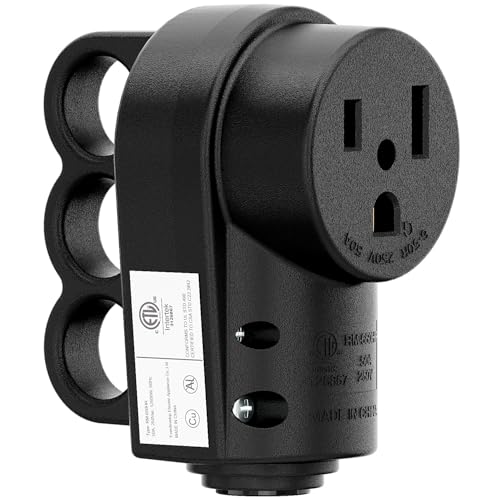
A welder is a high-current, intermittent load, and the National Electrical Code sizes its circuit by the machine's rated input current and duty cycle (Article 630), not by the ordinary motor rules. Our layout engine plans a 240V welder at 30 A, and 125 percent of 30 A is 37.5 A, which points to a 40 A breaker and 8 AWG copper; the NEC 60 C column of Table 310.16 gives 8 AWG as 40 A. The final answer is the nameplate on the machine and a licensed electrician. A NEMA 6-50 receptacle such as the 6-50R is the usual 50 A welder outlet. Run the numbers in the 240V circuit calculator.
On 120V the machine draws less power and welds thinner steel. The titles say 110V/220V for both machines, and what each does at each voltage, the duty cycle and the maximum thickness are on the listings. A welder on a 15 A household circuit that also carries lights and a fridge trips the breaker. Give it a dedicated circuit, and do not use a long thin extension cord; the 10/3 50 ft cord is the heavy option for 120V work, and the voltage drop calculator checks the run.
A welder is rarely alone. The ARCCAPTAIN 55A plasma cutter is listed 120V/240V and adds another load to the same circuit and another set of sparks. A bench grinder, an angle grinder such as the Metabo HPT 4-1/2 in and a vise such as the Nakkaa 5 in fill the bench. Welding throws hot spatter on the floor, so the slab should be bare concrete where you weld. Interlocking floor tiles such as the VEVOR tiles are a comfort and cleanliness product; read the listing for the material and keep them out of the spatter zone. Read the welder roundup for the three tiers.
Gas MIG on 240V for a garage with a car and clean work; flux-core on the smaller machine for a drafty bay, repair and fab, and a tight budget. If you can only buy one, buy the multi-process machine and use flux-core first. The 205A machine does both and gives you the 240V headroom; the 140A machine does both and fits a smaller budget. Either way, the rules are the same: car out, fuel out, extinguisher in reach, ventilation on and eyes covered.


Prices change often; the button shows today's price on Amazon.
One printable page: measure the bay, count the circuits, list the machines, check the floor. Plus a few short emails, then a couple a month at most.
Unsubscribe anytime. You can also just read the checklist on this site.Many people do, but it makes smoke, spatter and fume. Move the car and all fuel and solvents out, ventilate with a fan, keep an extinguisher in reach, and wear a fume respirator and eye protection. Check your insurance and local rules before you start.
For gas MIG, yes: a cylinder of shielding gas, a regulator and a hose. Cylinders must be secured upright. Flux-core wire needs no cylinder. Both YESWELDER machines here are listed as multi-process, so they can run either.
Our planning load is 30 A at 240V. At 125 percent that is 37.5 A, so a 40 A breaker and 8 AWG copper. NEC Article 630 sizes welder circuits by rated input and duty cycle, so the nameplate and a licensed electrician decide.
Not in our layout engine. A MIG welder on a 30 x 20 in cart fits a 12 x 22 ft bay with a sedan and fits a 12 x 20 ft bay only with the car out. Weld with the car outside.
Gas MIG with solid wire is the usual choice for thin steel because it makes less spatter and heat distortion is easier to control. Flux-core suits thicker, dirtier steel. Check each listing for the thickness the machine is rated to weld.
This page is researched guidance, not professional electrical, engineering or safety advice. Circuits, loads and clearances depend on your house, your service and your town: have a licensed electrician confirm any wiring, and check local code and each manufacturer's manual before you act.

