Wall-mount
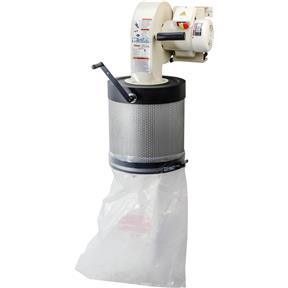
1 HP wall-mount collector with a canister filter. Hangs on the wall so it takes no floor; the listing has the dimensions and CFM.
Comparison
A wall-mount collector such as the Grizzly G0785 or the POWERTEC wall-mount is the right answer when you have a fixed machine layout and a wall to hang it on: the floor stays clear for the car. A portable such as the G1028Z2 (1-1/2 HP, 120V at 12 A, 1300 CFM bag rating, 118 lb) wins when the shop is small and the machines move.
1 HP wall-mount collector with a canister filter. Hangs on the wall so it takes no floor; the listing has the dimensions and CFM.
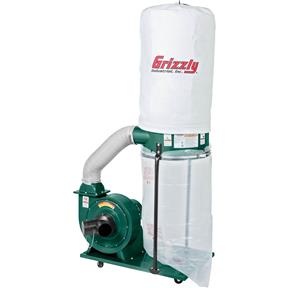
1-1/2 HP portable on casters, 120V at 12 A or 6 A at 240V, 1300 CFM bag rating, 6 in inlet Y with two 4 in openings, 42.6 gallon bag, 118 lb.
| Wall-mount | Portable | |
|---|---|---|
| Where it lives | On a wall, above the floor | On casters, anywhere on the floor |
| Motor (listing) | 1 HP | 1-1/2 HP |
| Filter | Canister | Bag |
| Voltage and amps (listing) | Read the nameplate figure on the listing | 120V at 12 A, or 6 A at 240V |
| Inlet | See the listing | 6 in inlet Y with two 4 in openings |
| Weight | See the listing | 118 lb |
| Ducting | Fixed: one collector, one duct system | Flexible hose to the machine, or a short fixed main |
| Floor space taken | None, beyond the wall zone | A caster base; stores against a wall |
| Wall required | Studs or a block wall rated for the unit | None |
| Budget tier | Price at grizzly.com | Price at grizzly.com |
The wall-mount, because it takes none of the floor. That is its whole case, and in a garage it is a strong one. A portable collector has a footprint of its own and a clearance zone around it for the hose and for emptying the bag. In our layout engine, floor items carry a 12 in clearance halo, and the car adds walk-around and apron requirements. Take the collector off the floor, and the bay gets easier to plan.
The floor space is worth a number. In a 12 x 20 ft bay, our engine fits a collector of the Grizzly G0860 class only when the car is out. A collector on the wall changes that. The practical caveat is that a wall-mount hangs at head height, so the wall it hangs on cannot also hold the workbench, the pegboard and the cabinets. Look at the 12 x 20 ft woodshop layout and the 12 x 22 ft layout to see what the wall budget looks like.
The portable is the opposite: it takes floor but is easy to put away against the wall, and it can be used on a machine at one end of the bay and then at the other end.
A collector moves air through a duct, and the duct decides how much arrives at the machine. At 4,000 fpm, a 4 in duct carries 349 CFM, a 5 in duct carries 545, and a 6 in duct carries 785. A table saw or a bandsaw asks for 350 CFM at the hood, a planer 400, a sander 550. Those are our machine table figures, not measurements.
A wall-mount is a natural fit for a fixed system: a short main, a few branches, and a blast gate at each machine. The collector is at the end of the run and the duct runs the length of the wall. The shorter and smoother the run, the more airflow arrives. The G1028Z2 listing gives a 6 in inlet Y with two 4 in openings, which means it takes two 4 in hoses at once; that is a convenient layout for two machines side by side.
A portable with a flex hose is the loss-heavy option. Flexible hose has a lot more resistance than smooth pipe, and a long hose crossing the floor is a trip hazard in a garage that also parks a car. The compromise is a short fixed main at one end of the bay and a portable that parks at the main. The dust collector calculator turns your machine list into a required CFM.
The airflow figures on a Grizzly listing differ in kind: the G1028Z2 lists a bag rating of 1300 CFM, which is a free-air figure. The G0860 lists 868 CFM at 1.8 in of static pressure. Do not compare a free-air number to a loaded one. We have no CFM figure for the G0785 in our briefs, so read the listing.
The G1028Z2 is listed at 12 A at 120V, or 6 A at 240V. At 125 percent, 12 A is 15 A, which points to a 15 or 20 A circuit with 14 or 12 AWG; the NEC 60 C column gives 14 AWG as 15 A (Table 310.16). The 240V option halves the current in the same wire. For a 1 HP motor, NEC Table 430.248 gives 16 A at 115V and 8 A at 230V. A licensed electrician should confirm the circuit for any of them.
A wall-mount adds a second job: the mounting. The collector hangs from a bracket or a French cleat on studs, with the weight read from the listing. Do not mount it on drywall alone. Allow for the vibration with isolating pads, and place it where you can reach the filter and the bag or drum without a ladder. Mounted high, the collector's intake also sits high, so the duct comes down to the machines; plan the main so it slopes toward the collector and does not trap chips.
If the garage is attached and shares a wall with living space, a wall-mount transmits more vibration through the wall than a portable on the floor. Isolation pads and a flexible connection to the duct help.
Both kinds are loud. The motor and the impeller are the noise, wherever they sit. Wear hearing protection such as the Decibel Defense muffs and keep the door closed near neighbors.
Filters decide the dust that reaches the car. The bag-style portable and the bag-style wall-mount both use fabric, which clogs on fine dust. The G0785 uses a canister, which cleans better. A wall-mount canister keeps more fine dust out of the bay than a bag, and a portable bag keeps the least. Whatever you choose, add a hanging filter: the G0738 lists 260, 362 and 409 CFM and a 1 micron inner filter, and its sheet is the G0738 fit sheet. For a ranked list, see the air filtration roundup.
The Amazon pair mirrors the Grizzly pair. The POWERTEC 1 HP, 560 CFM wall-mount uses collector bags with a 1 micron rating on its listing, where the Grizzly wall-mount uses a canister. The POWERTEC portable has the same 1 HP, 560 CFM motor on casters. The listing is the place to read the dimensions. The cards below show the Amazon and Grizzly buttons side by side for each. For the bag against canister against cyclone decision, read the three-way comparison.
Hang the collector if the layout is settled, the wall is solid and the car needs the floor. Roll it if you rent, if the layout changes and if you want to move to 240V later. A good compromise in a two-car garage is a wall-mount at the end of a short fixed main for the big machines and a shop vac with a separator for handheld tools; that arrangement leaves the floor clear and avoids a long hose. See shop vac against dust collector for that second half.
Wall-mount for a fixed shop and a bay that must park a car; portable for a shop that moves. The G0785 keeps the floor clear; the G1028Z2 rolls to the machine and moves to 240V later. Both are 120V-friendly and neither is a cyclone, so if fine dust or a clean filter is the priority, look at the G0860 first. The dust collector roundup has all three tiers.
Amazon pick and Grizzly pick for the same job, side by side.
Both are 1 HP wall-mount collectors that free the floor. The Grizzly one uses a canister filter; the Amazon one uses filter bags.
Both are bag-style portables on casters. The Grizzly unit is a 1-1/2 HP machine with a 1300 CFM bag rating; the Amazon unit is a 1 HP class machine at a lower entry cost.
Prices change often and Grizzly runs sales, so the buttons show current prices.


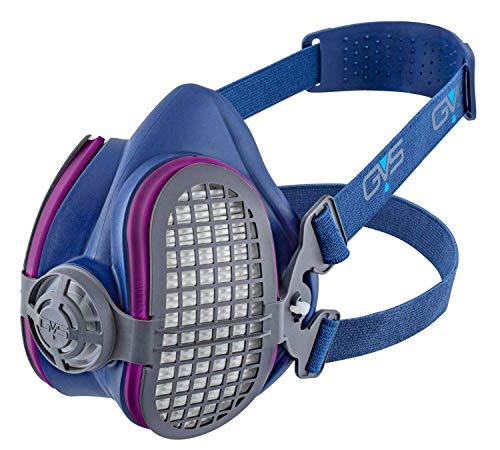
Prices change often; the button shows today's price on Amazon.
One printable page: measure the bay, count the circuits, list the machines, check the floor. Plus a few short emails, then a couple a month at most.
Unsubscribe anytime. You can also just read the checklist on this site.It can be unbolted and moved, but the duct run goes with the wall. If you think you will rearrange the shop or move house, a portable on casters is the lower-regret choice. A wall-mount suits a layout you have already settled.
Wall studs or a masonry wall, with a bracket or French cleat. Do not hang one from drywall alone. The listing gives the weight; add the weight of a full bag or drum. A vibration pad between the mount and the wall helps with noise.
It lists 12 A at 120V and 6 A at 240V on the same motor, so it can run on either, depending on how it is wired. That is a wiring job for a licensed electrician who reads the nameplate and the manual.
You can use a hose from the collector to each machine, but a short fixed main with blast gates moves more air than a long flexible hose. The G1028Z2 listing gives a 6 in inlet Y with two 4 in openings, which suits a pair of machines.
The wall-mount, if you have the wall. It takes no floor in a bay where our layout engine fits cyclone-class collectors only when the car is out. If you have no wall to spare, a shop vac with a separator is the fallback.
This page is researched guidance, not professional electrical, engineering or safety advice. Circuits, loads and clearances depend on your house, your service and your town: have a licensed electrician confirm any wiring, and check local code and each manufacturer's manual before you act.