5 in swivel bench vise
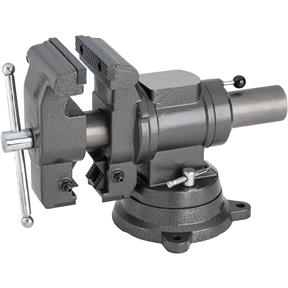
Both are 5 in vises with a 360 degree swivel base. The Grizzly one is a drop-forged industrial unit; the Amazon one is a lower-priced 5 in cast-iron vise.
Best picks · three tiers
For a garage metal shop, a dual-voltage MIG welder is the best fit because it runs on a household 120V outlet to start and on a 240V circuit when you need more heat: the YESWELDER 140A for a first welder, the YESWELDER 205A 5-in-1 as the all-round pick, and the ARCCAPTAIN MIG200 with a 55A plasma cutter for a fab bench.
| Tier | Amazon pick | Budget | Grizzly option |
|---|---|---|---|
| Beginner | YESWELDER 140A MIG Welder | Under $250 | Amazon only |
| Intermediate | YESWELDER 205A MIG Welder | Under $500 | Amazon only |
| Expert | ARCCAPTAIN 200A MIG Welder 110V 220V 6 in 1 Aluminum Welding | Under $500 | Amazon only |
Yes, with care. Many people weld in a garage, and it is the most common home metal shop. The risks are fire, fumes and flash. A garage has gasoline in the car and the mower, paint cans, rags, cardboard and sawdust, and welding throws sparks several feet. It also has a car that does not want spatter on its paint, and a wall that may be shared with the house.
The rules are simple. Clear everything flammable from a wide radius around the weld. Weld on a metal table, not on a wood bench. Keep the car out of the bay or well covered with a welding blanket. Keep a fire extinguisher within reach and know how to use it. Ventilate: open the door, run a fan, and never weld galvanized or coated metal without proper fume control. Wear a helmet with the right shade, gloves, a jacket and safety glasses under the helmet. Do not weld near a fuel tank or on a closed container. These are general safety notes, not a substitute for the welder manual or training. See the garage workshop guide for more.
This page was researched from manufacturer listings, published specifications and owner reviews, not a weld test. Duty cycle and amp draw are on each listing's data plate; read it, because a welder's input current is the number the circuit depends on.

Under $250
Who it is for: A one-car garage owner who wants to weld brackets, repair a gate and learn on sheet and light plate, with only a household outlet.
The YESWELDER 140A MIG is listed as 110V/220V with MIG, flux-core, lift TIG and stick. Run it on 120V to start. Flux-core wire needs no shielding gas, which is a plus in a garage with an open door and a breeze, since a draft blows shielding gas away. Add the YESWELDER welding cart with its two cylinder slots and drawers so the machine rolls out for work and back for the car. A 140A machine on 120V is for thin to medium steel; it is not a heavy-plate machine.
Skip it if: You plan to weld thick plate, trailer frames or structural steel. A small machine runs out of heat and duty cycle.
Check price on Amazon
Under $500
Who it is for: A one- or two-car garage owner who builds and repairs steel weekly and may add aluminum with a spool gun.
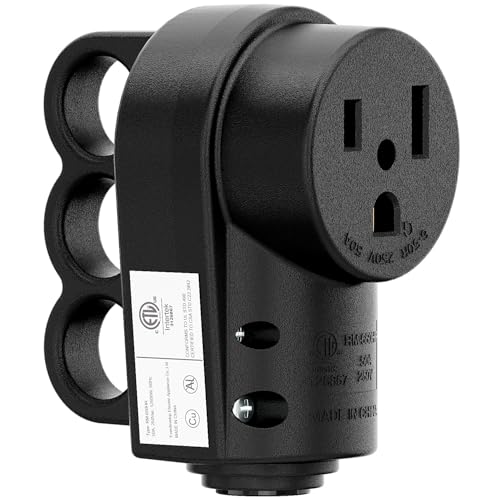
The YESWELDER 205A is listed as a 5-in-1 MIG, flux-core MIG, spool-gun MIG, lift TIG and stick machine on 110V or 220V. The ARCCAPTAIN MIG200 is the 200A alternative, listed as a 6-in-1 with aluminum capability. On 240V, either machine has the heat for thicker steel. That needs a 240V receptacle: a 6-50 like the NEMA 6-50R is the standard welder plug, and a 14-50 like the Leviton 1450R is common too. Match the receptacle to the plug on your machine and the amps on its nameplate.
Skip it if: You only own a 15 A garage circuit and will not add a 240V one. On 120V, a 205A machine cannot reach its rating.
Check price on Amazon
Under $500
Who it is for: A two- or three-car garage metalworker who fabricates frames, brackets and trailers and cuts plate at the bench.
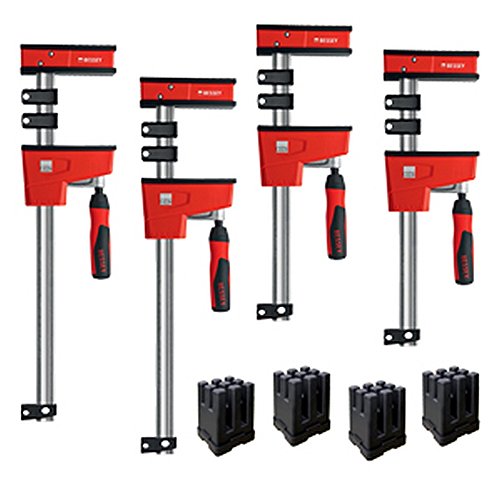
The ARCCAPTAIN MIG200 pairs with the ARCCAPTAIN 55A plasma cutter, a non-touch pilot arc unit that runs on 120V or 240V. A plasma cutter turns plate into parts faster than a grinder, and a fab bench needs both. Add a welding cart, a clamp set such as the BESSEY K Body kit and an angle grinder like the Metabo HPT 4-1/2 in. Together they are a real metal shop that still fits a two-car bay with a car.
Skip it if: You have a 12 x 20 ft bay and a gas-powered mower in the corner. A fab shop with a plasma cutter and a welder is a fire and fume risk in a shared space.
Check price on AmazonA dual-voltage welder plugs into a 120V outlet or a 240V outlet and adjusts its output. On 120V the heat is limited by the circuit: a 15 or 20 A branch cannot deliver the input for a 200A machine, so the output is much lower. On 240V the same machine reaches closer to its rated output. That is why the same listing says 140A, 205A or 200A but the real number on a household outlet is lower; the manual gives the output on each voltage, so read it.
For a one-car garage with only 120V, a 140A dual-voltage machine is a sound start. It welds sheet metal, brackets and light plate. For a bay with a 240V receptacle, either 200A machine uses more of its range. The 240V MIG welder fit sheet shows how a welder sits in each bay, and the welding and fab amps page adds up the load of a welder, a plasma cutter, a grinder and the lights.
Do not assume the receptacle. The input amps on the nameplate set the circuit: take the rated input current, use the duty-cycle rules in the NEC for welders (Article 630), and size the breaker and wire with a licensed electrician. The 240V circuit calculator covers motor loads; a welder has its own rules, so ask. Return no number rather than a guessed one.
For a garage, the two practical processes are MIG with shielding gas and flux-core with no gas. MIG gives a clean weld with little cleanup and needs a cylinder, a regulator and still air. Flux-core uses a wire with a flux inside, makes more smoke and spatter and works in a breeze. Most dual-voltage machines in this roundup list both. Lift TIG and stick are extras on these machines; they work, and for serious TIG or stick work you buy a dedicated machine.
The garage door decides a lot. A wide-open door gives ventilation, and also a draft that blows MIG gas away from the weld. Flux-core handles that. Closed up, MIG is cleaner but you need extraction. Plan for a fan that moves smoke out and a way to keep the car clean.
Aluminum needs a spool gun and pure argon, which is why the 205A and 200A machines list a spool-gun function. If you only weld steel, you do not need it. Buy for the metal you will actually join.
A welding station is a table, a cart and a clear zone. Put a steel welding table or a metal-top bench against a wall that is not shared with the house, with a fire-resistant wall behind it. The cart holds the welder and the gas cylinder; the YESWELDER 2-tier cart lists four drawers and dual cylinder slots, and it rolls the machine to the work and back to the wall when the car comes in. A cylinder must be secured upright to the cart or the wall with a chain.
Keep the clear zone around the weld: a common rule is a radius of 35 ft free of combustibles, which a garage cannot give, so use welding blankets and screens to shield the car and the walls. In a 12 x 20 ft one-car bay, welding with a car in it is a bad idea; pull the car out. In a two-car bay (20 x 20 to 24 x 24 ft), keep the car on the far side with a cover. The 22 x 22 welding and fab layout shows the table, the cart, the grinder and the car in one plan.
Light the table well with shop lights, and keep the grinding away from the welding. Grinding sparks and spatter share the same fuel, and a grinder next to a pile of rags is a recipe for a fire.
A welder alone does not make parts. The usual set is a plasma cutter or an abrasive saw for cutting, an angle grinder for prep and finish, clamps and magnets for holding, a vise, a square and a way to measure. The 55A plasma cutter cuts plate faster than a grinder and makes a cleaner edge. The Metabo HPT angle grinder comes with five grinding wheels and a case on its title. A pair of parallel clamps such as the JORGENSEN 36 in bar clamps or the BESSEY K Body kit holds a frame square while you tack.
A bench vise belongs on the table. The Nakkaa 5 in swivel vise and the Grizzly T33818 are 5 in bench vises with 360 degree swivel bases; the dual card below compares them. Add a bench grinder such as the DeWalt 8 in or the Grizzly G0865 for shaping and sharpening.
Power budget matters. A welder, a plasma cutter and a compressor do not run at once, but the circuit for each must be right. The workshop amps calculator adds the loads for you. Plasma cutters also want clean, dry air, so see the compressor page if yours takes shop air.
Welding in a garage sits close to two things you care about: a car and a home. Use a welding blanket over the car if it must stay, and never weld within reach of the fuel system. Keep sparks away from the house wall, and check the area for smoldering embers for at least an hour after you finish. Store gas cylinders upright and secured, away from heat. Keep the extension cord short and heavy, or better, use a proper receptacle.
Fumes matter as well. Welding fumes and the smoke from flux-core are not good to breathe in a closed garage. Use a fan to pull smoke out through the door and wear a respirator rated for metal fume when you weld, particularly on coated or galvanized steel. A cheap P100 mask is not a substitute for proper fume protection on some metals; read the label and the welder manual.
Finally, check your insurance and local rules. Some policies and some local codes limit welding in an attached garage. Ask before you set up. This site gives general information, not legal or safety advice.
One card per machine class, with the Amazon pick and the Grizzly pick side by side.
Both are 5 in vises with a 360 degree swivel base. The Grizzly one is a drop-forged industrial unit; the Amazon one is a lower-priced 5 in cast-iron vise.
Prices change often and Grizzly runs sales, so the buttons show current prices.







Prices change often; the button shows today's price on Amazon.
These picks plus the rest of a complete build at three budgets, as one list. A few short emails follow, then a couple a month at most.
Unsubscribe anytime. You can also just read the checklist on this site.A dual-voltage MIG welder, which runs on a household 120V outlet and a 240V circuit. The YESWELDER 205A is the all-round pick, the 140A model is the starter, and the ARCCAPTAIN MIG200 adds aluminum capability.
Yes, with a dual-voltage machine, but the output is limited by the circuit. A 120V outlet suits sheet metal and light plate. For thicker steel, add a 240V receptacle and have a licensed electrician confirm the circuit.
Flux-core needs no shielding gas, so a draft from the garage door does not ruin the weld, but it makes more smoke and spatter. MIG with gas is cleaner and better indoors with good ventilation and still air.
Many 240V welders use a NEMA 6-50 plug; some use a 14-50. Check the plug on your machine and the input amps on its nameplate, then match the receptacle and have an electrician size the breaker and wire.
It can be, with precautions: clear combustibles, cover or remove the car, ventilate, keep a fire extinguisher at hand and check the area afterward. Check your insurance and local rules first.
Not to start. A plasma cutter like the ARCCAPTAIN 55A cuts plate quickly and cleanly, which matters when you fabricate. Many garage welders add one after they are comfortable with the welder and a grinder.
This page is researched guidance, not professional electrical, engineering or safety advice. Circuits, loads and clearances depend on your house, your service and your town: have a licensed electrician confirm any wiring, and check local code and each manufacturer's manual before you act.
