6 in benchtop jointer
Both are 6 in benchtop jointers. The Grizzly lists 1-1/2 HP and 22,000 cuts per minute; the Amazon pick has a spiral cutterhead.
Best picks · three tiers
For a garage woodshop setup, buy a 6 in benchtop jointer and a 13 in benchtop planer: the Grizzly G0945 (1-1/2 HP, 10 A, 9-1/2 x 19-1/2 in base, 44 lb) with the DeWalt DW735X. The WEN PL1326 and WEN JT630H do the same jobs at lower cost. A 15 in Grizzly G1021Z planer is for a two-car bay with a dust collector.
| Tier | Amazon pick | Budget | Grizzly option |
|---|---|---|---|
| Beginner | WEN PL1326 15-Amp 13-Inch Spiral Benchtop Thickness Planer | Under $500 | Grizzly G0945 6 in Benchtop Jointer |
| Intermediate | DEWALT Thickness Planer | Under $1,000 | Grizzly G0814 6 x 48 Jointer with Cabinet Stand |
| Expert | DEWALT Thickness Planer | Under $1,000 | Grizzly G1021Z 15 in 3 HP Planer with Cabinet Stand |
To mill rough lumber to flat, square, even stock, you do both jobs. The jointer flattens one face and squares one edge. The planer makes the other face parallel and brings the board to thickness. A planer alone cannot flatten a cupped board, because it copies the shape of the face it rides on. A jointer alone cannot give you even thickness. If you buy lumber that is already surfaced, you can skip both and use a table saw. If you want to buy rough lumber, which costs less and gives you a better choice, you need both.
Many garage woodworkers start with a planer and use a sled or a table saw jig to flatten the first face, then add a jointer later. That works for short boards. A 6 in benchtop jointer is the other starting point: the table is short, and the 6 in width limits you to narrow stock, but it is the cheapest way to get a true edge.
This page was researched from manufacturer listings, published specifications and owner reviews, not a milling test. Specs for the Grizzly G0945 come from the Grizzly briefs; for the G0814 and G1021Z the briefs give the name only, and we say so where it matters.
Under $500
Who it is for: A one-car garage woodworker who wants to flatten and thickness rough boards and has a bench or a stand for both machines.
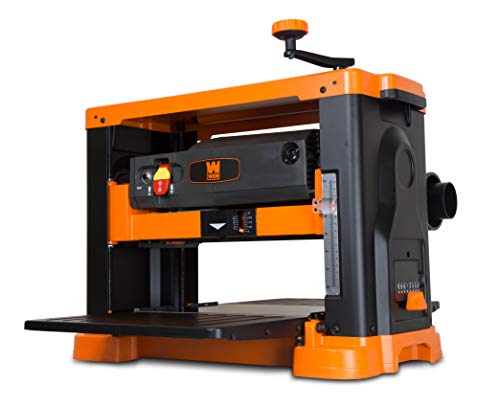
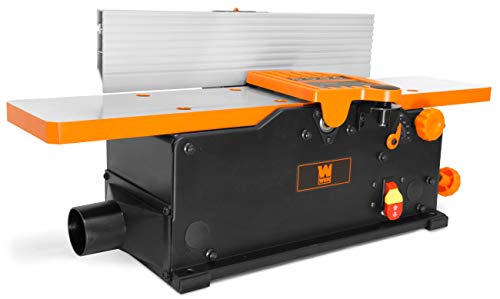
The WEN PL1326 is a 15 A, 13 in spiral-cutterhead benchtop planer and the WEN JT630H is a 10 A, 6 in spiral benchtop jointer. They are the lowest-cost way to flatten a board on one face and then thickness it. The Cutech 40160HB is the other 6 in spiral benchtop jointer in the catalog. A spiral head gives a smoother cut on figured wood and is quieter than a straight-knife head. Plan a place to store them: both are bench machines, and on a shelf they take no floor.
Skip it if: You mill a lot of lumber every weekend. Benchtop machines are slow and small, and a 6 in jointer cannot flatten a wide board.
See on Amazon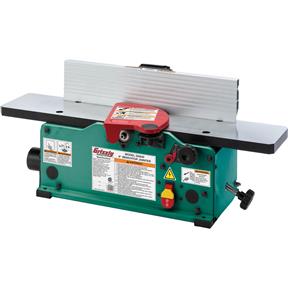
Direct from Grizzly: Grizzly G0945 6 in Benchtop Jointer. The Grizzly G0945 is a 6 in benchtop jointer with 1-1/2 HP at 10 A, a 6-1/4 x 30 in table, 1/8 in depth of cut and a 2-1/2 in dust port, at 44 lb.
Buy direct at Grizzly
Under $1,000
Who it is for: A one- or two-car garage woodworker who mills lumber monthly and wants a longer jointer bed.
The DeWalt DW735X is the 13 in benchtop planer most weekend shops end up with, and it works well with a collector hooked to it. The Grizzly G0814 is a 6 x 48 jointer with a cabinet stand, which has a longer bed than the benchtop jointers, and a longer bed flattens a longer board more accurately. The briefs list the G0814 by name only, so read its listing for the weight, motor, voltage and footprint before you plan the floor. A floor jointer is a real machine, and the bay needs a place for it.
Skip it if: You have a 12 x 20 ft one-car bay. A floor-standing jointer with a 48 in bed and an 8 ft board needs a lane you do not have.
See on AmazonDirect from Grizzly: Grizzly G0814 6 x 48 Jointer with Cabinet Stand. The cabinet stand makes the G0814 a stationary machine, with a bed long enough to flatten boards that a benchtop jointer cannot.
Buy direct at Grizzly Under $1,000
Who it is for: A two- or three-car garage woodworker who mills a lot of lumber, wants a wider cut and has a dust collector to match.
The Grizzly G1021Z is a 15 in, 3 HP planer on a cabinet stand. It is a bigger step up in footprint and circuit than the DW735X. A 3 HP single-phase motor draws about 17 A at 230V by NEC Table 430.248 (34 A at 115V), so assume a 240V circuit and check the listing for the voltage and the amps. A planer wants about 400 CFM at the hood, so pair it with a cyclone like the Grizzly G0860 or a 3 HP collector. The briefs list the G1021Z by name only; confirm the weight and footprint on the listing.
Skip it if: You have no 240V and no collector. A big planer without dust collection buries a garage in chips in minutes.
See on AmazonDirect from Grizzly: Grizzly G1021Z 15 in 3 HP Planer with Cabinet Stand. Fifteen inches of width and a stationary motor mean wider boards and faster work, at the price of floor, weight and a 240V circuit.
Buy direct at GrizzlyThe planer is a benchtop machine, so it needs a surface and a stock lane. A board enters one side and leaves the other, so the machine needs space equal to the board length on each side. An 8 ft board needs about 8 ft in front and 8 ft behind, less some overlap. In a 12 x 20 ft one-car bay with a car, you cannot do that. You can in a two-car bay, or you can pull the car out.
The workable answer is to keep the planer on a mobile stand or a bench with locking casters and roll it to the middle of the bay on milling day, when the car is out. Then it goes back against the wall. A mobile base like the WEN 500 lb base or the VEVOR 1500 lb adjustable base works under a stand for a stationary planer. The benchtop planer fit sheet and the layout calculator run the numbers for your bay.
Plan for snipe and for chips. A planer throws a lot of chips, and a 13 in model can fill a bag in a few minutes. Outside the garage door in good weather is a sensible place to run it; if not, a collector with a hose is required.
The benchtop machines are 120V and heavy users of power. The WEN planer lists 15 A, and a 15 A planer needs its own 20 A circuit, with the dust collector on another. The WEN jointer lists 10 A and the Grizzly G0945 lists 10 A at 120V. These machines do not run at the same time in a one-person shop, so one circuit can serve both in sequence, but not with a collector on it. Use the workshop amps calculator to add the loads for your own run.
For the 15 in Grizzly planer, assume a bigger load. NEC Table 430.248 gives a 3 HP single-phase motor 34 A at 115V and 17 A at 230V. The breaker and the wire come from 125 percent of that, using NEC Table 310.16 at the 60 C column: 17 A x 1.25 is about 21 A, so a 25 A breaker with 10 AWG on a typical garage run is the likely answer. Check the listing for the actual voltage and amps, and have a licensed electrician confirm. The 240V circuit for a 3 HP motor page works the same example through.
Planers pull a spike at start, so a circuit shared with lights will flicker. Keep the lights on a separate circuit. The 240V in a garage guide explains what a new circuit involves.
A lot. A planer is the dustiest machine in a woodshop by volume, and a jointer is not far behind. The numbers this site uses are about 400 CFM at the hood for a planer and about 350 CFM for a jointer. A 4 in duct carries 349 CFM at 4,000 fpm, a 5 in duct 545 CFM and a 6 in duct 785 CFM. So a planer wants a 5 or 6 in duct, not a 4 in hose, and a collector that delivers 400 CFM or more at the machine, after losses.
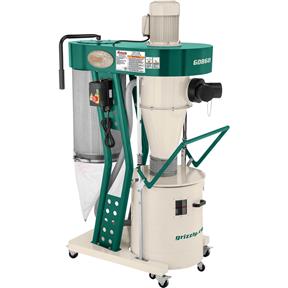
The DeWalt DW735X and the Grizzly benchtop jointer have dust ports; a collector with a 4 in hose and an adapter is the usual connection. A shop vacuum will clog on a planer in seconds. A cyclone like the Grizzly G0860 (868 CFM at 1.8 in SP, 6 in intake, 20 gal drum) or a wall unit like the POWERTEC 1 HP is the working answer. The dust collector roundup goes through the options, and the dust collector calculator sizes the system.
Add a respirator such as the GVS Elipse P100 and hearing protection; planers are loud. If you have a car in the bay, cover it or move it out before milling. Fine dust gets into every crack, and chips on a hood are hard to clean.
A straight-knife cutterhead has two or three long blades that dull and nick, and you replace or rotate them. A spiral cutterhead has many small carbide inserts in rows, and you rotate an insert when it dulls. The spiral head cuts with a shear angle, which tends to leave a smoother surface on figured wood and makes less noise in practice, according to maker listings and owner reviews. The WEN planer and the WEN and Cutech jointers in this roundup list spiral cutterheads in their titles.
Spiral heads cost more to build but less to maintain. A nicked straight knife leaves a ridge on every board until you fix it; a nicked insert leaves a smaller mark that you can rotate away. For a garage shop where you do the maintenance yourself, a spiral head is a convenience. The DW735X uses a different approach with its own knife system; read the listing and owner reviews for the details.
Whichever you pick, set the machine up carefully. Jointer tables must be coplanar with the knives or inserts, and planers need clean rollers and level infeed and outfeed support. A good setup matters more than the name on the machine.
The rule is to keep the machines against the wall and the stock lane clear when you work. In a two-car bay (20 x 20 to 24 x 24 ft), place the planer on a bench or stand along the side wall with the infeed pointing toward the door, and run the board straight through. In a one-car bay, store the machines on shelves or a rolling stand, and use the door opening as part of the stock lane by pulling the car out for milling day.
Think about the order of work. Joint the face, joint the edge, plane to thickness, rip on the table saw. That sequence needs the jointer, the planer and the saw all in reach, and a rolling stand for each makes it possible in a small bay. Check the 22 x 22 woodshop layout to see how they sit. Store boards on a wall rack, off the floor, and bring only what you will mill.
If your goal is the first woodshop in a garage, the table saw page comes first, and a planer and jointer are the second wave. Many people get by with a table saw, a bandsaw and a planer, then add a jointer when they get tired of fighting bowed boards.
One card per machine class, with the Amazon pick and the Grizzly pick side by side.
Both are 6 in benchtop jointers. The Grizzly lists 1-1/2 HP and 22,000 cuts per minute; the Amazon pick has a spiral cutterhead.
The Amazon pick is a benchtop 13 in planer on 120V; the Grizzly G1021Z is a 15 in, 3 HP planer on a cabinet stand and a bigger step up in floor space and circuit.
The long-bed floor jointer flattens longer boards than any benchtop. The Amazon pick is the benchtop alternative that fits a one-car garage.
The Grizzly G0860 is a two-stage cyclone on 120V with a 1 micron canister; the Amazon pick is a bag-style 1 HP machine. The cyclone costs more and keeps the filter clean far longer.
Prices change often and Grizzly runs sales, so the buttons show current prices.


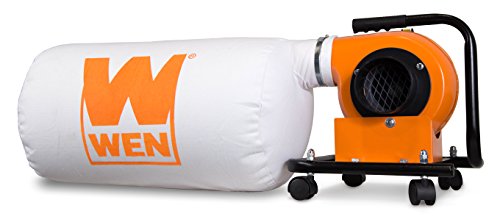
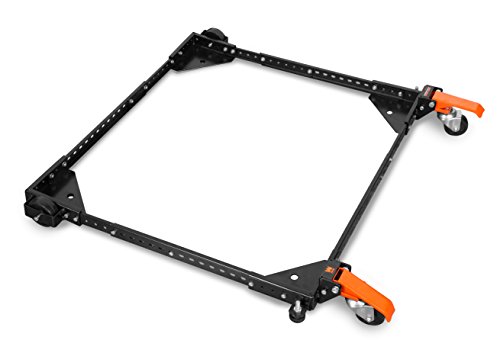


Prices change often; the button shows today's price on Amazon.
These picks plus the rest of a complete build at three budgets, as one list. A few short emails follow, then a couple a month at most.
Unsubscribe anytime. You can also just read the checklist on this site.Only if you buy rough lumber. The jointer flattens one face and one edge, and the planer makes the other face parallel and sets the thickness. If you buy surfaced lumber you can skip both.
A 6 in benchtop jointer. The Grizzly G0945 has a 9-1/2 x 19-1/2 in base, a 6-1/4 x 30 in table and weighs 44 lb, so it stores on a shelf and goes on a bench for use.
It is a 13 in benchtop planer that most weekend shops end up with. Pair it with a dust collector, because a planer fills a bag quickly, and with a stand you can roll out of the way.
A 3 HP single-phase motor draws about 17 A at 230V and 34 A at 115V by NEC Table 430.248, so 240V is the practical choice. Check the Grizzly G1021Z listing and have an electrician confirm.
About 400 CFM at the hood, per the figures this site uses. That means a 5 or 6 in duct and a collector that delivers it after losses. A shop vacuum clogs on a planer very quickly.
Amazon carries the DeWalt and WEN benchtop planers and the WEN and Cutech jointers. Grizzly sells the G0945 benchtop jointer, the G0814 floor jointer and the 15 in G1021Z planer direct.
This page is researched guidance, not professional electrical, engineering or safety advice. Circuits, loads and clearances depend on your house, your service and your town: have a licensed electrician confirm any wiring, and check local code and each manufacturer's manual before you act.