
Workbench
Garage workbench and storage
Combine a workbench with storage in three bands: drawers or a rolling chest below the top, pegboard or a cleat wall between about 40 and 72 in above the floor, and a locking wall cabinet or shelves above that. Keep 36 in of aisle, mount heavy storage low and over studs, and store daily tools within one step of the bench. A bench with built-in storage and power, such as a 48 in bench with a pegboard and outlets, does most of this in 4 square feet.
How do you combine a workbench with storage in a garage?
You stack the storage vertically around the bench in three bands and keep the floor for the bench and the aisle. Below the top, drawers, a rolling chest and bins hold heavy tools and hardware you reach for from a standing position. Above the top, between roughly 40 and 72 in off the floor, pegboard or a cleat wall holds the daily hand tools in sight. Above that, shelves and a locking cabinet hold supplies and things you use less often. Every band uses the same wall, so a 6 ft bench with its wall above it stores more than the same floor area of freestanding shelves.
The reason this works in a garage is the car. The floor behind a parked sedan is 3 ft in a 12 x 20 ft bay and 5 ft in a 12 x 22 ft bay, so a bench-and-storage wall that is 24 in deep at the bench and 12 in deep above it takes the least floor for the most storage. The workbench size for a one-car garage page has the fit table, and how to organize a garage workshop sets the zones.
Below the top: drawers, chests and bins
The space under a bench is the most underused volume in a garage. Options, from cheap to built in:
- A rolling tool chest tucked under the bench. A Goplus 5-drawer rolling tool cabinet with a detachable top toolbox or a VEVOR 2-in-1 rolling chest with 5 drawers slides under or beside the bench and rolls out to where you work. Grizzly's T34658 is a 42 in 6-drawer top chest and the T34659 is a 42 in 5-drawer roller cabinet; they pair, and the top chest can sit on the bench or on the cabinet. Check each listing for its external dimensions and load rating before you plan the slot.
- A shelf under the bench. A bottom shelf at 6 to 8 in off the floor stiffens the legs and carries bins. Heavy tools, power tool cases and bags of fasteners belong here, so the bench is weighted down.
- Bins on rails. Plastic bins that hang from a rail under the bench top slide out like drawers and cost little.
- A cabinet base. A bench built over a cabinet carcass with doors and drawers. It is the tidiest solution and the heaviest; see garage workbench ideas.
Plan the knee space if you sit. A stool such as the WEN pneumatic rolling stool needs a slot, and a bench with a full-width shelf under the top has no knee room. A bench for standing work can have storage across its full width; a bench for sitting needs a gap. Also leave space for your toes: a toe-kick of 3 to 4 in at the base lets you stand close without tipping forward.
Above the top: pegboard, cleat walls and shelves
The wall above the bench is the most valuable storage in the shop, because you see and reach everything. Pegboard is the fast option: the Spampur 4-pack of metal pegboard panels with 50 hooks is in our catalog, and the CAMMOO 48 x 24 in bench comes with a pegboard and power strip. A French cleat wall is stronger: a row of 45-degree cleats lets you hang boxes, racks and holders anywhere, and you can rearrange without drilling. Choose by load: pegboard hooks hold hand tools well and not heavy items, and a cleat wall holds a drill case.
Rules that keep it usable. Put the tools you use daily in the band from 40 to 60 in (eye to chest height). Lighter, seldom-used tools go above 60 in. Outline the tools with a marker or use labeled hooks so every tool has a home, and you can see at a glance what is missing. Mount the board on studs with spacers so hooks can seat. Do not hang anything where a swinging garage door or a car door can hit it. Leave 18 in of headroom above the bench top for a shelf and a light, and keep the shelf depth to 12 in or less so you can see over it.
Wall space has a power limit, too. The wall behind the bench should have outlets every 4 to 6 ft above the bench; see workbench with power outlets. Put the light over the bench, not behind you; see how to hang lights.
Benches, chests, cabinets and pegboard


Prices change often; the button shows today's price on Amazon.
Amazon and Grizzly, side by side
Each card shows an Amazon pick and a Grizzly Industrial pick for the same job.
Top tool chest
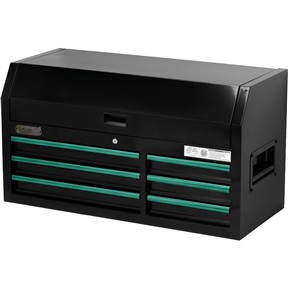
Pick the Amazon cart if you want one rolling unit; pick the Grizzly 42 in top chest if it will sit on a bench or on the matching roller cabinet.
Roller cabinet
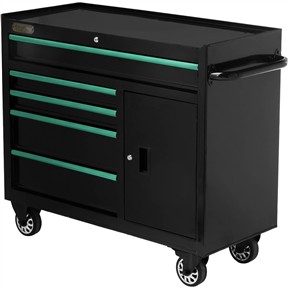
The Amazon combo is a one-box purchase; the Grizzly roller cabinet pairs with its 42 in top chest when you want to add drawers in stages.
4 ft adjustable workbench

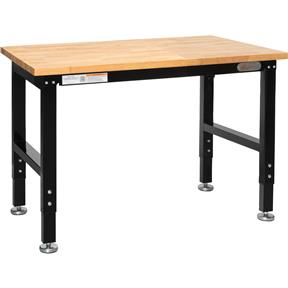
Pick the Amazon bench for the lowest entry cost; pick the Grizzly bench if you want outlets built into the bench and a direct parts line.
Prices change often and Grizzly runs sales, so the buttons show current prices.
Cabinets and shelves: closed storage
Closed storage keeps dust, moisture and curious hands off. A locking steel cabinet such as the GREATMEET locking metal wall cabinet with doors and a shelf holds glues, finishes, sharp bits and anything that should not be touched. Mount it at the end of the bench, with the bottom above the bench top so the door swings clear. Anchor into studs with the correct fasteners and load it with the heaviest items low. If there are children in the house, a lock is a safety feature; for flammable finishes, a cabinet built for them is a better answer than a general one. See garage shop fire safety.
For bins and supplies, steel shelving is the standard. The VEVOR 5-tier unit (60 x 24 x 78 in) and the HOMEDANT 47.7 in deep 5-tier unit stand on the floor; the VEVOR title gives 60 x 24 in, and the HOMEDANT title says 47.7 in deep, so read its listing for the footprint. A 24 in deep shelf next to a bench shares the aisle, so measure the aisle with the shelf in place. Anchor tall units to studs so they cannot tip, keep the heavy bins low and label every bin.
Moisture is a storage issue in a garage. Bins on the slab pick up water, and cardboard wicks it. Put everything off the floor, use plastic or metal containers, and keep metal tools in drawers or a cabinet with a rust inhibitor; see garage shop moisture and rust.
Weight, anchoring and stability
Storage is weight, and weight needs support. A wall cabinet loaded with tools can weigh well over a hundred pounds. Fasten it into studs, not drywall, using screws sized to the cabinet maker's instructions. Load ratings on a listing apply to the product as designed and installed; the wall behind it is your responsibility. A rolling chest full of tools is heavy too, and it can tip forward if you open several drawers at once; most chests have an interlock, so use it, and do not pull out a top drawer while the cabinet is on a slope.
The bench has to carry the load above it. A bench with a pegboard and a shelf and a tool chest on top needs a stout frame. The listings for the CAMMOO and Betterhood benches list a 2,000 lb maximum load; read what the number means for the top, the shelf and the pegboard before you stack weight on them. A bench and wall storage that are fastened together to a wall stud are stable; a freestanding bench with a loaded pegboard can tip.
Garage slabs slope. A tall unit that is level in the front can lean toward the door. Shim to level and anchor. Keep the heaviest storage on the wall that the car is not next to.
A storage plan for four benches
4 ft bench in a 12 x 22 ft garage. A 48 x 24 in bench with a built-in pegboard, a rolling chest under it, one wall cabinet at the end and a 5-tier shelf unit on the side wall. Depth into the room: 24 in plus a 30 in aisle, which fits the 5 ft behind a sedan.
6 ft adjustable bench in a two-car bay. A 6 ft bench with a cleat wall and a shelf at 72 in, a top chest on the bench and a roller cabinet beside it. The Grizzly T34011 is a 6 ft adjustable bench with outlets, and the T34658 and T34659 chest and cabinet match its size class.
Fold-down bench in a 12 x 20 ft garage. Storage goes on the wall above and beside the folded bench, since the area below must be clear to fold. A 12 in deep wall system with pegboard and a shallow cabinet. See fold-down workbench.
Rolling bench. A bench with a built-in drawer base and a hook rail; the storage goes where the bench goes. See rolling workbench for a garage.
For the tools that go in all this storage, see workshop tools and their functions. For products by tier, read best tool chest for a garage shop and best garage workbench.
Keeping the system working
A storage system fails when it takes more effort to put a tool away than to leave it out. Test every home for a one-motion return. Put the tools you use together in the same place: the measuring tools in one drawer, the marking tools in the next, the drivers on a rail. Label drawers on the outside, and keep a small tray on the bench for the tools of the current job, which you return at the end of the day. Review the system every few months, move what you reach for often closer and demote what you do not.
Budget it as a system. A bench with built-in storage, a chest, a cabinet and a pegboard together cost far more than any one piece, so buy in order of what hurts most. The budget planner prices a package by tier, and the price bands on each product page give the tier without typing a number here.
Common storage mistakes around a bench
Most storage failures around a bench are about reach, weight or the car.
- Storing the daily tools out of reach. If you have to take a step or open a door to reach a tool you use every session, it will end up on the bench. Move it to the pegboard.
- Hanging heavy items from pegboard. Pegboard holds light hand tools. A drill case or a heavy plane belongs on a shelf or a cleat.
- Overloading a wall cabinet. Heavy items go low. A cabinet loaded at the top with the heaviest items pulls on its fasteners.
- Blocking the car door. A shelf unit 24 in deep at the car's door swing is a dent maker. Measure the open door against the shelf.
- Using the floor as storage. Floor clutter becomes a trip hazard and blocks mobile bases. If it is on the floor, it should be on wheels.
- Cardboard on the slab. Cardboard wicks moisture and shelters pests. Use plastic bins on shelves.
- No labels. A bin you cannot identify gets opened every time.
Fix the mistakes in order of how often they bite you. The first two are cheap. The last four are about habits and a label maker. See how to organize a garage workshop for the zones, and check each addition against the car with the park-the-car calculator.
Get the garage shop planning checklist
One printable page: measure the bay, count the circuits, list the machines, check the floor. Plus a few short emails, then a couple a month at most.
Unsubscribe anytime. You can also just read the checklist on this site.Frequently asked questions
What is the best way to store tools around a garage workbench?
Use three bands: drawers or a rolling chest below the top, pegboard or a cleat wall between about 40 and 72 in, and a locking cabinet or shelves above. Keep daily tools within a step of the bench.
Should I get a bench with built-in storage?
In a small garage, yes. A 48 in bench with a pegboard, a power strip and a shelf handles daily tools in about 4 square feet. Check the listing for the bench depth, load rating and top material.
How high should pegboard be above a workbench?
Start the board about 12 to 18 in above the bench top, so about 50 to 55 in off the floor, and put daily tools between 40 and 60 in. Heavier items hang lower and light items go higher.
How do I stop a tall garage shelf from tipping?
Anchor it to wall studs, load heavy items on the bottom shelves and shim the feet level on the sloping slab. Do not rely on the listing load rating for the wall.
Where should I store finishes and glues?
In a closed, locking metal cabinet, off the floor, away from heat and ignition sources, in original labeled containers and in small quantities. See our fire safety guide.
This page is researched guidance, not professional electrical, engineering or safety advice. Circuits, loads and clearances depend on your house, your service and your town: have a licensed electrician confirm any wiring, and check local code and each manufacturer's manual before you act.
