
Guides
Can I open a shop in my garage?
Often yes, but only after five checks that no web page can answer for you: your zoning (home-occupation rules usually limit employees, customers, signs, noise and hours), your HOA or lease, your insurance (a business in a garage is commonly excluded from a standard homeowner policy), your permits and business license, and the physical limits of the room itself, since a 12 x 20 ft bay holds a small production shop and a 22 x 22 ft garage holds a real one. This is general information, not legal advice. Check your local rules and call each rule-maker in writing before spending money.
The short answer, and why it is only a start
In many places you can run a small business from a home garage. Most towns have a home-occupation rule that allows it with limits, and most insurers will cover it if you tell them. But the rules differ by city, by county, by neighborhood and sometimes by street, and a mistake can mean a fine, a denied insurance claim or a letter from the HOA. So the useful answer to "can I open a shop in my garage?" is a process: find out which rules apply to you, ask each rule-maker, get the answers in writing, and then decide whether the shop you want fits inside the answers.
We are not lawyers and this page is not legal advice. It is a map of the questions, and of the physical facts about garages that make some businesses easy and some impossible. For the general question of whether a garage can be a workshop at all, read can I use my garage as a workshop; this page is about the business side.
Question 1: What does your zoning allow?
Zoning is the town's rulebook for what may happen on each parcel. Residential zones usually allow a "home occupation" with conditions. The conditions vary, but the same topics come up over and over:
- Customers and traffic. Some rules allow no customers on site, some allow a few appointments a day. A shop that ships product has very different needs from one that sells to walk-ins.
- Employees. Many rules limit non-resident employees to none or one.
- Signs and appearance. Often no sign, or a small one. The garage usually has to look like a garage from the street.
- Floor area. Some codes cap the share of the house used for business, and some say whether a garage counts.
- Hours and noise. Quiet hours and decibel limits at the property line are common.
- Deliveries and parking. A pallet delivered by a freight truck is different from a parcel truck once a day.
- Hazardous materials. Fuel, solvents, finish, welding gases and compressed air can trigger fire code rules.
Find the answer by looking up your city's zoning code online for "home occupation", then calling or emailing the planning or zoning office with a one-paragraph description of what you intend to do. Ask them to confirm in writing. If the answer is no, ask whether a conditional use permit or a variance is possible, and what it costs in time.
Low-cost safety gear that every garage business needs on day one



Prices change often; the button shows today's price on Amazon.
Amazon and Grizzly, side by side
Each card shows an Amazon pick and a Grizzly Industrial pick for the same job.
6 ft adjustable workbench

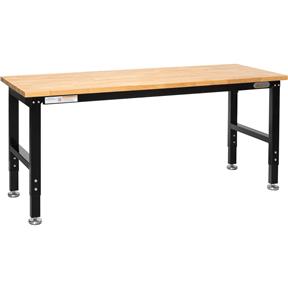
Choose the Amazon bench to keep spending down; choose the Grizzly bench when you run power tools on it every weekend and want the built-in outlets.
Prices change often and Grizzly runs sales, so the buttons show current prices.
Question 2: What do the HOA, the lease and the deed say?
Even when the town allows it, a private agreement can forbid it. Read the covenants (CC&Rs) if you have an HOA: many prohibit any business activity, noise past a stated hour, visible commercial vehicles or parking customers on the street. If you rent, the lease is the controlling document, and a landlord who allows hobby use may not allow a business or welding. If your garage is shared in a townhouse or condo, the bylaws may restrict anything that affects the next unit. Ask for the answer in writing, and ask early: it is easier to get a yes before you buy the tools than a forgiveness after the neighbors complain.
Question 3: What does your insurance say?
This is the one people skip and the one that hurts most. A standard homeowner or renter policy commonly limits coverage for business property and business liability, and some policies exclude business activity at the residence altogether. A fire that starts in a garage shop, a customer who is hurt, or stolen equipment can be a denied claim if the insurer was never told. Call your agent, describe the shop in plain words (machines, welding, finishing, any employees, any customers), and ask what is covered. Common answers are an endorsement on the existing policy, a separate in-home business policy, or a commercial policy. Get the answer in writing and keep it with your business records. Also ask about the machines themselves, since welding, spray finishing and dust collection are things underwriters ask about by name.
Question 4: Which permits and licenses apply?
There are three different kinds of paper and each comes from a different office:
- A business license or registration from the city or county, and often a state tax account (sales tax if you sell goods). These are about being a legal business.
- A home-occupation permit from planning or zoning. This is about whether the use is allowed at the address.
- Building and trade permits for the physical work: new circuits, a subpanel, a gas line, a vented heater, a structural change. This is about whether the garage is safe. Most places require an inspection after the work. A licensed electrician pulls the electrical permit for you.
Some trades have licensing requirements of their own (welding for structural work, auto repair, food, childcare, firearms). Check your state's licensing board for the specific thing you plan to do. Business structure and tax questions go to an accountant, not a web page.
Question 5: Can the garage physically do the work?
Rules aside, a garage has physical limits, and a business runs the machines far harder than a hobby does. Run each limit through the site's tools:
- Floor. A one-car garage is about 12 x 20 or 12 x 22 ft clear. Without a car, the layout engine fits a woodshop of a hybrid saw, a bandsaw, a cyclone collector, a tool bench, a 6 ft workbench and a compressor in a 12 x 20 ft bay with about 176 sq ft of floor left open. A 22 x 22 ft two-car garage holds a cabinet saw, bandsaw, collector, tool bench, workbench, miter station, shelving and compressor with about 387 sq ft open. See the layout pages for your bay and trade, including the 22 x 22 machine shop and the 22 x 22 welding and fab shop.
- Power. A business runs machines for hours at a time. The layout engine suggests a 60 A subpanel for the woodshop that fits a 22 x 22 ft garage and 100 A for the bigger 24 x 24 and three-car woodshops, and the workshop amps calculator sizes yours. Whether the house service can carry it is an electrician's call.
- Heat. A production shop needs to hold a working temperature all winter. A typical 22 x 22 ft garage needs about 15,500 BTU per hour at 10F outside; the heater calculator works yours.
- Dust and fumes. Commercial volume means a real collector and an air filter. Read how to set up dust collection in a garage shop.
- The vehicle. If you need to park the car or a work van in the garage, the park-the-car calculator shows what is left.
Neighbors, noise and goodwill
Most garage-shop problems start with a neighbor, not a rule. A dust collector runs around 78 dB per the Grizzly G0860 listing, and a table saw cutting or a compressor starting is louder than that. Noise travels through shared walls and open garage doors. Reduce it before anyone asks:
- Work with the overhead door closed. A closed insulated door is much quieter than an open one.
- Pick a quiet compressor. An oil-free ultra-quiet unit such as the California Air Tools 20020 or the Grizzly T32337 quiet-series 20 gallon costs more than a loud one and is the right trade in an attached garage. See the best garage shop air compressor.
- Insulate the shared wall and the door; the heater page and the build-out guide explain why that also saves heat.
- Set your own quiet hours and tell the neighbors what you are doing before you start. A short friendly conversation prevents most complaints.
- Use hearing protection yourself. A business that runs loud machines all day is a hearing-loss risk for you.
Also think about parked vehicles, delivery trucks and visitors. A street full of cars outside a garage shop is the thing neighbors notice first.
Fire, fumes and electrical safety for a shop with customers or employees
A garage business raises the stakes for safety, because other people can now be hurt. Cover the basics: a fire extinguisher within reach of every exit and another near any finishing or welding area; working smoke and carbon monoxide alarms; GFCI protection and a plug-in tester such as the Klein RT210; a respirator such as the GVS Elipse P100 for dust; and a written habit for oily rags, solvents and fuel. Do not run extension cords as permanent wiring. A business shop deserves real circuits. Have a licensed electrician size and install them, and pull the permit.
This is general information, not an inspection or legal advice. Fire code, electrical code and zoning vary by place and change over time. Check your local rules.
Which shops tend to work and which tend to run into trouble
Some businesses fit a garage easily and some do not. Judge your own by the same questions the rule-makers ask: how much noise, dust and traffic does it make, and how much does it store?
- Usually workable: small-batch woodworking, crafts, jewelry, 3D printing, electronics repair, sewing, small-parts machining with enclosed machines, product photography, online fulfilment of small parcels. Low traffic, low noise, small inventory.
- Often restricted: auto repair (fluids, fire, customer cars), welding and fabrication (fire, arc flash, fumes), spray finishing (VOCs), anything with regular walk-in customers, anything with employees who park on the street.
- Usually not allowed in a residential zone: retail, industrial processes, anything with outdoor storage, and operations that move heavy trucks to the address.
If your intended shop is in the second group, plan on a conditional approval and insurance with higher premiums. If it is in the third, consider renting a small bay in a light-industrial building instead; it is usually cheaper than the fines and the trouble.
A one-page checklist before you spend money
- Write a one-paragraph description of the business: what you make, the machines, the hours, any customers or employees, any fuel or finish.
- Look up your city or county zoning code for "home occupation" and read the conditions.
- Email planning or zoning with the description. Ask for the answer in writing.
- Read the HOA covenants or lease. Ask for the answer in writing.
- Call your insurance agent. Ask what is covered and what an endorsement or separate policy costs. Get it in writing.
- Ask the building department which permits the electrical work needs, then get two electrician quotes.
- Run your bay, your trade and your machines through the layout calculator and the amps calculator.
- Tell the neighbors.
- Print the planning checklist and keep every written answer in one folder.
Then plan the shop itself: how to set up a workshop in a garage and how to build a workshop in a garage cover the physical work.
Get the garage shop planning checklist
One printable page: measure the bay, count the circuits, list the machines, check the floor. Plus a few short emails, then a couple a month at most.
Unsubscribe anytime. You can also just read the checklist on this site.Frequently asked questions
Can I run a business out of my garage?
Often yes under a home-occupation rule, with limits on customers, employees, signs, noise and hours. Zoning, HOA covenants, your lease and your insurance all have to agree. Check your local rules and get each answer in writing.
Do I need a permit to open a shop in my garage?
Usually several: a business license, a home-occupation approval from zoning, and building permits for new circuits or fuel lines. Rules vary by place. Ask your city or county planning and building departments.
Does homeowners insurance cover a garage business?
Often not fully. Many standard policies limit or exclude business property and business liability. Tell your agent exactly what you plan and ask for an endorsement or an in-home business policy in writing.
Can my HOA stop me from opening a shop in my garage?
Yes, if the covenants prohibit business use or limit noise and traffic, even where the town allows it. Read the covenants and ask the board before you buy machines.
What businesses work best from a garage?
Low-noise, low-traffic work with small inventory: crafts, small-batch woodworking, electronics repair, 3D printing and small-parcel fulfilment. Auto repair, welding and spray finishing draw the most restrictions.
This page is researched guidance, not professional electrical, engineering or safety advice. Circuits, loads and clearances depend on your house, your service and your town: have a licensed electrician confirm any wiring, and check local code and each manufacturer's manual before you act.
