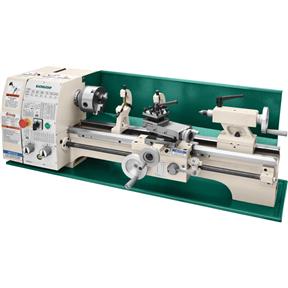
Grizzly G4000
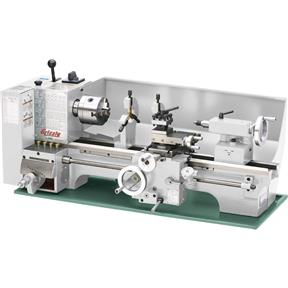
9 x 19 benchtop metal lathe. 3/4 HP, 120V at 9 A, 8-3/4 in swing, 19 in between centers, footprint 16 x 37 in, 294 lb shipping.
Comparison
The Grizzly G4000 (9 x 19, 3/4 HP, 9 A at 120V, 294 lb shipping, 16 x 37 in) is the easier lathe to place and wire: a 15 A circuit on the listing amps and a WEN 500 lb base. The G0602 (10 x 22, 1 HP, 13.6 A, 432 lb shipping, 47-1/2 x 12-1/2 in) takes the same floor but 138 lb more weight and a 20 A circuit. Both fit a 12 x 22 ft bay beside a parked sedan.
9 x 19 benchtop metal lathe. 3/4 HP, 120V at 9 A, 8-3/4 in swing, 19 in between centers, footprint 16 x 37 in, 294 lb shipping.
10 x 22 benchtop metal lathe. 1 HP, 120V at 13.6 A, 9-1/2 in swing, 22 in between centers, footprint 47-1/2 x 12-1/2 in, 432 lb shipping.
| Grizzly G4000 | Grizzly G0602 | |
|---|---|---|
| Size class | 9 x 19 | 10 x 22 |
| Motor | 3/4 HP | 1 HP |
| Voltage and amps (listing) | 120V at 9 A | 120V at 13.6 A |
| Swing over bed | 8-3/4 in | 9-1/2 in |
| Distance between centers | 19 in | 22 in |
| Footprint | 16 x 37 in | 47-1/2 x 12-1/2 in |
| Shipping weight | 294 lb | 432 lb |
| Circuit at 125 percent of listing amps | 15 A breaker, 14 AWG copper | 20 A breaker, 12 AWG copper |
| Mobile base need (weight x 1.3) | 382 lb: a WEN 500 lb base | 562 lb: the VEVOR 1500 lb base |
| Fits 12 x 20 ft with a sedan? | Stored only, not working | Stored only, not working |
| Fits 12 x 22 ft with a sedan? | Yes, working and stored | Yes, working and stored |
| Floor share of a 12 x 22 ft bay | 2% | 2% |
| Budget tier | Price at grizzly.com | Price at grizzly.com |
The two footprints look different but cover almost the same area. The G4000 is 16 x 37 in, about 592 square inches. The G0602 is 47-1/2 x 12-1/2 in, about 594. Our layout engine gave both a floor share of 2 percent of a 12 x 22 ft bay. What changes is which wall dimension you spend: the G4000 is deeper, the G0602 is longer and shallower.
That matters for the bench you put under it. A bench 14 in deep with a 48 in run holds the G0602. The G4000 wants about 16 in of depth and about 37 in of run. In a garage the length of the wall is usually the scarce thing, since cabinets, a water heater and the car's door swing are all competing for it.
The lathe is also not the whole footprint. You stand in front of it, and you need to reach the tailstock and the headstock end. Our layout engine used a 30 in operator halo for both. The fit sheets show each bay: G4000 and G0602.
Our layout engine placed each lathe alone in each of our six standard bays, then with a sedan parked and walk-around clearance, then with the clearance removed to test storage. The results for the two are identical.
| Bay | G4000 | G0602 |
|---|---|---|
| 12 x 20 ft one-car | Stored with a car, not working | Stored with a car, not working |
| 12 x 22 ft one-car | Fits with a car | Fits with a car |
| 20 x 20 ft two-car | Fits with a car | Fits with a car |
| 22 x 22 ft two-car | Fits with a car | Fits with a car |
| 24 x 24 ft two-car | Fits with a car | Fits with a car |
| 32 x 24 ft three-car | Fits with a car | Fits with a car |
A benchtop lathe is the rare shop machine that does not need a stock lane. Round bar goes in the headstock end, so the car and the lathe can share a one-car bay if the lathe sits along the back wall. That is a better result than any table saw gets. The weight, not the footprint, is what hurts you.
The listings give shipping weights of 294 lb and 432 lb, a gap of 138 lb. Both are bench lathes that arrive on a pallet. Even the lighter one is not a two-person lift onto a bench, so plan an engine hoist, a pallet jack and a helper, or set the lathe on a low, strong stand and build the bench around it.
The bench is where the weight lands. Amazon titles give load ratings for a few garage benches, for example 2000 lb for the Betterhood 70 in and 3000 lb for the VEVOR 72 in. A rating is a total, spread across the top, so check the listing for how the rating is meant to be used before putting one concentrated load on it. Add tooling, chucks and cutting oil to the lathe weight, and keep the lathe over a leg.
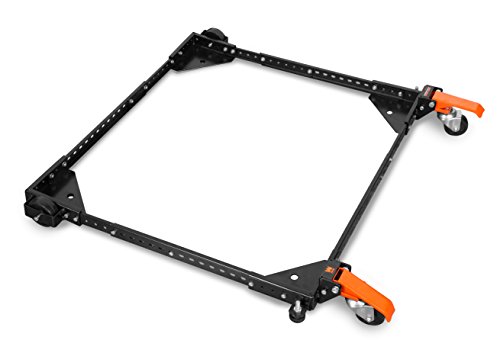
If the lathe has to roll away, use our rule of weight times 1.3: 382 lb for the G4000, 562 lb for the G0602. The first fits the WEN 500 lb base; the second needs the VEVOR 1500 lb base. The mobile base sizing calculator does the sum for your own numbers. A lathe on wheels is a vibration problem as well as a weight one, so lock the base or lower the machine onto feet before cutting.
The two lathes differ by 4.6 A on the listings: 9 A for the G4000 and 13.6 A for the G0602. At 125 percent the G4000 is 11.3 A and the G0602 is 17 A. The first points to a 15 A breaker and 14 AWG copper, the second to a 20 A breaker and 12 AWG copper, under the 60 C column of NEC Table 310.16. Our engine's own NEC table calculation for a 30 ft run gives 20 A and 12 AWG for both, so on a long run the G4000 wants the 20 A circuit as well.
Putting the lathe on a dedicated 20 A circuit is the plain answer for either one. A lathe starts under load more often than it looks, as the chuck and workpiece have inertia, and a shared circuit with a compressor or a heater trips. The workshop amps calculator sums everything you plan to run at once, and the 240V explainer is there if you later add a bigger machine. A licensed electrician should confirm every circuit from the nameplate.
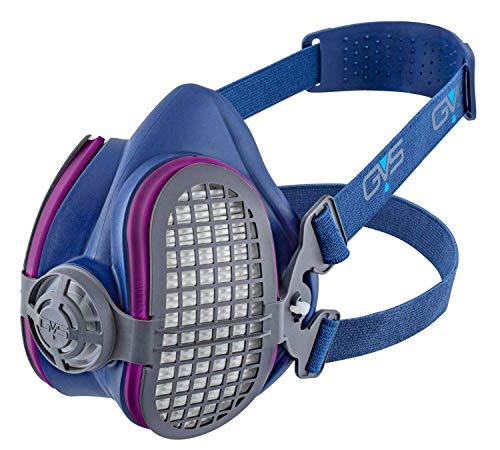
Metal chips are sharp, hot and fast, so safety glasses are not optional at a lathe. Add hearing protection, because a lathe in a closed garage is louder than it feels. Roll long sleeves up, keep hair and jewellery clear of the chuck, and leave the chuck key out. If you cut a lot of material that makes fine dust or oil mist, a respirator belongs in the kit; the GVS P100 respirator and safety glasses are the catalog picks.
Both lathes are benchtop machines for small metal work: bushings, pins, spacers, small shafts. The envelope is 8-3/4 in swing and 19 in between centers on the G4000, and 9-1/2 in and 22 in on the G0602. Before you buy, list the biggest part you expect to turn. If it fits the G4000 with room to spare, the larger lathe buys you weight and amps, not capability. Our lathe and mill roundup and the machine shop start guide cover tooling and what to buy first.
G4000 if you want the lighter, easier machine and have a 15 A or 20 A circuit; G0602 if the extra swing and length matter and you can give it a 20 A circuit and a stronger bench. The two cover the same floor and fit the same bays beside a car. The G0602 costs you 138 lb, 4.6 A and a bigger mobile base. Choose it for a reason you can name in inches, not because it is the larger number. Have a licensed electrician confirm the circuit either way.
Amazon pick and Grizzly pick for the same job, side by side.
The Amazon lathe is a VEVOR 7 x 14; the Grizzly G4000 is a 9 x 19 with a 3/4 HP motor and 294 lb of cast iron. More lathe means more floor and more weight.
The Grizzly G0602 is a 10 x 22 with an enclosed gearbox and 432 lb of weight on a footprint of about 4 ft by 1 ft; the Amazon VEVOR 7 x 14 is the lightweight entry alternative.
Prices change often and Grizzly runs sales, so the buttons show current prices.



Prices change often; the button shows today's price on Amazon.
One printable page: measure the bay, count the circuits, list the machines, check the floor. Plus a few short emails, then a couple a month at most.
Unsubscribe anytime. You can also just read the checklist on this site.The G0602 at 432 lb shipping against 294 lb for the G4000, a difference of 138 lb. Both are listed as shipping weights, so the machine itself is lighter than the crate.
In our layout engine both fit a 12 x 22 ft bay with a sedan parked, and a 12 x 20 ft bay only when stored, without working clearance.
On the listing amps, 9 A at 125 percent points to a 15 A breaker for the G4000, and 13.6 A points to a 20 A breaker for the G0602. A licensed electrician should confirm both from the nameplate.
Not if it lives on a bench. If it must roll, our rule is weight times 1.3: 382 lb for the G4000 and 562 lb for the G0602, so different bases.
It is the next size up on the swing and length listed, 9-1/2 in over 22 in against 8-3/4 in over 19 in, with a larger motor. The footprint area is about the same but the shape is different.
This page is researched guidance, not professional electrical, engineering or safety advice. Circuits, loads and clearances depend on your house, your service and your town: have a licensed electrician confirm any wiring, and check local code and each manufacturer's manual before you act.